
You should never have to gamble on “maybe I can get to my car fast enough.” Real safety is the moment you feel a situation turning and you already have a plan in your hand, on your keys, or in your pocket – without fumbling, without second-guessing, without freezing.
Personal protection gear is not about living in fear. It’s about taking control of the variables you can control: distance, attention, time, and options. The right tool helps you create space, draw attention, or stop a threat long enough to get away. The wrong tool (or the right tool carried the wrong way) can leave you stuck with a false sense of security.
Below is a practical breakdown of the best personal protection gear for women, how each option works in real life, and how to choose based on where you actually go and what you will actually carry.
“Best” is the gear you can access in two seconds, use under stress, and keep on you consistently. Most people don’t fail on willingness – they fail on friction. The tool is too bulky, too complicated, or “only for certain outfits,” so it stays at home.
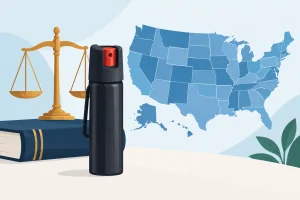
The second part of “best” is legality and environment. Some tools are restricted in certain states, cities, campuses, and venues. Even when they’re legal, specific places (airports, federal buildings, some events) may prohibit them. If you travel, commute, or work in controlled-access spaces, you may need a layered setup – one option for daily carry and another for the car or home.
Finally, the best protection tool matches your goal. Sometimes you need to create distance. Sometimes you need a high-impact deterrent. Sometimes you need noise, light, or detection because the safest win is leaving early.
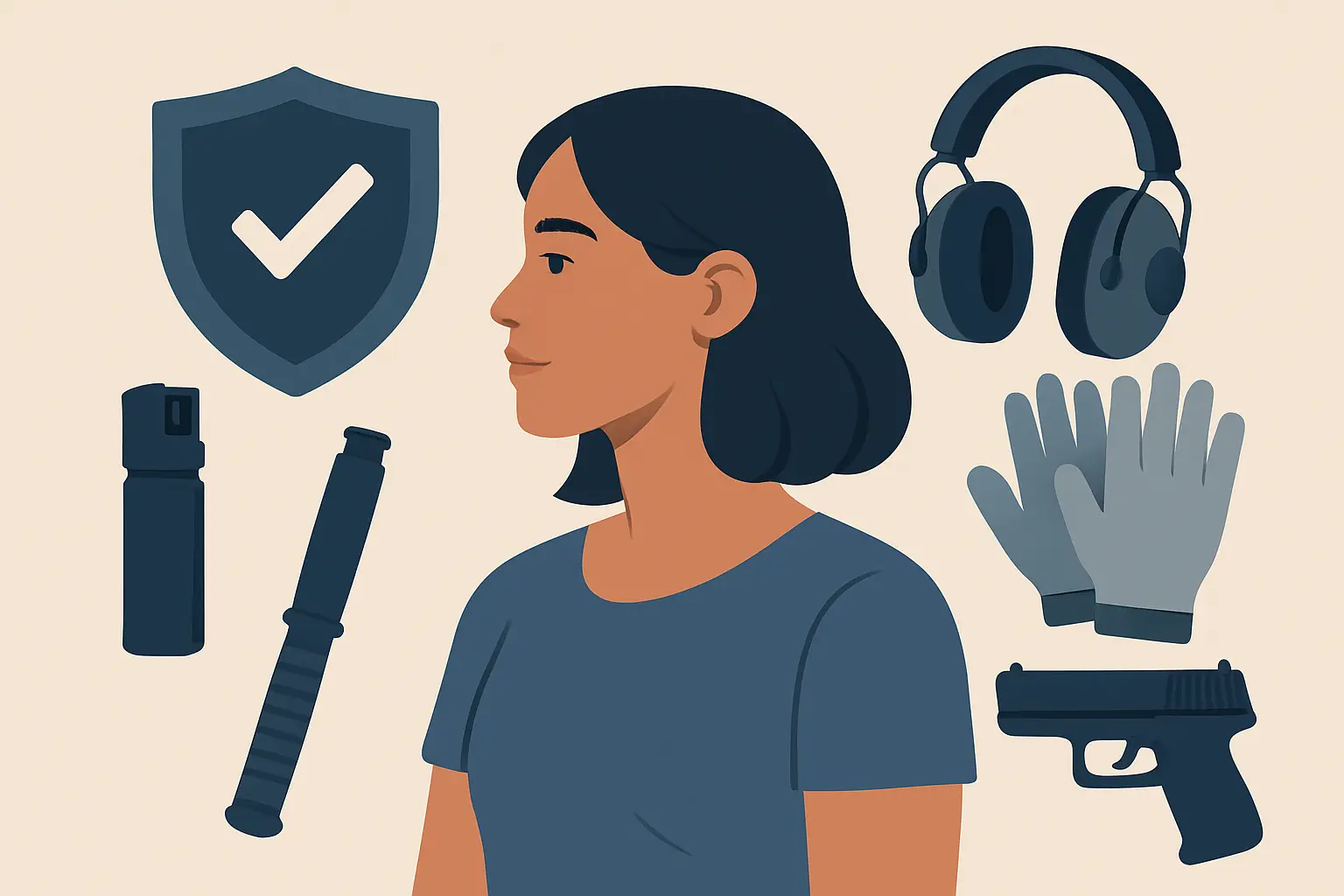
Pepper spray remains one of the most effective, accessible tools for personal defense because it works at a distance and can disrupt an attacker’s vision and breathing long enough for you to escape. It’s also relatively simple: aim, spray, move.
The trade-off is that it’s not magic. Wind, rain, or tight indoor spaces can affect performance, and you need to know your spray pattern (stream vs. fog) so you don’t create blowback. A focused stream usually gives you better range and less airborne mist, while a wider pattern can be easier to “land” under stress.
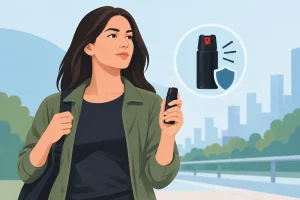
Carry matters here. A pepper spray canister buried in a bag is not protection – it’s luggage. If it’s going to save you, it needs to live where your hand naturally goes: clipped inside a pocket, attached to keys, or in a dedicated outer pocket you can reach without looking.
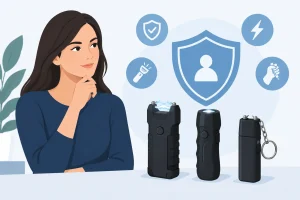
A stun gun is a strong choice for people who want an unmistakable deterrent and a tool designed to interrupt an attacker’s ability to continue. They’re typically compact and built for quick activation.
The honest trade-off is range. A stun gun is a close-contact tool, which means it’s best for situations where distance has already collapsed. That’s why pairing it with a distance tool (pepper spray) or an attention tool (alarm) can be a smart setup.
If you choose a stun gun, prioritize three things: a safety switch you can manipulate under stress, a grip that won’t twist in your hand, and a carry method that keeps it oriented the same way every time. Consistency is speed.
If you like the concept of a stun device but want additional reach, a stun baton offers more stand-off distance and can be easier to control with two hands. That extra length can help you maintain space while you move.
The trade-off is portability. A baton is not always convenient for everyday errands, and it’s not the tool you casually slip into a small purse. This option tends to fit best for people who walk dogs at night, manage property, work late in large parking areas, or want something staged at home.
A personal alarm is one of the most underappreciated tools because it doesn’t rely on strength or close-range contact. It’s built to do one job: get eyes on the problem. That matters because most attackers don’t want an audience.
Alarms are also low-friction. They’re lightweight, easy to carry, and generally allowed in more places than sprays or stun devices. The trade-off is obvious – an alarm won’t physically stop someone. It buys you time and increases the chance of help, but you still need to move.
For many women, the best setup is an alarm plus either pepper spray or a stun device. One creates a scene. The other creates an exit.
A tactical pen can be a practical everyday carry item because it looks normal and can live in your hand when you’re walking to your car. It’s also one of the few tools that fits into professional settings without raising eyebrows.
The trade-off is skill and proximity. Impact tools require you to be close, and they work best when you’ve practiced using them under stress. If you’re choosing a pen or keychain tool, treat it as part of a layered plan, not your only plan.
Also, be cautious with “spiky” novelty keychains. Some are restricted in certain jurisdictions or venues, and many are awkward to use effectively. A tool that seems aggressive but is hard to deploy can be more liability than help.
A bright safety light isn’t just for visibility. It helps you scan your surroundings, check under and around your car, and control what you can see before you step into a bad situation. Light also signals awareness – and awareness is a deterrent.
The trade-off is that light is supportive gear. It doesn’t stop a threat by itself, but it reduces the chance you’ll be surprised. Pairing a light with pepper spray or an alarm gives you both prevention and response.
Your ideal setup depends on where you spend your time and what you’ll actually carry.
If you commute early or late and park far away, prioritize a safety light and a personal alarm, then add pepper spray for distance. If you jog or walk regularly, choose lightweight, hand-accessible options that won’t bounce or get buried – a keychain alarm and a compact spray are popular because they can stay consistent.
If you’re often in places with restrictions (campuses, certain workplaces, events), an alarm and light can still give you real leverage. You can also stage more capable tools in your car or at home, where rules are different.
If you travel for work, think in layers: a travel-friendly alarm for your person, a light for hotels and parking garages, and your preferred defense tool for destinations where it’s legal and permitted.
Gear that isn’t accessible is not gear. It’s a comfort object.
Your goal is simple: your hand should find the tool without searching. That means a consistent location, consistent orientation, and minimal steps to activate. If it takes two hands to dig through a purse, you’re already behind.
Practice doesn’t need to be dramatic. Stand at your front door once a week and rehearse: keys in hand, tool in hand, phone ready, head up. If you carry pepper spray, rehearse the motion of drawing it and aiming. If you carry an alarm, rehearse pulling the pin. If you carry a stun device, rehearse disengaging the safety and indexing your grip.
The point is to remove hesitation. Stress makes fine motor skills worse. Your setup should be built for that reality.
Personal protection isn’t only what you carry on your body. Your environment matters.
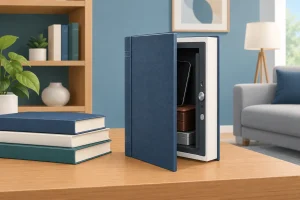
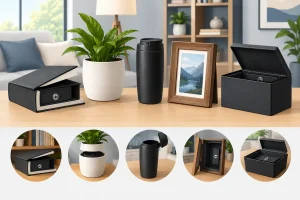
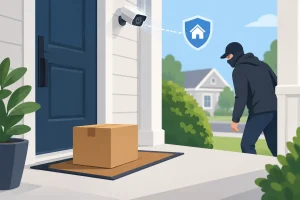
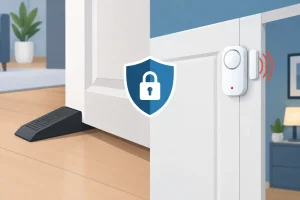
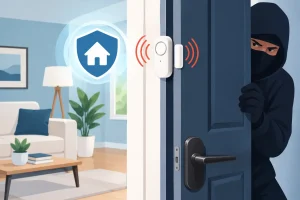
If you want to tighten up home security without turning your life into a project, simple window and door alarms can give you instant awareness. Hidden cameras can help you verify what’s happening before you open a door. Dummy cameras and diversion safes add another layer by discouraging opportunistic behavior and protecting valuables.
In the car, a small safety light and a staged personal alarm give you options if you hear something, see something, or just get that feeling that you’re being watched. Trust that instinct. Your body notices patterns before your brain finishes the sentence.
Look for designs that are easy to hold, easy to activate, and easy to carry daily. Complicated triggers, slick finishes, or “cute” tools that don’t fit your grip are not your friend.
Skip anything you wouldn’t practice with or wouldn’t carry consistently. Also skip tools that rely on pain compliance alone or require precision targeting under stress. You want tools that work with gross motor movements and give you a clear next step: create space, make noise, leave.
If you want a one-stop place to build a practical setup across personal carry and home security, Elite Warrior Defense stocks a broad range of self-defense essentials and security add-ons designed for real life and real budgets.
The goal is not to collect gadgets. The goal is to feel steady when you’re alone at the gas station, walking the dog, closing up a store, or riding an elevator with someone who sets off your alarm bells.
Pick one primary tool you will carry every day, then add one support tool that complements it. If you choose pepper spray, add a safety alarm. If you choose a stun device, add a light. Make the setup simple, repeatable, and legal where you live.
Then do the part that changes everything: commit to using your gear early. The best moment to act is when your instincts first speak up, not when you’re already cornered. Give yourself permission to be “rude,” cross the street, make noise, or leave. You’re not responsible for protecting someone else’s comfort – you’re responsible for getting home safe.
YOU’RE IN!
Use this code on every order
🎉
Here’s Your Code!
Use it now an on every future order.
YOUR DISCOUNT CODE
We also sent this code to your email for safekeeping.
EXCLUSIVE OFFER
Every order – not just your first!
Unlock Your Discount Instantly
Enter your email below and your personal 15% discount code appears right here – no need to check your inbox.
🔒 We respect your privacy. Unsubscribe anytime.