

College campuses should be places of learning and growth, not fear. Yet statistics show that 1 in 4 undergraduate women experience sexual assault during their college years.
Campus safety for women requires more than just awareness-it demands preparation and action. We at Elite Warrior Defense LLC believe every woman deserves the knowledge and tools to protect herself on campus.
Sexual assault represents the most serious threat facing female college students, with the Association of American Universities reporting that 25.9% of undergraduate women experience nonconsensual sexual contact during college. Other dangers demand equal attention. Stalking affects 10.3% of undergraduate women according to the same 2019 study, while theft targets personal belongings at much higher rates in dormitories and campus common areas.
Residence halls present significant safety concerns for campus security. Parking structures and isolated walkways between buildings create perfect opportunities for predators, especially during evening hours between 6 PM and midnight when most incidents occur. Off-campus parties pose significant risks, with 84% of sexual assaults involving alcohol consumption by the victim, perpetrator, or both (according to the National Sexual Violence Resource Center).

The first six weeks of the academic year, known as the red zone, see the highest rates of sexual assault among first-year students. Weekend nights between Thursday and Saturday generate 65% of all campus safety incidents. Late-night study sessions in empty library floors or academic buildings leave women isolated and exposed.
Greek life events and off-campus house parties create environments where perpetrators exploit social dynamics and substance use to target victims. Women who walk alone after dark face exponentially higher risks, particularly on paths without emergency call boxes or adequate lighting systems. These situations require specific preparation strategies and safety tools that can make the difference between vulnerability and protection.
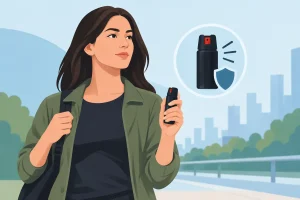
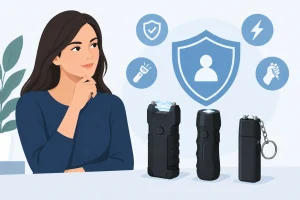
Personal alarms rank among the most effective campus safety devices, producing 130-decibel sounds that can be heard from 600 feet away. The SABRE Personal Alarm with LED Light costs under $10 and attaches easily to backpacks or keychains. Pepper spray remains the gold standard for non-lethal protection, with a 90% effectiveness rate according to the National Institute of Justice. Look for products with a 10-foot range and UV marking dye for suspect identification.

Tactical pens serve dual purposes as writing instruments and striking tools, while remaining legal in all campus environments where traditional weapons face restrictions. Stun guns provide another layer of protection where campus policies permit their use (though many universities prohibit them). Hidden cameras can document harassment or stalking behavior, creating evidence for campus security or law enforcement. These devices work best when students practice with them regularly and understand their limitations.
Palm strikes prove more effective than punches for women, generating maximum force while protecting small hand bones from injury. Target the nose, solar plexus, or groin for immediate impact. The knee strike delivers devastating power when an attacker moves within close range – drive your knee upward into the groin or solar plexus with explosive force. Master the heel stomp technique for foot attacks, driving your heel down onto an attacker’s instep with full body weight.
Weight and size determine whether you’ll actually carry protection devices consistently. Products over 4 ounces typically get left behind in dorm rooms when needed most. Choose pepper spray with flip-top safety mechanisms rather than twist caps, which fumble under stress. LED flashlights with strobe functions disorient attackers while illuminate escape routes. Test any device before relying on it – practice drawing, activating, and using each tool until operation becomes automatic.
Replace pepper spray every three to five years and check battery levels monthly on electronic devices. The most sophisticated protection tools mean nothing without a comprehensive safety plan that integrates these devices into your daily campus routine.
A reliable safety network starts with three specific people who know your daily schedule and location preferences. Choose one roommate or close friend on campus, one family member off-campus, and one additional trusted contact who lives locally. Share your class schedules, work shifts, and regular social activities with these contacts. Students with established communication networks have better access to campus safety resources and incident reporting systems.
Program emergency contacts with specific titles in your phone like Campus Security Emergency and Local Police Non-Emergency to eliminate confusion during high-stress situations. Download your campus safety app – most universities now offer GPS-enabled apps that connect directly to campus security dispatch. Set up automatic location sharing with your safety network during high-risk times like evening library sessions or weekend social events.
Send check-in texts every two hours when you walk alone after dark. Establish a code word system with trusted friends that signals immediate danger without alerting potential threats nearby. This simple communication strategy can save precious minutes when seconds count.

Walk the same well-lit routes between classes and dormitories to build familiarity with escape routes and emergency call box locations. Carry your keys between your fingers when you walk alone, but avoid the popular wolverine grip (which actually reduces striking power and increases hand injury risk). Check your surroundings every 30 seconds while you walk – attackers typically observe potential victims for 7-10 minutes before they approach according to criminology research from the University of North Carolina.
Consider carrying personal safety devices like alarms or defensive tools that can provide additional security during your daily routines.
Leave detailed itineraries with your safety contacts before you attend parties or study in isolated campus locations. Include specific pickup times and backup transportation plans when original arrangements fall through. Never rely on a single exit strategy or transportation method. Always have a backup plan that doesn’t depend on the same people or resources as your primary plan (this redundancy often makes the difference between safety and danger).
Campus safety for women demands action over awareness alone. Women who carry personal alarms, practice self-defense moves, and build strong support networks cut their risk of campus threats dramatically. Statistics prove that preparation prevents trauma and saves lives.
Your protection strategy needs three core elements: tested safety devices, practiced defensive skills, and reliable communication networks. These layers work together to deter attackers and create escape routes when danger strikes. Quality tools make the difference between confidence and vulnerability on campus.
We at Elite Warrior Defense LLC provide self-defense products that help women take control of their campus safety. Practice your techniques monthly, test your devices regularly, and keep your support network active (these habits transform potential victims into prepared survivors). Your safety starts with preparation before threats appear.