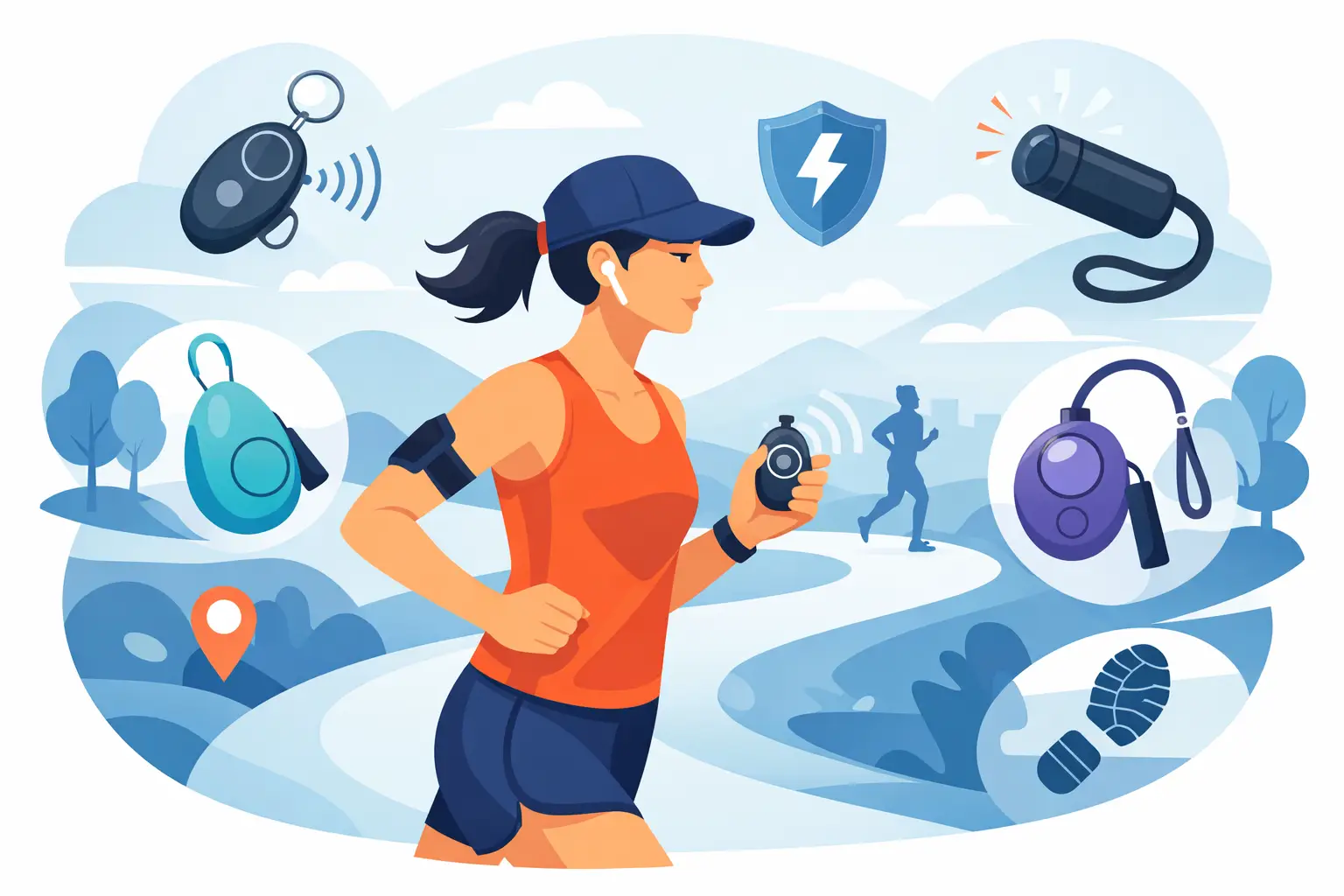
A quiet trail at 6 a.m. can feel like freedom right up until it doesn’t. For runners, the right safety tool needs to be fast, loud, light, and simple enough to use when your heart rate is already up. That is exactly why so many people look for the best personal alarms for runners instead of bulky gear that gets left at home.
A personal alarm is not about fear. It is about creating attention fast, buying yourself a moment, and making it much harder for someone to isolate you. For runners, that matters. You are often moving alone, carrying very little, and focused on pace, traffic, or terrain. A good alarm fits into that reality instead of fighting it.
What makes the best personal alarms for runners?
The short answer is volume, speed, and carry comfort. If an alarm is awkward to reach, too heavy for a waistband, or easy to trigger by mistake, it stops being useful. The best options are loud enough to cut through traffic, wind, and headphones, while staying secure during movement.
Most runners should look for an alarm rated around 120 to 140 decibels. Numbers are not everything, but weaker alarms can get swallowed by a busy street or open park. You also want activation to be immediate. Pull-pin designs are especially popular because they are simple under stress. Press-button models can work well too, but only if the button is easy to find without looking down.
Battery type matters more than many people expect. Rechargeable alarms are convenient, especially if you already charge a watch, phone, and earbuds every few days. Replaceable-battery models can be dependable too, but only if you are disciplined about testing them. An untested alarm is just extra weight.
There is also a trade-off between minimal size and grip. Tiny alarms disappear nicely on a keyring, but some are harder to hold with sweaty hands. Slightly larger models may be better if you run in gloves, cold weather, or low light.
The 7 best personal alarms for runners
No single alarm is perfect for every runner. The best choice depends on where you run, how you carry gear, and whether you want extra features like a flashlight or strobe.
1. Pull-pin keychain alarms
For most runners, this is the safest place to start. Pull-pin alarms are straightforward. Grab, pull, and the siren sounds. That simplicity is a real advantage when adrenaline hits.
They work especially well clipped to a waistband, hydration vest, or running belt. If you already carry a house key or car key, the form factor feels familiar. The main thing to watch is retention. A weak clip can bounce loose on longer runs.
2. Wristband personal alarms
Wrist-worn alarms are ideal for runners who do not like carrying anything in their hands. Because they are already on your body, they can be faster to access than something buried in a pocket.
The trade-off is comfort. Some wrist alarms feel fine for two miles and annoying by mile six. If you choose this style, look for a secure but flexible fit that will not chafe once you start sweating.
3. Clip-on alarms for waistbands and sports bras
This style works well for runners who want a dedicated spot for quick access. A strong clip can keep the alarm stable without forcing you to hold it.
Placement matters here. If it is clipped somewhere hard to reach with either hand, the benefit disappears. Test your setup before you trust it on the road.
4. Personal alarms with built-in flashlight
If you run early in the morning or after sunset, a flashlight adds real value. It can help you see a lock, a path, or an obstacle, and it also makes you more visible.
Still, extra features should not weaken the core function. A flashlight is helpful, but not if the alarm itself is too quiet or the unit becomes bulky. Light should be a bonus, not the reason you buy it.
5. Alarm and strobe combinations
A strobe can attract visual attention in addition to noise, which is useful near roads, parking lots, or neighborhoods where someone may see the flash before they understand the sound.
This type can be especially effective for runners in low-light conditions. The downside is battery drain. More features usually mean more maintenance, so regular testing is non-negotiable.
6. Compact rechargeable alarms
Rechargeable alarms appeal to runners who want less hassle and fewer replacement batteries. If you already have a charging routine for your running gear, this can be a practical fit.
Just be honest with yourself about habits. If you frequently forget to charge devices, a replaceable-battery model may actually be more dependable for you.
7. Rugged weather-resistant alarms
If you run in rain, humidity, or extreme heat, weather resistance matters. A cheap alarm may work fine in a drawer and fail after weeks of sweat and exposure.
Rugged models are often worth the extra few dollars if you train outdoors year-round. Reliability is not the place to cut corners.
How runners should choose the right alarm
Start with your route. If you run in busy neighborhoods, an alarm with a strobe may help you get attention quickly. If you run on isolated trails, maximum siren volume and easy one-hand activation should take priority. If your runs happen before sunrise, visibility features deserve more weight.
Then think about carry style. Some runners hate anything in their hands. Others prefer a handheld alarm because it is instantly available. Neither choice is wrong, but the best personal alarms for runners are the ones you will actually carry on every run, not just the ones that look good in product photos.
Comfort is part of safety. If an alarm bounces, pinches, or snags clothing, you may leave it behind. A slightly less feature-rich model that feels invisible on your run is often the smarter choice.
Price matters too, but this category is usually affordable. You do not need to overspend to get dependable protection. What matters more is buying from a trusted source that focuses on practical self-defense tools instead of novelty gadgets. That is one reason many shoppers turn to stores like Elite Warrior Defense for security products built around real-world use.
How to carry and use a personal alarm while running
An alarm only helps if you can activate it immediately. That means no deep pocket, no zipped compartment that takes two hands, and no setup that requires fine motor skills under stress.
Before your first run with it, practice. Hold it with your left hand and your right hand. Try it while standing still and after a short jog. You want the motion to feel automatic. If there is a pull pin, know exactly how much force it takes. If there is a button, know where your thumb lands naturally.
It also helps to think ahead about when you would use it. If someone is following you, approaching aggressively, blocking your path, or making you feel cornered, early activation can be the right move. A personal alarm is designed to disrupt, draw attention, and help create an opening to get away.
Mistakes runners make when buying alarms
The biggest mistake is shopping for features before function. Fancy lights, stylish colors, and ultra-mini designs can be appealing, but a runner needs reliability first. Loud, fast, and secure beats clever every time.
Another common mistake is assuming all alarms are equally easy to use. They are not. Some require awkward hand positions or too much pressure. Others are so sensitive they go off by accident in a gym bag. Both problems matter.
The last mistake is neglect. If you never test your alarm, you are guessing. Check it regularly, confirm the battery is strong, and inspect the clip or attachment point. Runners trust their shoes because they know how they perform. Your safety gear deserves the same standard.
Are personal alarms enough on their own?
Sometimes yes, sometimes no. A personal alarm is one layer of protection, and for many runners it is a smart one because it is legal in many places, easy to carry, and simple to use. But your route choices, awareness, and run timing still matter.
Some runners pair an alarm with a safety light, phone access, or other self-defense tools where legal. That layered approach makes sense, especially if you run alone often. The goal is not to turn every jog into a tactical exercise. The goal is to remove easy opportunities and give yourself options if something goes wrong.
The best running safety tool is the one you can reach without thinking and trust without hesitation. If your alarm is loud, accessible, and built for real movement, it is doing its job before you ever need to use it.