A bear encounter can turn serious in seconds, especially when visibility is low, a trail is quiet, or a bear is protecting food or cubs. This guide to bear spray use gives you the practical actions that matter most: carry it where you can reach it, know how it works before you leave the trailhead, and use it to create room to get away.
Bear spray is not a substitute for awareness, smart food storage, or following park rules. It is a defensive tool for a close encounter. When carried and used correctly, it can help deter an approaching bear without requiring you to get closer or rely on physical strength.
What Bear Spray Is Designed to Do
Bear spray is a high-volume pepper-based deterrent made for use against bears. It projects a wide cloud rather than a narrow stream, creating a barrier of irritating spray between you and an animal that is approaching. The goal is simple: disrupt the bear’s ability to see and breathe comfortably long enough for you to back away and leave the area.
Do not confuse bear spray with a small personal pepper spray. Both contain an irritant, but bear spray is made to produce a larger cloud at greater range and is intended for wildlife defense. For time in bear country, choose a bear-specific product and read its label closely. The canister’s listed range, deployment time, expiration date, and storage instructions are the authority for that specific product.
Bear spray is a deterrent, not a guarantee. Wind, rain, terrain, distance, and the bear’s behavior can affect how it performs. That is why prevention and calm decision-making still matter.
Carry Bear Spray Where It Counts
A canister packed in a backpack might as well be miles away during a fast encounter. Carry bear spray in a belt holster, chest holster, or another secure location that you can reach immediately with either hand. It should be outside your clothing and equipment, not buried under straps, rain gear, or a jacket.
Before every hike, hunt, campout, or backcountry workday, make a quick readiness check:
- Confirm the canister is not expired, damaged, leaking, or badly corroded.
- Make sure the safety clip is in place and the nozzle is clear.
- Position the holster so your normal movement does not block your draw.
- Tell everyone in your group where their spray is carried and how to use it.
Keep the safety clip on until you need the spray. Removing it early can lead to an accidental discharge when you are moving through brush, climbing, or handling gear. At the same time, practice the motion of locating the canister, drawing it, and removing the safety without looking. Use an inert training canister when possible. Never use a live canister for casual practice, since you can lose the contents needed for a real emergency.
How to Use Bear Spray During an Encounter
The first priority is to avoid surprising the bear. Stay alert near berry patches, streams, blind corners, dense vegetation, animal carcasses, and fresh sign. Make normal human noise when appropriate, travel in groups when possible, and keep food, trash, and scented items secured according to local regulations.
If you see a bear at a distance and it has not noticed you, do not approach for a closer look or photograph. Quietly increase your distance. If it sees you, remain calm, speak in a low, steady voice, and back away slowly without running. Running can trigger a chase response.
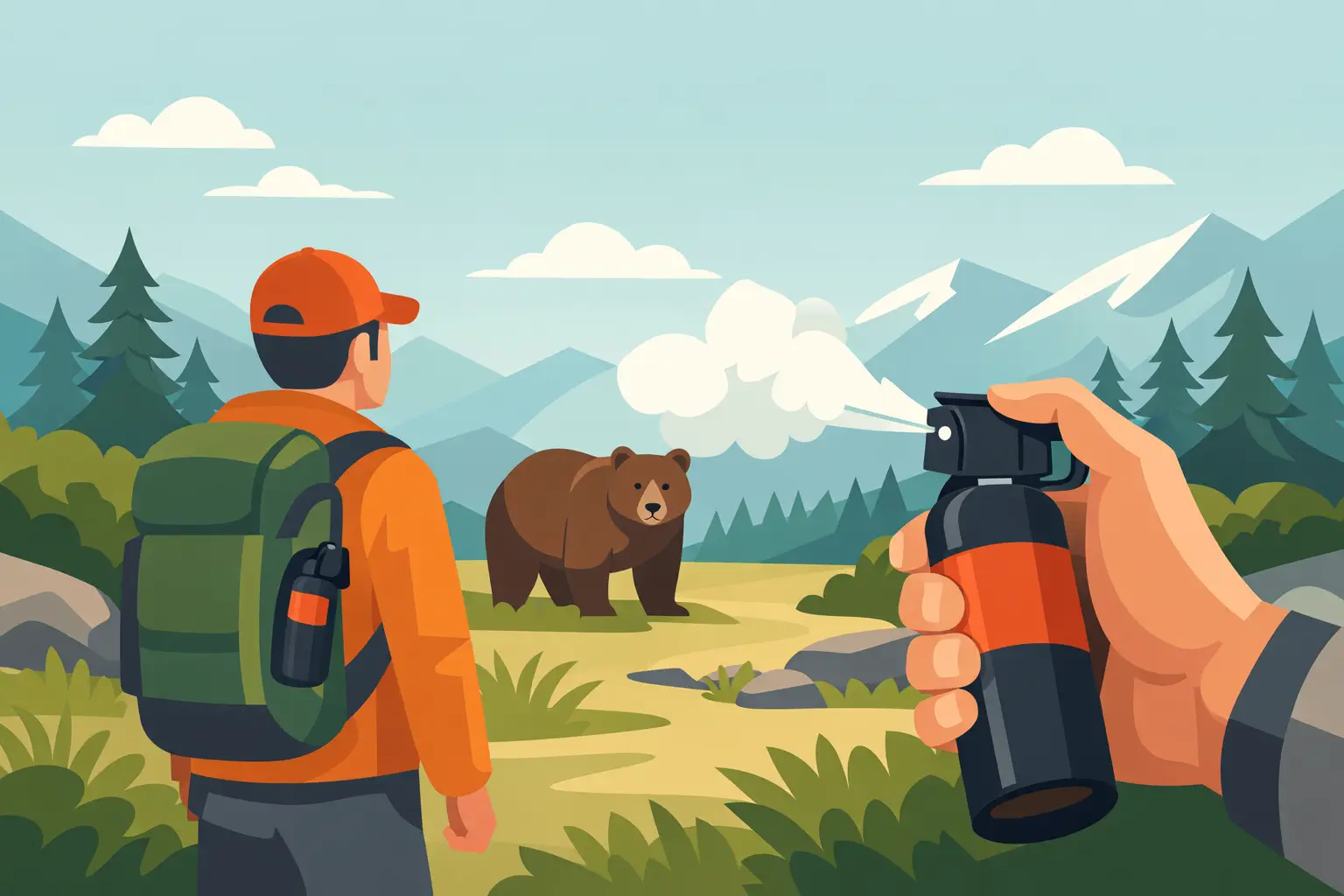
When a bear is approaching or closing distance, prepare to deploy the spray. Remove the safety clip, hold the canister firmly in front of you, and keep your finger off the trigger until you are ready. Aim slightly downward toward the bear’s face and the space directly in front of it. You are building a cloud that the bear must move through, not trying to make a perfect pinpoint hit.
Deploy in short bursts based on the instructions printed on your canister. Many bear sprays are intended to be used when the bear is within the effective range listed on the label, often at close range. Do not wait until the bear is on top of you. A controlled burst gives the cloud time to expand and gives you time to assess whether the bear changes direction.
Wind matters. If the wind is blowing toward you, lower your aim and move sideways if you safely can so you are not standing directly in the cloud. Some blowback is possible in any conditions. Do not let that fear stop you from using the spray if a bear is closing in. Temporary irritation is better than being unprepared.
After deploying, do not turn and sprint away. Continue watching the bear, back away deliberately, and leave the area when you can do so safely. If the bear retreats, give it plenty of room. Do not follow it, search for it, or assume the encounter is over because the spray was effective once.
Know What Not to Do
Bear spray works best when it is treated as a serious emergency tool. Do not spray it on tents, backpacks, campsites, or clothing as a repellent. The pepper residue can contaminate gear, affect you and others nearby, and create problems in a confined space. Do not test-fire it inside a vehicle, garage, home, or tent.
Avoid storing a canister where extreme heat can build up, such as a closed vehicle in summer. Do not leave it where children can access it. Store it according to the label, away from direct heat and physical damage.
Never approach a bear because you have spray. Bear spray gives you an added layer of protection, not permission to take unnecessary risks. Give wildlife space, keep dogs under control where permitted, and follow closures or seasonal warnings in the area you are visiting.
Practice the Decision, Not Just the Draw
The physical draw is only part of bear spray readiness. Under stress, people often freeze because they have not thought through what an encounter may look like. Before heading out, mentally rehearse a few simple decisions: Where is your spray? Which hand will draw it? What will you do if you see a bear far away? What will you do if one begins moving toward you?
This preparation helps replace panic with action. The goal is not to become fearless around bears. The goal is to stay composed enough to recognize distance, reach your deterrent, and make space for a safe retreat.
Hikers and campers should also learn the bear guidance for the specific area they plan to visit. Black bears and grizzly bears can behave differently, and local land managers may issue current recommendations based on food conditions, bear activity, and seasonal patterns. If an encounter becomes an attack, follow the guidance of the local wildlife authority when possible. There is no single response that fits every species, situation, or type of attack.
After You Use Bear Spray
Once you are safely away, notify the appropriate park staff, ranger station, property manager, or wildlife agency. Report where the encounter happened, the bear’s behavior, whether spray was deployed, and whether anyone was injured. That information can help protect the next people on the trail.
If spray gets on your skin or eyes, move to fresh air, avoid rubbing, and rinse with cool water as soon as practical. Remove contaminated clothing carefully and wash it separately. Seek medical attention for severe symptoms, breathing trouble, eye pain that does not improve, or any injury from the encounter.
A canister that has been discharged should be replaced. Do not assume a partially used canister has enough product left for another emergency. A fresh, properly stored bear spray canister is a small piece of gear that carries major value when you are deep on a trail, at a remote campsite, or working outdoors.
The best bear encounter is the one that never becomes close. Stay alert, respect wildlife, keep your bear spray accessible, and make sure your response is ready before the moment asks for it.