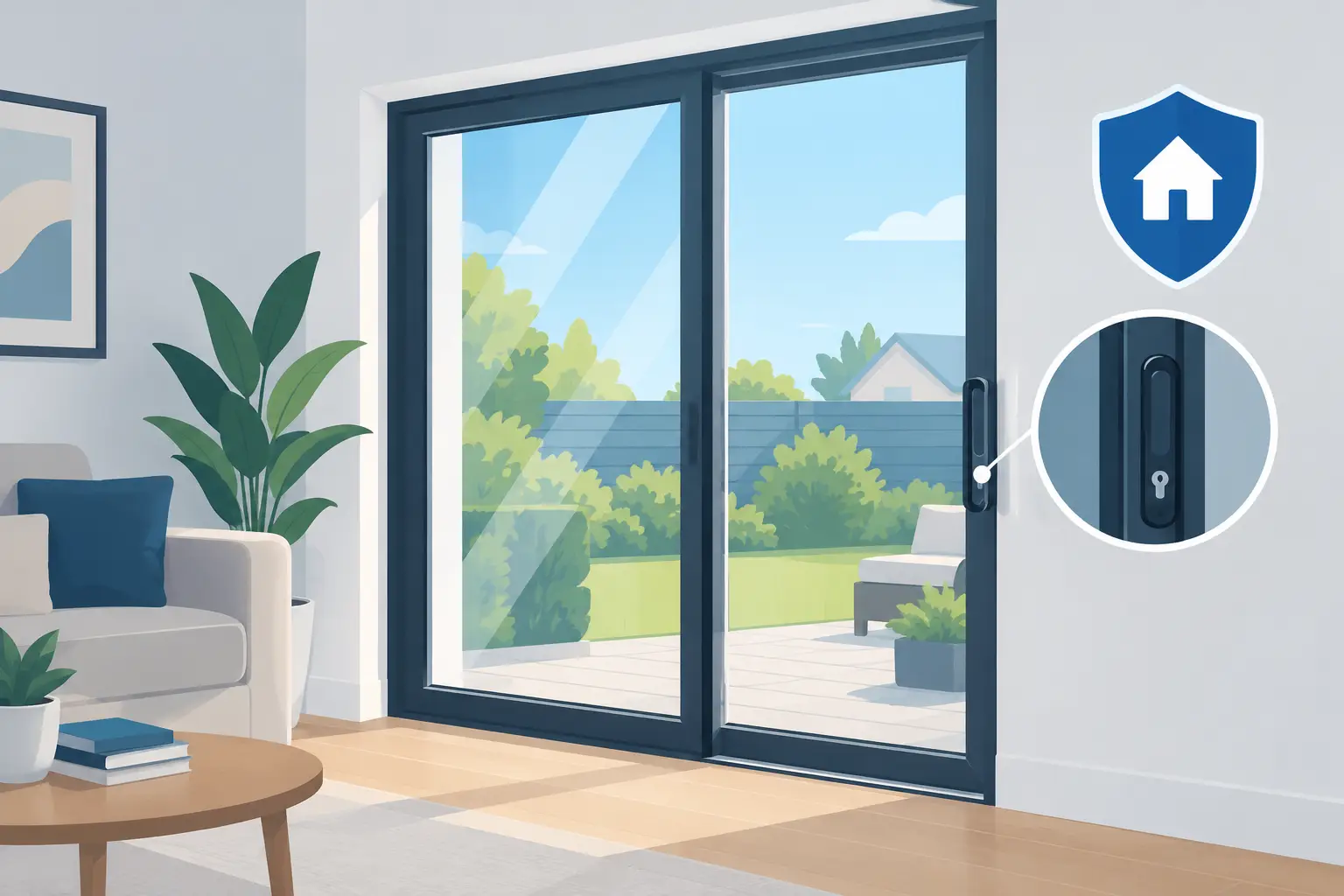
A sliding glass door should bring light into your home, not create an easy access point for an intruder. Learning how to secure sliding doors means looking beyond the factory latch. Most sliding doors can be made significantly harder to force, lift, pry, or quietly open with a few affordable upgrades and a consistent nightly routine.
The goal is not to turn your home into a fortress. It is to create enough visible resistance, noise, and delay that an intruder decides your home is not worth the risk. Start with the door itself, then add layers that alert you if someone tries to defeat it.
Why Sliding Doors Need Extra Protection
Sliding doors are popular because they offer a wide view and easy access to a patio, deck, or backyard. Their design also creates security concerns that hinged exterior doors do not always have. A standard latch may keep the door closed during normal use, but it is not necessarily designed to resist force. Older doors can have worn rollers, loose frames, or latches that no longer fully engage.
There are three common ways criminals target a sliding door: forcing it sideways, lifting it out of its track, or breaking the glass. The right security setup addresses all three. What works best depends on your door’s age, frame material, ground-floor exposure, and whether the door is used as a primary entrance.
How to Secure Sliding Doors at the Track
The quickest upgrade is a physical block in the lower track. A properly fitted security bar, adjustable door brace, or solid wood dowel prevents the door from sliding open even if the latch is defeated. It is simple, inexpensive, and immediately effective.
Measure the inside track carefully before choosing a bar or cutting a dowel. The fit should be snug enough that the door cannot move, but not so tight that it damages the frame or is difficult for household members to remove in an emergency. Place it where it rests securely against the door frame rather than against fragile trim.
A track bar is especially useful at night or when you are away. If the sliding door is your family’s daily entrance, an adjustable security bar is often more convenient than a loose piece of wood because it can be quickly set and removed. Either option provides a crucial layer of protection, but it should not be your only one.
Upgrade the Lock, Not Just the Latch
Many sliding doors have a small thumb-turn latch. If yours feels loose, fails to align cleanly, or can be jostled open, replace or reinforce it. Look for a sliding door lock designed to secure the moving panel to the fixed panel or frame. Some options mount at the top or bottom of the door, adding a second locking point beyond the original latch.
A secondary lock can make a major difference because it changes the force required to open the door. It also helps protect against a common weakness in older doors: latch hardware that no longer lines up after years of settling, weather changes, and regular use.
Do not install a lock that prevents occupants from exiting quickly during a fire or emergency. Anyone in the household who may need to use the door should know how the lock works. Security should add confidence, not create confusion when seconds matter.
Stop the Door From Being Lifted Out
Some sliding panels can be lifted high enough to clear the lower track and be removed from the frame. This is more likely when the door has loose rollers, an improperly adjusted height, or an older frame. An anti-lift device closes that gap.
One approach is to install anti-lift blocks or screws in the upper track. Positioned correctly, they limit how far the panel can rise. The door should still glide normally, but it should not have enough vertical clearance to leave the track. Because track designs vary, follow the hardware instructions closely or ask a qualified door professional to inspect the fit.
This is also a good time to check the rollers and track condition. Dirt, debris, and worn rollers do more than make a door hard to open. They can affect alignment and leave gaps that weaken the lock. Clean the track, inspect the frame for damage, and repair any door that does not sit squarely when closed.
Add an Alarm That Makes Entry Loud
Physical barriers buy time. An alarm turns that time into attention. A door or window alarm can sound when the sliding door opens or when its contact sensor is separated. These devices are easy to place and provide a strong deterrent, especially for doors that face a fenced yard, alley, or other area where activity may go unnoticed.
For a more complete setup, pair a contact alarm with a glass-break sensor or a security system that monitors the room. A contact alarm may not activate if someone breaks glass without sliding the panel, so the combination matters when glass breakage is a concern.
Choose an alarm loud enough to be heard throughout your home. Test it monthly, replace batteries as needed, and make sure everyone knows how to arm and disarm it. A security device that is never activated cannot protect you.
Make the Area Less Attractive to an Intruder
Security is not only about hardware. The space around the door affects how much privacy and time an intruder has. Trim shrubs or landscaping that creates a hiding place near the patio. Keep outdoor furniture, ladders, tools, and heavy objects away from the door when possible. They can provide cover or be used to break glass.
Motion-activated exterior lighting is a practical addition for backyards and side yards. Good lighting can expose suspicious activity before someone reaches the door. Indoors, closing blinds or curtains at night prevents strangers from seeing whether the home appears occupied or where valuable items are located.
If your sliding door is in a particularly isolated location, a visible camera or dummy camera can add another deterrent. Visible security measures are not a substitute for locks, but they send a clear message: this home is prepared and watched.
Protect the Glass Without Blocking Your View
Glass is the most vulnerable part of a sliding glass door. Security film can help hold shattered glass together after impact, making entry slower and messier. It does not make glass unbreakable, and it should not be presented as a replacement for locks or alarms. Its value is in adding delay and reducing the chance of an easy, quiet opening.
For homes with children, pets, or frequent patio traffic, consider the practical side of any glass upgrade. Some films affect appearance, and professionally installed options can cost more than basic security hardware. In many homes, a well-maintained lock, a track bar, anti-lift protection, and an alarm provide the strongest value first.
Build a Simple Sliding Door Routine
The best equipment only works when it is used. Before bed and before leaving home, confirm the primary latch is fully engaged, set the secondary lock or track bar, and arm the alarm. During the day, do not leave the door partially open or unlocked just because you are working in another room.
After a party, contractor visit, move, or repair, check the door again. These are the moments when a security bar gets set aside, a latch is left misaligned, or a door is not closed completely. Make sliding-door security part of the same habit as locking your front door and checking your windows.
A strong home security plan is built one practical layer at a time. Start with the weakness you can fix today, then add the next layer when you can. Elite Warrior Defense believes confidence begins with preparation, and a secured sliding door is one clear step toward protecting the people and property that matter most.