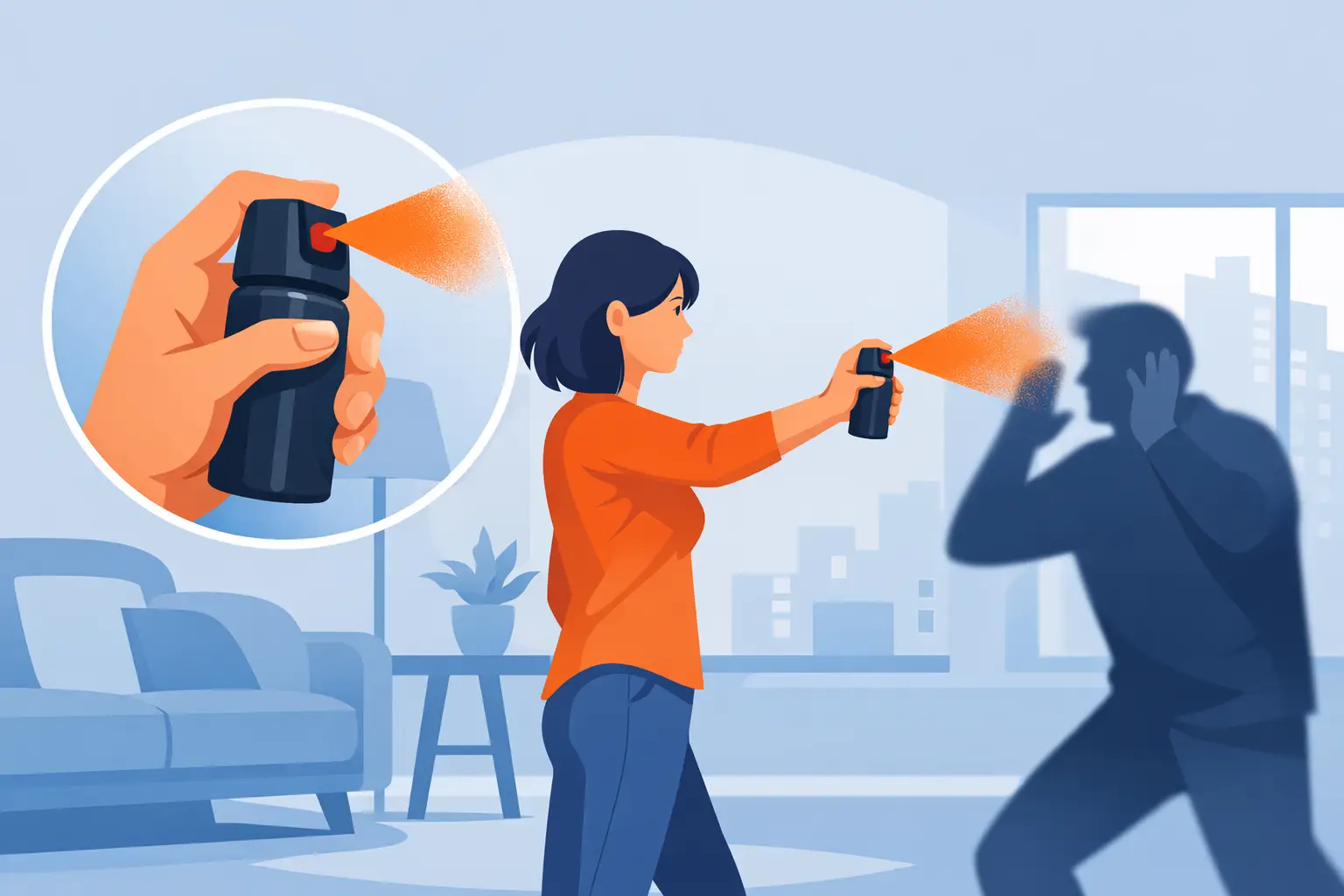
You hear pounding at your apartment door at 11:40 p.m. The dog is barking, your heart rate jumps, and you realize the pepper spray in your nightstand is still sealed in the package. That is where an apartment pepper spray example becomes useful – not as a dramatic story, but as a real test of whether your home defense plan actually works under stress.
Pepper spray can be a smart tool for apartment living because it is compact, easy to store, and generally simpler to use than many other defensive options. But apartments create a unique problem. Small rooms, shared hallways, thin walls, and limited exits change how pepper spray behaves and how fast a bad situation can turn messy. If you live in an apartment, the question is not just whether pepper spray works. It is whether you can use it without trapping yourself in the same cloud.
A realistic apartment pepper spray example
Picture a second-floor apartment with a short entry hallway, a living room, and one bedroom. A resident hears someone forcing the front door after repeated shouting outside. The resident retreats several steps back from the door, calls 911, and positions near the hallway opening instead of standing directly in front of the entrance. Pepper spray is in hand, safety off only when the threat is immediate.
The door opens. The intruder steps inside and closes distance. The resident sprays a short burst aimed at the face, then immediately moves laterally toward the bedroom side of the apartment and out of the direct path of the spray. That sequence matters. Spray, move, create distance, and escape if possible. Staying planted after deployment is where people often make a stressful situation worse.
Now the trade-off. In a tight apartment, even a successful spray can drift back toward you. If the air conditioning is running hard or a fan is pushing air down the hallway, the cloud can spread fast. If you have children, pets, or a roommate in the next room, they can also be affected. That does not make pepper spray a bad choice. It means your plan has to account for the space you actually live in, not an idealized scenario.
Why apartment layouts change pepper spray decisions
In a house, you may have more room to retreat and more ways to avoid the contaminated area. In an apartment, you may have one front door, one narrow hallway, and nowhere to go without moving through the spray zone. Hallway width, ceiling height, airflow, and furniture placement all matter more than people think.
This is why one apartment pepper spray example is never enough by itself. A studio apartment is different from a two-bedroom unit with a balcony exit. A ground-floor unit with easy outdoor access gives you more options than a top-floor unit with a single stairwell. If your only exit is through the area where you would likely deploy the spray, that is a serious planning issue.
Think through angles, not just locations. If you store pepper spray by the door, can you safely reach it if someone is already forcing entry? If you keep it by the bed, do you have enough warning time to grab it? The right answer depends on your routine, your layout, and who lives with you.
The best place to keep pepper spray in an apartment
Accessibility beats clever hiding spots. A defensive tool that takes too long to reach is not doing its job. For many apartment residents, the most practical setup is one spray near the bed and another near the main living area, especially if the front door is not visible from the bedroom.
That said, placement should balance speed with safety. If children visit often, or if you have curious pets, the spray should still be secure from accidental handling. You want it reachable for you and unreachable for everyone else. Wall-mounted quick-access storage or a consistent high shelf can work better than tossing it in a junk drawer.
You also need to know what you are grabbing. In low light, people confuse flashlights, hair products, and personal defense items more often than they admit. Practice locating the spray by touch. Know where the safety is. Know which direction the nozzle faces. Under pressure, fine motor skills drop fast.
Spray pattern matters more in small spaces
Not all pepper spray behaves the same way. In an apartment, that difference matters. Fog and cone patterns spread wider, which may increase the chance of affecting the attacker, but they also raise your risk of cross-contamination in a confined room. Stream patterns are often easier to direct and may reduce airborne spread, making them a better fit for indoor use in many apartment settings.
Gel is another option some people consider because it is less likely to atomize into the air. That can be helpful in tight spaces, but it also demands more precise aim. If your stress response causes shaky hands or rushed movement, that trade-off matters. There is no perfect choice for every person. The best option is the one you can deploy confidently in the space you live in.
For apartment dwellers, it usually makes sense to favor control over maximum spread. A precise stream can be the smarter indoor choice when you are trying to stop a threat without filling your own apartment with irritant.
What people get wrong about using pepper spray at home
The biggest mistake is thinking possession equals preparedness. Buying pepper spray is step one. Knowing how it behaves in your apartment is what turns it into a practical layer of defense.
Another mistake is assuming you will have time to read the canister in an emergency. You will not. You should already know the firing mechanism, the estimated range, and how long it sprays. A short burst is not the same as emptying the can. In a tight apartment, controlled use matters.
People also underestimate movement after deployment. Once you spray, do not stand in place to see if it worked. Your next action should be immediate – create distance, move to a safer position, and get out if you can. If escape is not possible, move to a space that gives you a barrier or better visibility.
Building a smarter apartment defense plan
Pepper spray works best as part of a layered approach. Door alarms, better locks where permitted, brighter entry lighting, and a charged phone within reach all strengthen your response time. Even something as simple as keeping your keys, flashlight, and spray in the same consistent place can cut hesitation when seconds matter.
Walk through your apartment with fresh eyes. Where would you move if someone came through the door? Where is the safest place to stand if you need to issue a warning? Which path leads away from the likely spray area? That kind of planning is not paranoia. It is preparation.
If you live with a spouse, roommate, or older teen, everyone should know the basic plan. Confusion inside a small apartment creates danger fast. If one person deploys pepper spray while another runs into the same hallway, you now have a second problem to solve.
Legal and practical realities to remember
Pepper spray laws vary by state and sometimes by local rules, so apartment residents should confirm what is allowed where they live. It is also wise to check lease terms if your building has unusual restrictions related to defensive items. Being proactive protects you twice – physically and legally.
Practical reality matters too. If you have respiratory issues, or someone in your household does, indoor pepper spray use carries added risk. The same goes for very small apartments with poor ventilation. In those cases, product selection and placement deserve even more thought. Elite Warrior Defense serves customers who want practical protection, and practicality starts with honest assessment, not false confidence.
Confidence comes from rehearsal, not guesswork
A good apartment pepper spray example does not end with the spray firing. It ends with the resident having already thought through placement, movement, communication, and escape. That is what gives the tool real value.
You do not need a complicated security system to be better prepared tonight. You need a realistic plan, a tool you can access fast, and the discipline to think through your own layout before a threat forces the issue. The strongest home defense decisions are usually the simplest ones – made ahead of time, practiced enough to feel natural, and built around protecting yourself without creating new problems in the space you call home.