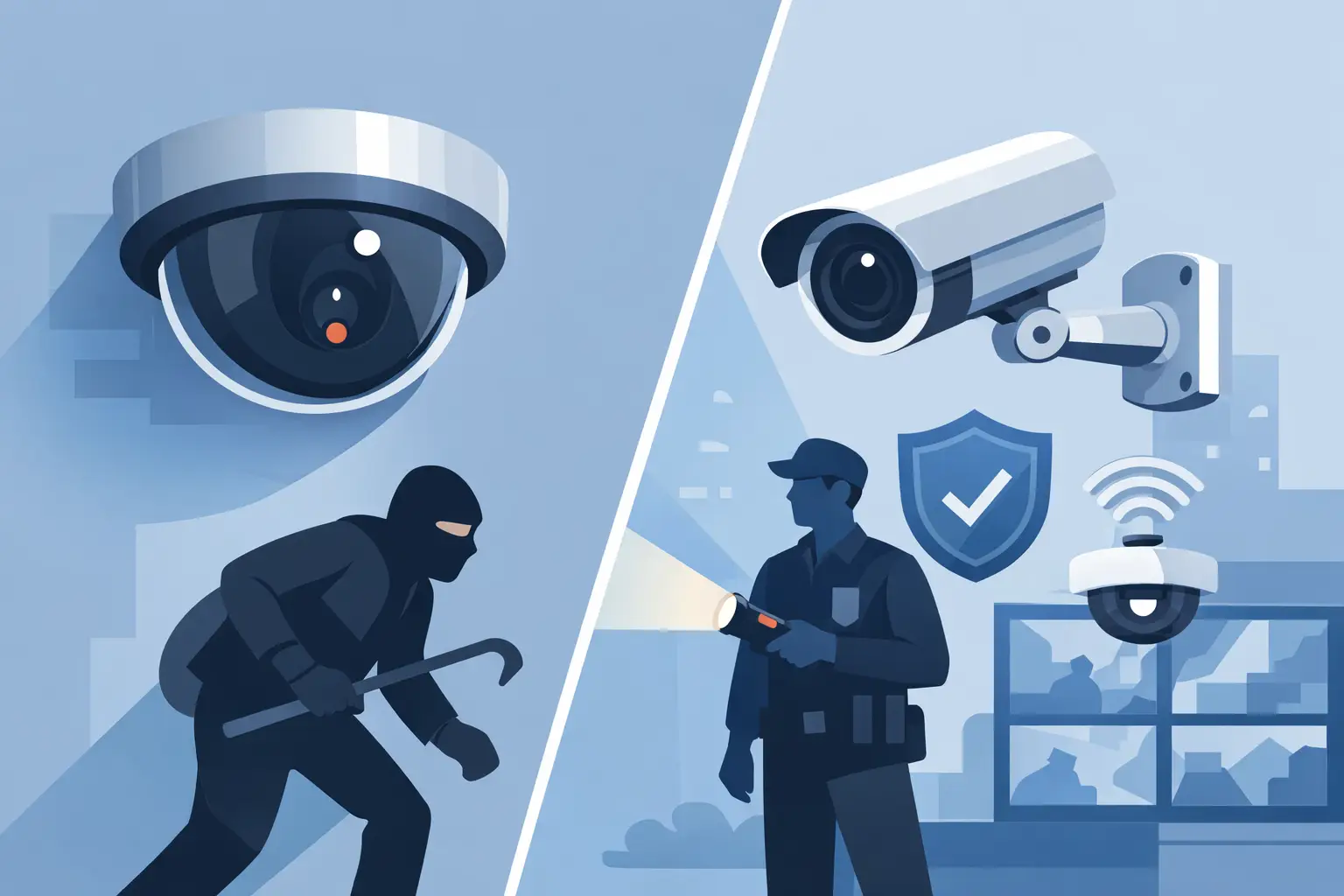
A thief walking up to a front door is making quick calculations: Can I get in easily? Can anyone see me? Will I get caught? Do dummy cameras prevent theft? Sometimes, because a visible camera can add doubt to that calculation. But a fake camera is only a deterrent, not evidence, not an alert system, and not a substitute for securing the weak points of your home.
For homeowners, renters, and small-business owners who want practical protection without overspending, dummy cameras can play a useful role. The key is knowing exactly what they can do, where they fall short, and how to use them as part of a stronger security plan.
Do Dummy Cameras Prevent Theft in Real Life?
Dummy cameras can discourage opportunistic theft. An opportunistic thief is looking for the fastest, lowest-risk target: an unattended package, an unlocked vehicle, an open garage, or a side door hidden from the street. A realistic-looking camera may make that person choose another target rather than risk being identified.
That deterrent effect is strongest when the camera is visible, believable, and positioned where someone would reasonably expect surveillance. A camera above a front entrance, garage, driveway, or rear access point sends a simple message: this property may be watched.
But a dummy camera does not stop a determined intruder. Someone who has targeted a specific home, knows the property is empty, or has experience spotting security equipment may not be persuaded. Worse, if a theft does happen, a fake camera provides no video for police, insurance claims, or identifying the person responsible.
Think of a dummy camera as a warning sign on a fence. It can make someone hesitate. It cannot physically keep them out.
Why Visible Deterrence Can Work
Most property crime is not a movie-style break-in planned weeks in advance. Many incidents are crimes of opportunity. The person sees an easy opening and acts before anyone notices.
Visible security measures create uncertainty. A thief does not need proof that a camera is real to worry that it might be. If they believe they could be recorded, recognized, or caught later, the perceived risk goes up. That extra risk may be enough to make them leave.
A dummy camera can also make a property appear cared for. Combined with good lighting, trimmed landscaping, locked gates, and visible door or window alarms, it signals that the owner pays attention. Criminals generally prefer places where they can move unnoticed and leave quickly.
The benefit is not just the device itself. It is the overall impression of awareness and preparedness.
Where Fake Cameras Fall Short
The biggest limitation is simple: dummy cameras do not record anything. If your vehicle is damaged, a package is stolen, or someone attempts to force entry, you will not have footage to review or share.
They also do not send motion alerts. A real camera can let you know someone is approaching your porch, checking a side gate, or lingering near a parked car. That early warning can give you time to turn on lights, call a neighbor, contact law enforcement, or avoid walking into a potentially dangerous situation.
Experienced offenders may notice clues that a camera is fake. Poor placement, a cheap plastic appearance, an unrealistic blinking light, visible dummy wiring, or a camera aimed at an angle that makes no sense can undermine the deterrent. A fake camera mounted too high to maintain, pointing at a blank wall, or placed where no real homeowner would need coverage can look more decorative than protective.
There is another consideration: a dummy camera can create false confidence. If it leads you to skip locking doors, leave valuables visible, or ignore a broken latch, it is working against your safety. Security is strongest when every layer supports the next one.
How to Use Dummy Cameras More Effectively
If a dummy camera fits your budget and security needs, treat placement as seriously as you would with a real unit. Put it where a person approaching the property will see it before they reach the easiest entry point. Front doors, garage approaches, driveway entrances, back gates, and side-yard paths are common choices.
Choose a realistic design and mount it securely. It should be aimed toward a logical coverage area, such as a door, walkway, or vehicle space. Avoid placing it where it could reasonably be seen as monitoring a neighbor’s private space. Even a non-recording camera should be installed with respect for privacy and local rules.
Do not rely on a blinking red light alone to make a camera look real. Many modern security cameras do not have one, and an exaggerated light can have the opposite effect. A simple, believable installation is usually more convincing.
Dummy cameras are also more useful when paired with other visible measures. A thief seeing a camera, motion-activated lighting, alarm decals, and a reinforced door has more reasons to move along. None of those layers guarantees safety on its own. Together, they increase effort, visibility, and risk for anyone considering a crime.
Build Layers That Protect More Than Appearances
A smart home-security setup starts with the basics. Lock exterior doors and windows every time, including when you are home. Reinforce door frames and strike plates, especially on exterior and garage-entry doors. Keep spare keys out of obvious hiding spots, and do not leave valuables in plain view through windows or inside vehicles.
Then add practical deterrence and detection. Motion-sensor lights can remove the cover darkness provides. Window and door alarms can make a forced entry loud and immediate. A real hidden or visible camera can provide alerts and evidence. Diversion safes can help keep small valuables less obvious inside the home, although they should not replace secure storage for high-value items.
For personal safety, the same layered mindset applies. Awareness, a charged phone, good exterior lighting, and legal self-defense tools suited to your comfort level can all contribute to readiness. Elite Warrior Defense focuses on accessible tools that help people take those practical steps without making security feel complicated or out of reach.
Your situation should guide your choices. A renter may need removable alarms and portable cameras. A homeowner may benefit from permanent lighting and reinforced hardware. Someone in a quiet neighborhood may mainly want package-theft deterrence, while a person with repeated suspicious activity may need recording, alerts, and a plan for contacting law enforcement.
When a Real Camera Is the Better Choice
A dummy camera is best used when your goal is low-cost visible deterrence. A real camera is the better choice when you need accountability.
Choose recording capability if you have had package theft, vehicle break-ins, vandalism, trespassing, or repeated attempts to access your property. Footage can help establish what happened, when it happened, and who may have been involved. It can also help you spot patterns, such as someone checking doors at the same time each week.
Real cameras are especially valuable at entry points, driveways, and areas where deliveries are left. If budget is limited, one well-placed real camera covering the most likely access point can be more valuable than several fake cameras scattered around the property.
A balanced approach can make sense. Use a real camera where evidence and alerts matter most, then use visible deterrents, lighting, alarms, and possibly dummy cameras to make the rest of the property look less inviting. Just make sure the system is honest with yourself: only real devices can tell you what actually happened.
The Bottom Line on Dummy Cameras and Theft
Dummy cameras may prevent some theft by making an easy target look uncertain and risky. They are affordable, simple to install, and useful for creating visible deterrence around common access points. But they cannot record crime, notify you of suspicious activity, or replace locks, lighting, alarms, and real surveillance where evidence matters.
The strongest move is not hoping one product will handle every threat. Make your home harder to enter, harder to approach unseen, and harder to target without consequences. Even small, deliberate upgrades can give you more control over the safety of the people and property you work hard to protect.