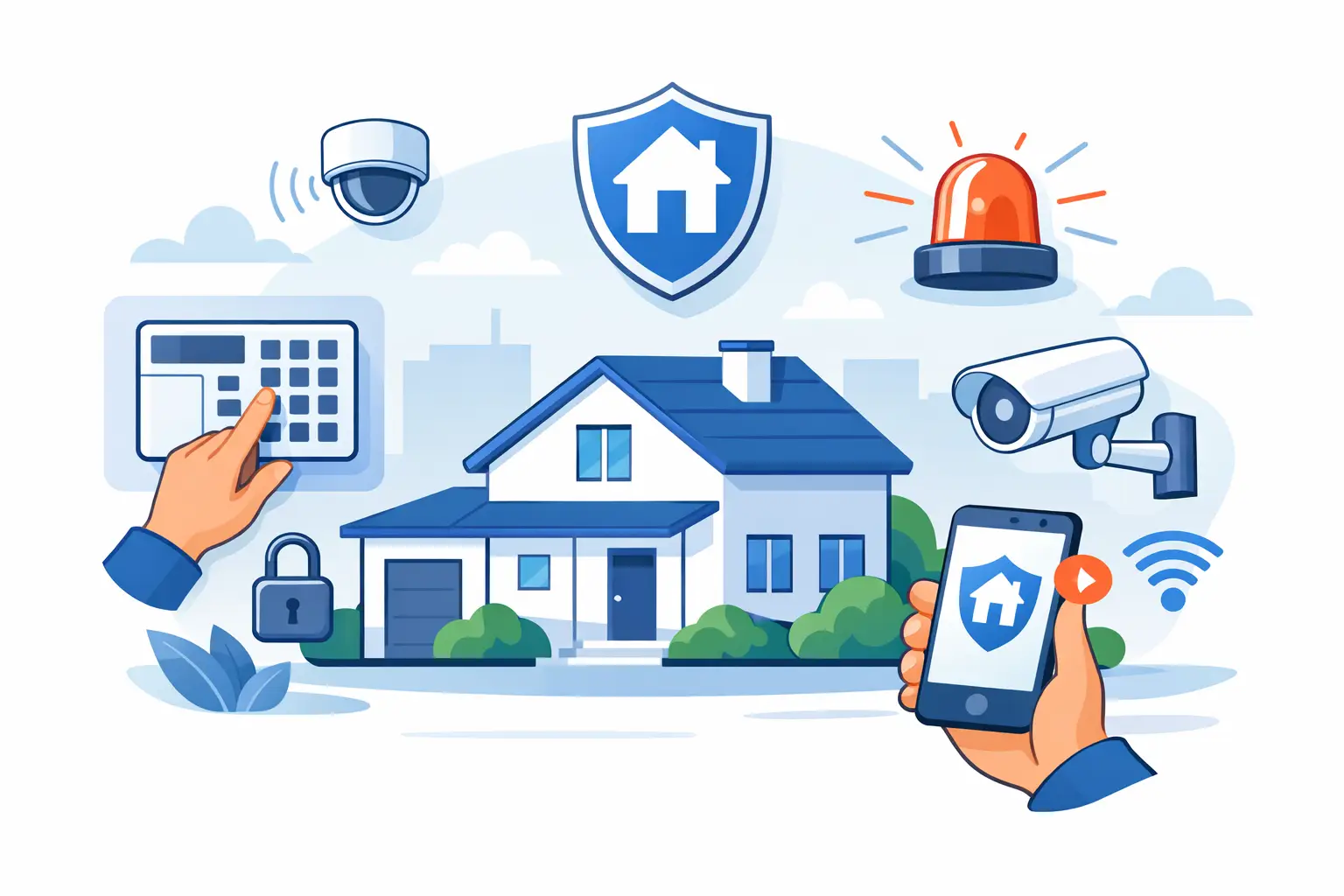
A front door left unsecured for a few minutes, a basement window hidden from the street, or a garage door that does not fully close can create an opportunity. Home alarm basics for beginners start with recognizing those everyday weak points and building a system that alerts you quickly when something is wrong. The goal is not to turn your home into a fortress. It is to create enough warning, visibility, and deterrence that you can act with confidence.
What a Home Alarm Is Designed to Do
A home alarm does three jobs: it discourages unwanted entry, detects a possible break-in, and alerts you or others to respond. A visible camera or window alarm may persuade someone to move on before they try a door. If they continue, a contact sensor, motion detector, or glass-break sensor can trigger a loud siren or send an alert to your phone.
An alarm does not physically stop every intruder, and no security product can promise that result. What it can do is reduce the time an intruder can act unnoticed. That time advantage matters. A loud alarm can draw attention, disrupt an attempted entry, and give you a chance to move to safety and contact emergency services.
Think of an alarm as one layer in a practical home-security plan. Good locks, exterior lighting, locked windows, trimmed landscaping, cameras, and alert neighbors all work better together than any one item works alone.
The Home Alarm Basics for Beginners: Know the Parts
You do not need a complicated control room to protect a home. Most starter setups use a few straightforward components chosen for the risks around the property.
Door and window contact sensors
These small two-piece sensors are among the simplest and most useful alarm devices. One piece attaches to the frame and the other to the door or window. When the two separate while the system is armed, the alarm sounds or an alert is sent.
Start with the most likely entry points: exterior doors, sliding glass doors, accessible first-floor windows, and any door connecting an attached garage to the home. A contact sensor is especially helpful for doors that family members sometimes forget to secure.
Motion sensors
Motion sensors monitor movement inside a room or hallway. They are valuable for covering an area where several entry paths meet, such as a main living room, downstairs hallway, or garage.
Placement matters more than buying the most sensors. Mount a motion sensor where it can see across the expected path of movement, not directly at a heater, air vent, sunny window, or moving curtain. If you have pets, choose pet-aware settings when available and test the coverage before relying on it. A detector that frequently reacts to a dog or cat quickly becomes a detector people ignore.
Sirens and personal alerts
A siren is the part that makes an alarm impossible to overlook. It may be built into a keypad, a standalone unit, or a compact door and window alarm. Loud sound creates urgency and can attract attention from people nearby.
Some systems also send app notifications or text alerts. Those notifications are useful when you are at work, traveling, or asleep in another part of the house, but do not treat them as a replacement for a siren. Phone alerts can be missed, delayed, or affected by battery and signal issues.
Cameras and visible deterrents
Cameras can help you check activity around entry points and document what happened. Place them where they can cover approaches to doors, driveways, porches, and side gates. A camera aimed only at the middle of a yard may show movement without capturing useful detail.
Dummy cameras can add a visible deterrent at a lower cost, but they do not record evidence or send alerts. Use them as an extra layer, not your only layer. Hidden cameras may be useful in appropriate areas of your own home, but privacy matters. Never place cameras in bathrooms, guest sleeping areas, or any location where someone has a reasonable expectation of privacy.
Choose the Right Type of Alarm Setup
The right system depends on your home, budget, and how much hands-on control you want. A basic DIY setup with individual door, window, and motion alarms is affordable, quick to install, and easy for renters to take along when they move. It is a strong starting point for a small apartment, dorm, or first home.
A connected smart alarm can combine sensors, cameras, a keypad, and phone notifications. This option offers more visibility and flexibility, but it requires reliable Wi-Fi, charged devices, and attention to account security. Change default passwords, use a unique password for the app, and turn on two-factor authentication if it is offered.
Professionally monitored systems may contact a monitoring center when an alarm triggers. That can provide added reassurance, particularly if you travel often or cannot always answer your phone. The trade-off is monthly cost and, sometimes, contracts or equipment restrictions. Before committing, ask what happens during a power outage, whether cellular backup is included, and how false alarms are handled.
For many households, the best first step is not the biggest package. It is securing the most vulnerable doors and windows, adding a clear audible alarm, and expanding only after you understand how your home is used.
Put Sensors Where They Make a Difference
Walk around your property as if you were arriving home after dark. Which doors are hidden from the street? Which windows are easy to reach from a porch, fence, or air-conditioning unit? Which entrance does your family use most often? That walk-through will tell you more than guessing based on the number of rooms.
Protect the main entry door and back door first. Then prioritize sliding doors, garage access doors, and ground-level windows that are concealed by fencing, shrubs, or a backyard. If a window is rarely opened, a simple alarm can be an excellent low-maintenance safeguard. If it is opened often, choose a sensor that is easy to arm and disarm so it does not become a daily frustration.
Place a motion sensor in a central path after you have covered the entry points. This creates a second alert if someone enters through an unprotected opening. Avoid placing every device in one room. Security works best when it covers both access points and interior movement.
Build Habits Around the Alarm
An alarm only helps when it is armed, maintained, and understood by everyone in the household. Create a simple routine: lock doors and windows, arm the system, and confirm the status before bed or before leaving. Keep instructions easy enough that a teenager, houseguest, or trusted neighbor can follow them without confusion.
Test each sensor and siren when you install it, then test again on a regular schedule. Replace batteries before they fail, not after. If a sensor begins sending weak-battery alerts, reacting inconsistently, or falling off its mounting surface, fix it promptly. A system with repeated false alarms is more than annoying. It trains people to dismiss a real alert.
Decide in advance what your household will do if the alarm sounds. Move to a safe location, account for family members, call 911 when there is an immediate threat, and avoid searching the house yourself. Your priority is safety, not confronting an intruder or protecting property.
A Strong Starter Plan
If you are setting up home security for the first time, focus on a clear, affordable foundation:
- Add contact alarms to your main exterior doors and the most accessible windows.
- Use a motion sensor to cover a central hallway, living area, or garage.
- Add a loud siren and make sure everyone knows what it sounds like.
- Improve exterior visibility with lighting and keep shrubs from hiding entry points.
- Test the system, replace batteries, and practice the response plan with your household.
Elite Warrior Defense offers practical options such as door and window alarms, cameras, safety lights, and other security tools that can help you build those layers without overcomplicating the process.
Security is not about living in fear. It is about removing easy opportunities and knowing your home can alert you when something needs your attention. Start with the entry point that concerns you most, install one reliable layer, and build from there.