
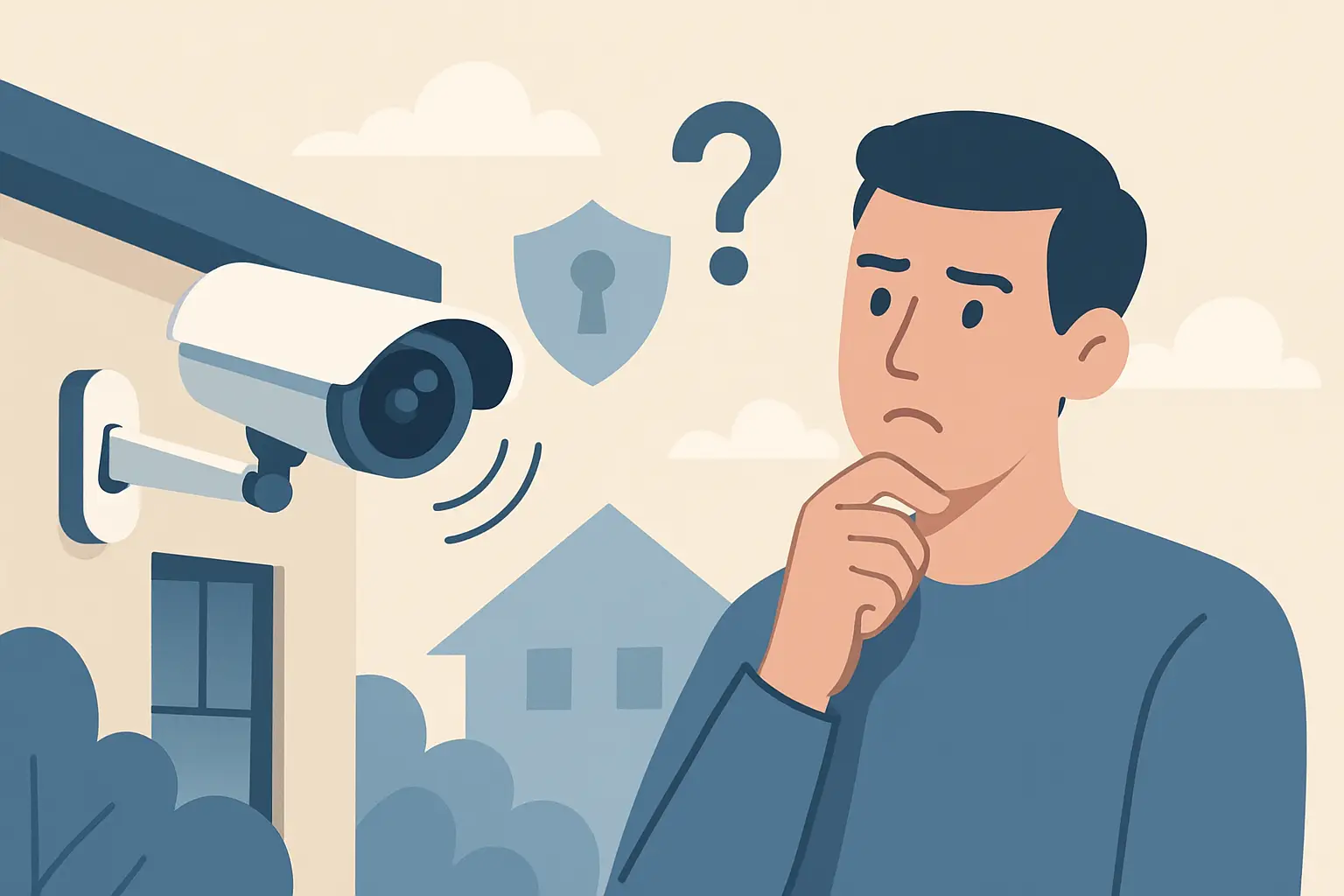
A porch pirate isn’t looking for a fair fight. They’re looking for the easiest win on the block. That’s why a simple, visible signal – like a camera pointed at the front door – can change their math fast. The question is whether dummy cameras for home security actually shift that risk, or whether they just make homeowners feel better.
Used the right way, dummy cameras can be a smart, low-cost layer of deterrence. Used the wrong way, they can backfire – either because the “camera” is obviously fake, or because it creates a false sense of coverage where you needed real evidence.
Most property crime is opportunistic. Someone is testing doors, scanning porches, or circling a parking area looking for the lowest friction target. A visible camera, real or not, introduces uncertainty. That uncertainty is often enough to push a casual offender to the next house.
Dummy cameras are not about catching someone. They’re about sending a message: “This home is paying attention.” When you pair that message with a few other cues – motion lights, window/door alarms, clear house numbers, trimmed hedges – you create the impression of a prepared homeowner. That’s not the place most criminals want to spend time.
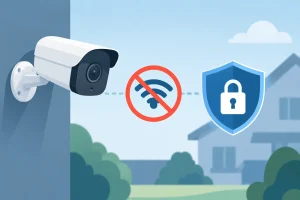
There’s also a practical advantage: coverage. People like the idea of cameras, but not everyone wants to run power, connect Wi‑Fi, manage apps, or spend hundreds of dollars per entry point. Dummy units let you cover obvious choke points quickly.
Deterrence has limits. A dummy camera doesn’t record, doesn’t alert you, and doesn’t help police identify anyone. If your main goal is evidence after an incident, a fake camera can’t deliver.
They also fail against anyone who’s prepared or experienced. Some offenders recognize common dummy designs, look for telltale signs (no wiring, a blinking LED that looks unrealistic, a camera pointed in an odd direction), or simply don’t care. If someone is determined to break in – or if you’re dealing with repeated targeting – relying on a fake camera alone is a gamble.
The biggest risk is psychological: you may relax other habits because you feel “covered.” If a dummy camera makes you less consistent about locking doors, securing sliding glass doors, or using outdoor lighting, it’s doing harm, not good.
Dummy cameras tend to make the most sense in three situations.
First, when you want visible deterrence immediately. If you’ve had a package stolen or a neighbor was hit recently, quick action matters. A realistic dummy camera, installed correctly, can change how your house looks overnight.
Second, when you’re filling gaps that would be expensive to cover with real cameras. Think side yards, detached garages, back gates, or long driveways. You may only need one or two real cameras for evidence while adding dummy units to suggest broader coverage.
Third, when you’re building a layered system on a budget. Security works best in layers: deterrence (seen), delay (locks and barriers), detection (alarms), and response (you and your plan). Dummy cameras live in the deterrence layer, and they can do their job without draining your wallet.
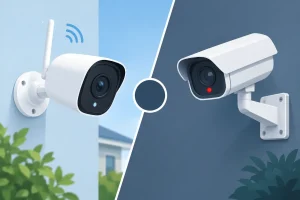
A fake camera only helps if it looks believable at a glance. You don’t need Hollywood props, but you do need realism.
Look for a housing style that matches what people commonly see in your area. In many neighborhoods, that’s a simple bullet-style camera under an eave or a dome camera mounted near an entry. Oversized “security camera” designs with loud labels can look suspiciously fake.
A blinking LED can help or hurt. Some people like it because it screams “camera.” The problem is many real modern cameras don’t blink constantly, and experienced offenders know that. If your dummy has a light, it’s better when it’s subtle and not pulsing like a bicycle taillight.
Power cues matter. A short length of cable running into the soffit or along trim can increase believability, even if the unit is battery powered. Just don’t create a tripping hazard or violate building rules in a rental.
Weather resistance matters too. A faded, cracked plastic “camera” in two months does the opposite of deterrence – it signals neglect.
Most dummy cameras fail because they’re installed like decorations, not like surveillance.
Place them where a real camera would be placed: 8 to 10 feet high, angled to capture faces at entry points, not aimed at the sky or down at the doormat. If it looks like it couldn’t possibly record anything useful, people will assume it’s fake.
Front door and driveway coverage usually gives you the biggest deterrent effect because that’s where strangers approach. Mount one near the main entry and another covering the path someone would take to reach windows or side gates.
Avoid “too perfect” symmetry. Two identical cameras mounted in matching positions can look staged. A more natural setup is one near the front door, one near the garage, and one toward a side access point.
Also be careful with lighting. If the camera is tucked into a dark corner where it can’t see anything at night, it won’t look credible. Pairing it with a motion light makes the whole setup more convincing and more effective.
Dummy cameras are strongest when they’re not alone.
Motion-activated lighting is one of the simplest upgrades you can make. It exposes anyone approaching and makes your property feel “awake.” That alone deters a lot of nonsense.
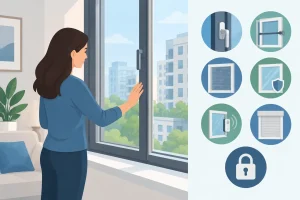
Door and window alarms add the detection you’re missing with a fake camera. If a door opens, you want noise immediately. Noise creates urgency, and urgency makes intruders leave.
Physical reinforcement matters. Solid deadbolts, longer strike plate screws, and secure sliding door bars are boring upgrades, but they buy you time. Time is safety.
If you want a balanced, budget-friendly approach, consider using one real camera where you most need identification (usually the front entry) and dummy units elsewhere. That way you get evidence where it counts and deterrence across the rest of the property.
The fastest way to waste money on dummy cameras is making them easy to dismiss.
Don’t mount them indoors facing outward through glass. Glare and reflections make even real cameras look questionable, and most people know it’s not ideal.
Don’t install them at a weird height, like six feet on a fence post, unless that’s truly the only option. It reads as amateur and invites a closer look.
Don’t rely on signage alone. A “smile, you’re on camera” sign without credible placement can become background noise. If you use a sign, make sure the camera placement supports it.
And don’t use them to cover serious risk. If you’ve had attempted break-ins, stalking concerns, domestic issues, or anything that feels targeted, skip the guesswork. You want real detection, real alerts, and real footage.
In the US, placing dummy cameras on your own property is generally allowed, but you still need to respect privacy. Don’t point anything – real or dummy – into a neighbor’s windows or private areas. Beyond legal concerns, it creates tension, and tension is the enemy of community safety.
If you live in an HOA or rent, check the rules about exterior fixtures. Some places restrict mounting hardware on siding or require approval for devices visible from the street.
Good: Dummy cameras plus motion lighting and consistent locking habits. This is a strong deterrence starter for most low-to-moderate risk homes.
Better: Add door/window alarms so an entry attempt creates instant noise and urgency.
Best: One real camera at the primary entry for footage and alerts, backed by dummy cameras to suggest wider coverage.
If you want a one-stop place to build that kind of layered setup affordably, Veteran Owned Elite Warrior Defense carries dummy cameras and other practical home security essentials that fit real-life budgets.
If you’re on the fence, use this simple test: ask yourself what you’d want the morning after an incident. If your answer is “a clear face, a license plate, and an alert that woke me up,” dummy cameras won’t satisfy you.
Upgrade if your packages are repeatedly stolen, if you have blind spots that are easy to access, if you travel often, or if someone has already tested your doors or windows. Those patterns signal that deterrence alone may not be enough.
On the other hand, if your goal is to discourage casual trouble and make your home look more prepared than the one next door, dummy cameras can absolutely play a role.
Security isn’t about buying one perfect product. It’s about making your home a hard target and making yourself a confident one. Start with the layers you can do today, place them like you mean it, and keep building until you’re the house that says “not worth it.”



YOU’RE IN!
Use this code on every order
🎉
Here’s Your Code!
Use it now an on every future order.
YOUR DISCOUNT CODE
We also sent this code to your email for safekeeping.
EXCLUSIVE OFFER
Every order – not just your first!
Unlock Your Discount Instantly
Enter your email below and your personal 15% discount code appears right here – no need to check your inbox.
🔒 We respect your privacy. Unsubscribe anytime.