
College campuses present unique safety challenges that require specific preparation and awareness. Female students face particular risks that demand targeted self-defense strategies.
We at Elite Warrior Defense LLC understand that effective self defense for college girls combines physical techniques, mental preparedness, and smart prevention tactics. This guide provides practical tools to help you stay safe and confident throughout your college experience.
College campuses contain predictable danger zones that smart students learn to identify quickly. Parking garages show the highest crime rates on most campuses, with campus crime increasing by 22% between 2021 and 2022. Isolated study areas, empty dormitory hallways after 10 PM, and secluded paths between buildings create perfect conditions for attacks. The Association of American Universities found that 25.9% of undergraduate women experience nonconsensual sexual contact during college, with most incidents happening in familiar campus locations students consider safe.
Most students ignore the powerful safety tools their campus provides. Emergency blue light phones connect directly to campus police within 15 seconds, yet studies show only 12% of students know their locations. Campus escort services operate 24/7 at 89% of universities, but usage remains below 5% because students don’t request them.

Download your campus safety app immediately – these systems can alert security to your exact location and send help faster than calling 911. Campus police respond 3x faster than city police because they patrol smaller areas and know every building layout.
Your gut feeling beats politeness every time. Women often ignore warning signs to avoid appearing rude, but attackers count on this social conditioning. If someone makes you uncomfortable, exit immediately without explanation or apology.

The Department of Justice reports that 80% of assault victims felt something was wrong before the attack occurred. Walk confidently with your head up and phone ready – attackers target distracted, vulnerable-looking victims. Make eye contact with people around you and trust any situation that feels off (even if you can’t explain why).
Develop specific habits that keep you alert without creating paranoia. Check behind you every 30 seconds when walking alone at night. Notice who enters and exits buildings with you. Keep one earbud out when listening to music outdoors. These simple practices become automatic with repetition and dramatically reduce your vulnerability. Security experts recommend the “baseline method” – learn what normal looks like in your regular campus areas, then notice anything that breaks that pattern.
Now that you understand how to spot danger and use campus resources effectively, the next step involves equipping yourself with the right tools and techniques for personal protection.
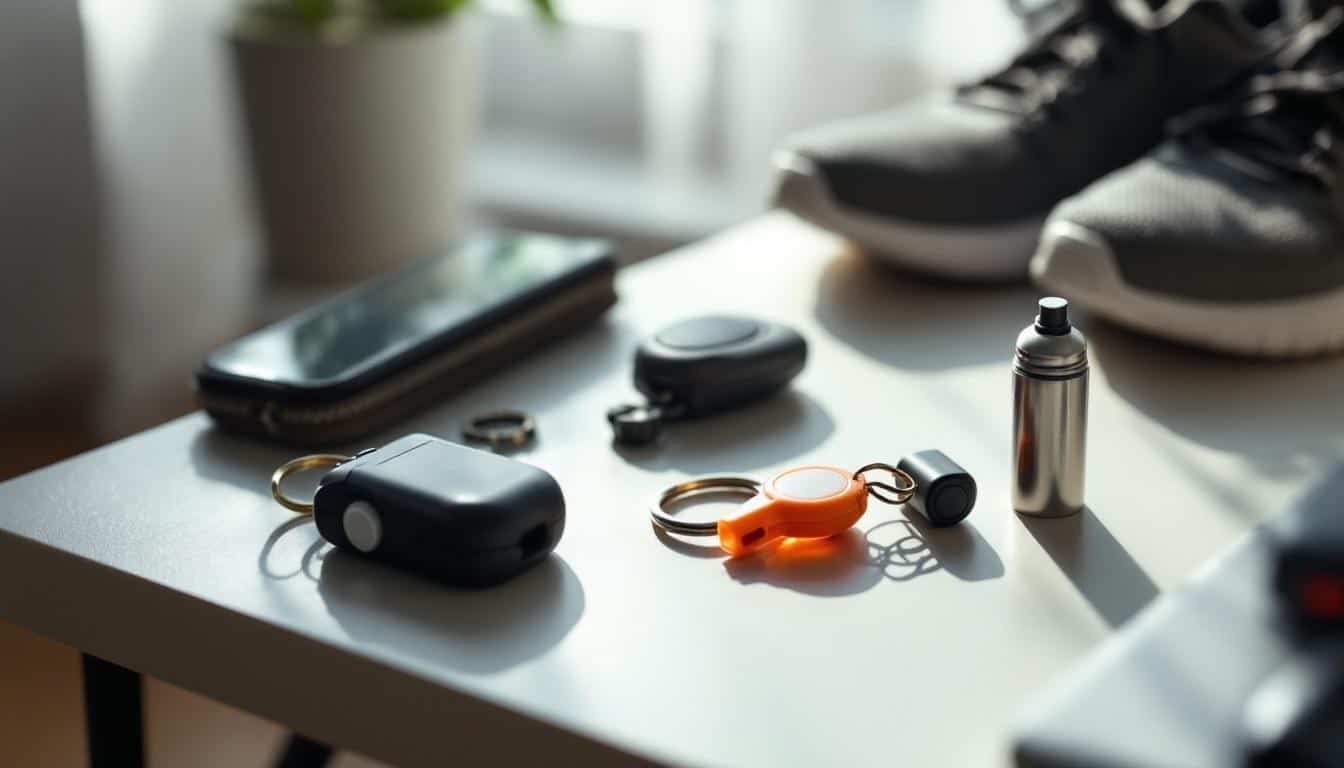
Campus weapon policies eliminate most traditional self-defense tools, but several effective options remain completely legal. Tactical pens function as normal writing instruments while they provide serious defensive capability – the TSA allows them on planes, and universities cannot ban writing tools. Personal alarms produce 130-decibel sounds that disorient attackers and alert others within 300 feet. Personal alarms effectively deter attackers because they flee immediately when attention focuses on them. Pepper gel offers superior accuracy compared to traditional spray, with a 12-foot range and minimal wind blowback that makes it safer for indoor use.
Forget complex martial arts moves that require years of practice. Three simple techniques stop most attacks and require minimal training. Palm strikes to the nose use the heel of your hand to generate more power than punches and break the attacker’s grip instantly.

Knee strikes to the groin work from any position and create immediate incapacitation – try upward motion with maximum force. Research shows that women who fought back experience better outcomes compared to passive victims. Practice these moves for 10 minutes weekly until they become automatic reflexes.
Social media posts reveal your location patterns to potential stalkers and attackers. Turn off location services for Instagram, Snapchat, and Facebook – these apps broadcast your exact whereabouts in real-time. Never post photos immediately from campus locations (especially when alone or late at night). Check-ins at libraries, gyms, and coffee shops create predictable schedules that dangerous people exploit. Privacy settings that limit profile visibility to confirmed friends only protect your information better. Campus security continues to track increasing numbers of safety incidents, with social media posts as a primary intelligence source for perpetrators.
Personal safety devices work best when you can access them quickly under stress. Keychain alarms attach to your keys and activate with a simple pull motion (no fumbling with buttons required). Smartphone emergency features like SOS mode contact authorities and share your location automatically. Most phones allow you to program emergency contacts that receive alerts when you activate panic mode. These tools bridge the gap between recognizing danger and getting help, but they require practice to use effectively under pressure.
Physical tools and digital safety form just one part of comprehensive protection – mental preparation and confidence often determine whether these techniques work when you need them most.
Confident body language prevents potential attacks before they begin according to security research. Stand tall with shoulders back and maintain direct eye contact – predators avoid targets who project strength. Practice saying NO in a firm, loud voice without explanation or apology. Women often add unnecessary words like sorry or maybe, which signals weakness to potential attackers. The phrase “I said no” should become automatic in uncomfortable situations. Voice projection exercises strengthen your ability to command attention – practice speaking from your diaphragm for 5 minutes daily until your voice carries authority naturally.
Traditional emergency contact lists fail when you need them most because panic makes complex decisions impossible. Program three emergency contacts into your phone with simple names like MOM, DAD, and POLICE. Set up automatic text alerts that send your location to trusted contacts when you press your phone’s emergency button (most smartphones include this feature). Campus security recommends the buddy system with specific check-in times – if your roommate doesn’t hear from you by midnight, they call immediately. Create a code word system with close friends that signals danger without alerting potential threats nearby.
Visualization training builds automatic responses that work when adrenaline floods your system. Spend 10 minutes weekly imagining specific threat scenarios and your exact response – which direction you’ll run, what you’ll yell, how you’ll position your body. Mental rehearsal activates the same neural pathways as physical practice, which makes your responses faster and more decisive. Combat sports research shows that athletes with higher athletic achievement tend to have stronger imagery abilities. Focus on simple, aggressive actions rather than complex defensive moves because fine motor skills disappear during stress (your hands may shake or feel numb). The goal is programming your brain to react instantly without conscious thought when danger appears.
Physical preparation builds mental confidence that attackers can sense immediately. Practice your self-defense moves weekly until they become second nature. Carry your personal safety tools in the same pocket every day so you can access them without thinking. Test your emergency apps monthly to verify they work properly. This preparation creates a mindset shift from victim to protector. Women who train regularly report feeling more confident in potentially dangerous situations. Your confidence shows in your posture, voice, and eye contact – qualities that make predators choose easier targets instead.
Effective self-defense for college girls requires you to combine awareness, preparation, and confidence into daily habits. Statistics show that women who prepare themselves mentally and physically experience better outcomes when they face dangerous situations. Your safety depends on how well you recognize campus danger zones, use available security resources, and trust your instincts over social pressure.
Physical tools like tactical pens and personal alarms provide protection within campus regulations, but they only work when you practice with them regularly. Mental preparation through visualization and assertive communication skills often prevents attacks before they begin. The combination of situational awareness and confidence creates a protective mindset that potential attackers recognize and avoid.
Your safety education should continue beyond college through ongoing practice and updated knowledge. We at Elite Warrior Defense LLC provide comprehensive self-defense and security products that help protect you throughout your college years and beyond. Regular training with your chosen tools and techniques maintains the skills that keep you safe (whether you face immediate threats or long-term security challenges).