
Your keys are already in your hand when you walk to the car, unlock your front door, or cross a dark parking lot. That is exactly why a self defense keychain guide matters. The best setup is not the one with the most gadgets – it is the one you can carry comfortably, access fast, and use under stress.
A self-defense keychain can be a smart everyday layer of protection, but only if you choose it with clear priorities. Too many people buy a flashy keychain full of attachments they have never practiced with. When a tense moment happens, bulk gets in the way, confusion sets in, and the tool that looked impressive online becomes hard to use in real life.
This guide is built for practical carry. If you want something that helps you feel prepared without turning your pockets or purse into a mess, start with the basics: legality, accessibility, ease of use, and fit for your daily routine.
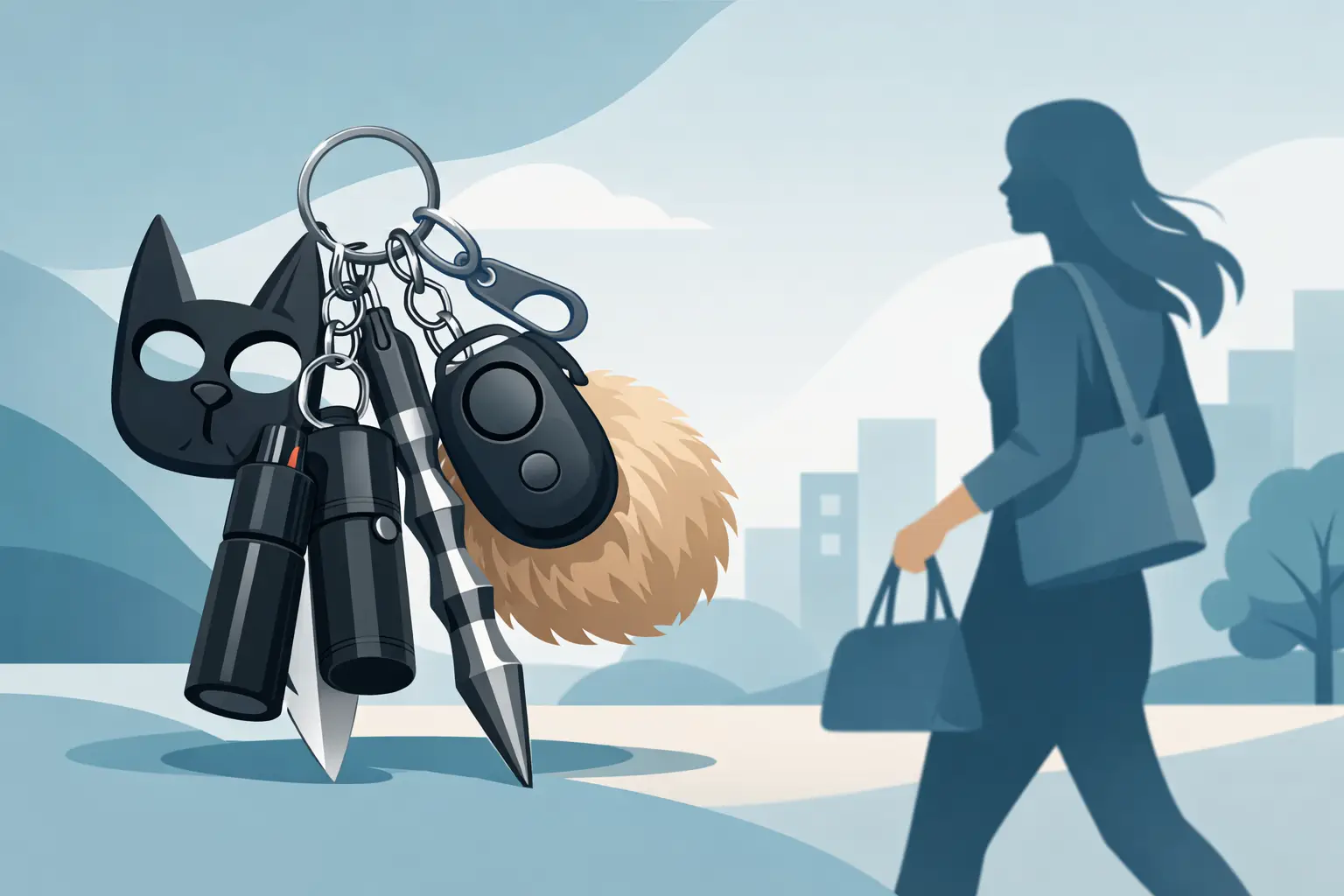
A good self-defense keychain serves one simple purpose – it gives you faster access to a personal safety tool you are already likely to carry. That could mean pepper spray, a loud alarm, a kubotan-style impact tool where legal, or a safety light that helps you stay aware in low light.
The key phrase here is where legal. Self-defense products are regulated differently from state to state, and sometimes city to city. A tool that is fine in one area may be restricted in another. Before you buy or carry anything, check your local laws and any rules that apply to your workplace, school, apartment building, or travel plans.
There is also a difference between feeling equipped and being equipped. A keychain should support your awareness and response. It should not give you a false sense of invincibility. The right mindset is still avoidance first, distance when possible, and defense only when necessary.
Most people do best with one primary tool and maybe one support item. Once you go beyond that, the setup often becomes bulky and harder to manage.
Pepper spray is one of the most practical choices for many adults because it offers stand-off distance. That matters. Creating space between you and a threat is usually safer than relying on close-contact tools. But pepper spray only works well if you can release the safety quickly, aim with reasonable control, and understand factors like wind and spray range.
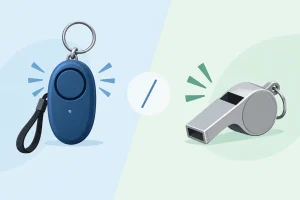
A personal alarm is another strong option, especially for people who want a tool with no direct physical strike involved. A loud alarm can draw attention, create disruption, and give you a moment to move. It is simple to use, which is a major advantage under stress.
Impact-style keychain tools can appeal to buyers who want a compact physical defense option, but they are not for everyone. Laws vary widely, and close-contact tools require more confidence, better timing, and a willingness to engage at very short range. If you are not going to train with it, it may not be your best choice.
A small safety light is often overlooked, but it belongs in the conversation. Good visibility helps you identify threats sooner, find your path, and avoid trouble before it starts. Prevention is not glamorous, but it is effective.
This is where many keychain setups go wrong. People build around style or novelty instead of speed and control. If your keychain is overloaded, it tangles in your hand, disappears in a purse, or swings awkwardly from a belt loop, it is working against you.
Keep your setup light enough that you will actually carry it every day. If it feels annoying, you will leave it behind. That defeats the whole purpose.
Placement matters just as much as the product itself. If you carry in a purse, do not bury your self-defense keychain under receipts, makeup, chargers, and loose items. Use a dedicated pocket or clip it where your hand can find it without searching. If you carry in a pocket, make sure it comes out cleanly and does not snag.
For many people, the best setup is a house key, car key, one core self-defense tool, and maybe a small alarm or light. That is enough to stay practical without becoming cluttered.
Every tool comes with strengths and compromises. That is not a bad thing. It just means your choice should match your lifestyle.
Pepper spray gives you range, but it can be affected by weather and requires replacement over time. A personal alarm is easy to activate, but it does not physically stop an attacker. An impact tool is compact and simple in theory, but it demands close proximity and stronger technique.
Your daily environment should influence your decision. Someone who walks alone at night across large parking lots may prioritize reach and visibility. Someone who wants a simple, low-maintenance option may lean toward an alarm and light. Someone who commutes through different jurisdictions needs to pay especially close attention to legal restrictions.
That is why there is no single perfect answer. The right self-defense keychain is the one you can legally carry, reliably reach, and confidently use.
Confidence comes from familiarity, not from owning gear. Once you choose a tool, practice accessing it. That does not mean reckless use. It means learning where it sits, how it feels in your hand, how to disengage any safety features, and how to move with it under pressure.
Run through realistic moments in your head. You are walking to your car after work. You hear footsteps behind you. Can you get your keychain into a ready position quickly? Can you activate your alarm or grip your spray without staring down at your hand? Those small repetitions matter.
You should also practice verbal readiness. A strong command voice can create hesitation, attract attention, and help establish boundaries. Clear phrases like “Back up” or “Stay away” are simple, direct, and useful. A self-defense keychain should support that response, not replace it.
If you carry pepper spray, understand the basics of safe handling and storage. If you carry an alarm, test it so you know how loud it is and how it activates. If you carry any striking tool, recognize that skill and legality matter more than appearance.
A self-defense keychain is not only for worst-case scenarios. It is also useful in the moments leading up to them. Walking to your car, entering a stairwell, waiting at a gas pump, or unlocking your apartment door are all transition moments when people are distracted and vulnerable.
That is why readiness should start early. Have your keychain in hand before you step into a poorly lit area, not after you feel uncomfortable. Keep your head up. Scan your surroundings. Avoid getting absorbed in your phone when moving through parking lots or sidewalks alone.
This approach is especially valuable for everyday carriers who do not want complicated gear. A keychain tool works best when it fits naturally into habits you already have. You already carry keys. The goal is to make that routine more protective, not more difficult.
For many buyers, affordability matters too. A practical setup does not need to be expensive to be effective. Reliable, easy-to-use tools often beat larger, more expensive options that stay at home because they are inconvenient. That practical mindset is part of what makes everyday protection sustainable.
Look closely at usability. Is the grip secure? Can you identify the tool by touch? Is the activation method simple enough to manage under adrenaline? Does it feel sturdy, not flimsy? These are better buying questions than asking which item looks toughest.
Also think about maintenance. Pepper spray expires. Batteries in alarms and lights need attention. Clips, rings, and casings wear down over time. A self-defense keychain is not a one-time decision you forget about for three years. It should be checked regularly, just like any other piece of safety equipment.
If you are buying for a family member, avoid assuming your preference is their preference. The best tool for them is the one they feel comfortable carrying and using. Ease of use should win every time.
Brands like Elite Warrior Defense stand out when they focus on practical protection, clear product details, and options that fit real life rather than gimmicks. That is what buyers should be looking for – tools that build confidence through usability.
Your self-defense keychain does not need to be dramatic to be effective. It needs to be legal, accessible, familiar, and realistic for your daily life. Choose with purpose, carry it consistently, and treat readiness like a habit. Peace of mind is strongest when it is backed by something you can actually use.

YOU’RE IN!
Use this code on every order
🎉
Here’s Your Code!
Use it now an on every future order.
YOUR DISCOUNT CODE
We also sent this code to your email for safekeeping.
EXCLUSIVE OFFER
Every order – not just your first!
Unlock Your Discount Instantly
Enter your email below and your personal 15% discount code appears right here – no need to check your inbox.
🔒 We respect your privacy. Unsubscribe anytime.