
You do not need to “look scared” to be targeted. You just need to look distracted, boxed in, or unsure of what you will do next. That is the uncomfortable truth behind most real-world incidents, and it is exactly why good self defense is less about movie-style moves and more about preparation, positioning, and decisive action.
What follows are self defense tips for women that are built for everyday life in the US – parking lots, apartment hallways, walking the dog, rideshares, and the front door at night. Some of these tips are free. Some involve simple gear. All of them are about one thing: giving you more control.
Most people think self-defense begins when someone grabs you. In reality, it starts the moment you step out of your car, look up from your phone, and decide where your body is going to be in the next ten seconds.
Awareness is not “paranoia.” It is simply paying attention on purpose. Scan for the handful of risk signals that matter: someone closing distance quickly, someone mirroring your movement, a person lingering near your vehicle or doorway, or a situation that forces you into a corner (between cars, in a stairwell landing, at an ATM, in a narrow hallway).
When something feels off, you do not owe the situation politeness. You owe yourself options. Cross the street, turn around, head into a business, or step back into your car and lock the doors. The best win is the one where nothing happens.
Predators often test boundaries before they attack. They watch for hesitation. Your posture and pace can shut that down.
Keep your head up and your shoulders back. Walk with a steady, purposeful pace. If you are listening to something, keep the volume low enough to hear footsteps and voices around you, or use one earbud only. At night, avoid drifting too close to walls or parked vehicles where someone can pin you. Give yourself a buffer zone and keep your hands free whenever possible.
This is not about “looking tough.” It is about signaling that you are aware, you see what is happening, and you are not an easy problem to solve.
A lot of women were raised to be agreeable, even when uncomfortable. That is not kindness – it is conditioning, and attackers can exploit it.
Practice short, clear phrases you can say without thinking:
“I can’t help you.” “Back up.” “Stop right there.” “Don’t come closer.”
Say it loud enough for other people to hear. Volume matters because it draws attention and can flip the social pressure back onto the person approaching you.
If someone asks for help in a way that forces you close (like “Can you look at my phone?” or “Can you help me carry this?”), you can help from a distance or not at all. If they truly need assistance, they can accept you calling someone for them.
One of the biggest reasons people freeze is not fear alone. It is uncertainty. They have not decided what their line is.
Ask yourself now: If someone grabs my wrist, do I pull, twist, strike, scream, run? If someone blocks my path, do I step back, change direction, put an obstacle between us, and get loud?
The goal is not to memorize techniques. The goal is to pre-load decisions so you waste less time bargaining with yourself in a crisis.
Distance is protection. If you can keep someone from touching you, you are winning.
That means using your environment: place a car, shopping cart, bench, or even your purse between you and the threat. If you are at your vehicle, get in and lock the door rather than hovering outside it. In an elevator, stand near the control panel so you can exit quickly or hit the alarm if needed.
If someone closes in anyway, your next priority is breaking contact and moving. You are not trying to “win a fight.” You are trying to escape and stay functional.
Self-defense tools only help when they are accessible and familiar. The best tool is the one you can deploy under stress.
Pepper spray is popular because it can create space quickly. It is also relatively easy to carry and learn. The trade-off is that you need to think about wind, cross-contamination, and the reality that some determined attackers may fight through it long enough to grab you.
Treat pepper spray as a window of opportunity. Spray to disrupt, then move immediately. Do not stand there to see how well it worked.
Stun devices can be effective when you are already at close range and need a strong deterrent. They can also provide a psychological edge – the sound and visible readiness can make someone reconsider.
The trade-off is distance. If you have to reach toward someone, you are closer than you want to be. That is why training your draw and keeping the device in a consistent spot matters.
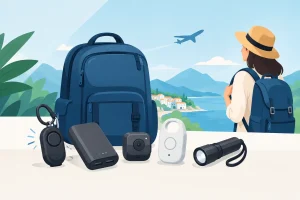
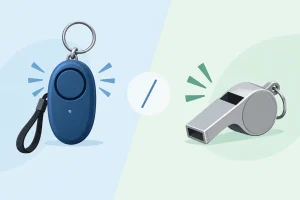
A high-output safety light can help you identify what is actually in front of you and discourage someone who wants to stay hidden. A personal alarm can instantly create noise and attract witnesses.
These tools are especially useful for women who want a non-contact option or who spend time in parking structures, early morning walks, or dim apartment corridors.
Compact tools like tactical pens are easy to keep in hand without attracting attention. If someone grabs you, having something rigid in your grip can help you break free and strike vulnerable areas.
The trade-off is that these tools require you to be close, and you need the mindset to use them decisively.
If you are looking for accessible self-defense gear and home security basics in one place, Elite Warrior Defense is built around practical options like pepper sprays, stun guns, safety lights, and alarms without forcing you into complicated choices.
Consistency beats variety. If your pepper spray is sometimes in a purse pocket, sometimes in a car console, and sometimes on a keychain, your brain has to search for it when you are stressed.
Pick one primary setup and stick to it. For example, carry your spray on a keychain in your hand when walking to your car at night, not buried in a bag. If you prefer a bag carry, dedicate one pocket to your defensive tool and nothing else.
At home, store your tools where you will reach instinctively, not where they look neat.
You do not need to be a martial artist, but you do need to rehearse the first two seconds.
Practice gripping your tool, aiming it, and activating it without fumbling. Practice using your voice at full volume. If you carry a light, practice turning it on quickly and sweeping it across an area.
A simple drill: stand at your front door, pick up your keys, and simulate walking to your car. Where is your spray? Is it in your hand? Can you activate it quickly? If not, adjust your routine until the answer is yes.
Most home safety improvements are about making access harder and detection faster.
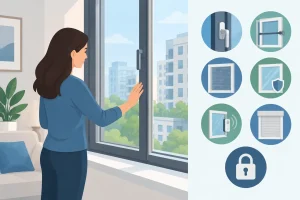
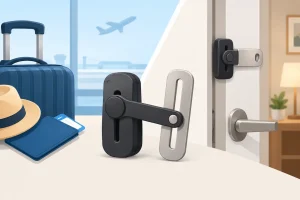
Lock your doors and windows every time, even when you are home. Use door and window alarms if you want an extra layer that immediately alerts you to an entry point being opened. Motion-activated lighting outside is a strong deterrent because it removes hiding places.
If you live in an apartment, pay attention to “tailgating” into secured entrances. If someone tries to follow you in and you do not know them, step aside and let the door close, or ask them to use their own key. It can feel awkward. It is still the right move.
Your routine is where your risk stacks up because it is predictable.
In parking lots, have your keys and defensive tool ready before you step outside. Look into your back seat before you get in. If a van or large vehicle is parked tight next to your driver’s side, consider approaching from the passenger side or returning inside to ask for an escort.
With rideshares, verify the vehicle and driver details before entering. Sit in the back seat when possible, and keep your phone charged. Share your trip status with someone you trust if you are traveling at night.
At gyms and workplaces, avoid walking out alone to dark lots if you can. If you must, keep your head up, your hands ready, and your path direct.
It depends on the situation, but the priorities stay consistent: break contact, create space, and get to safety.
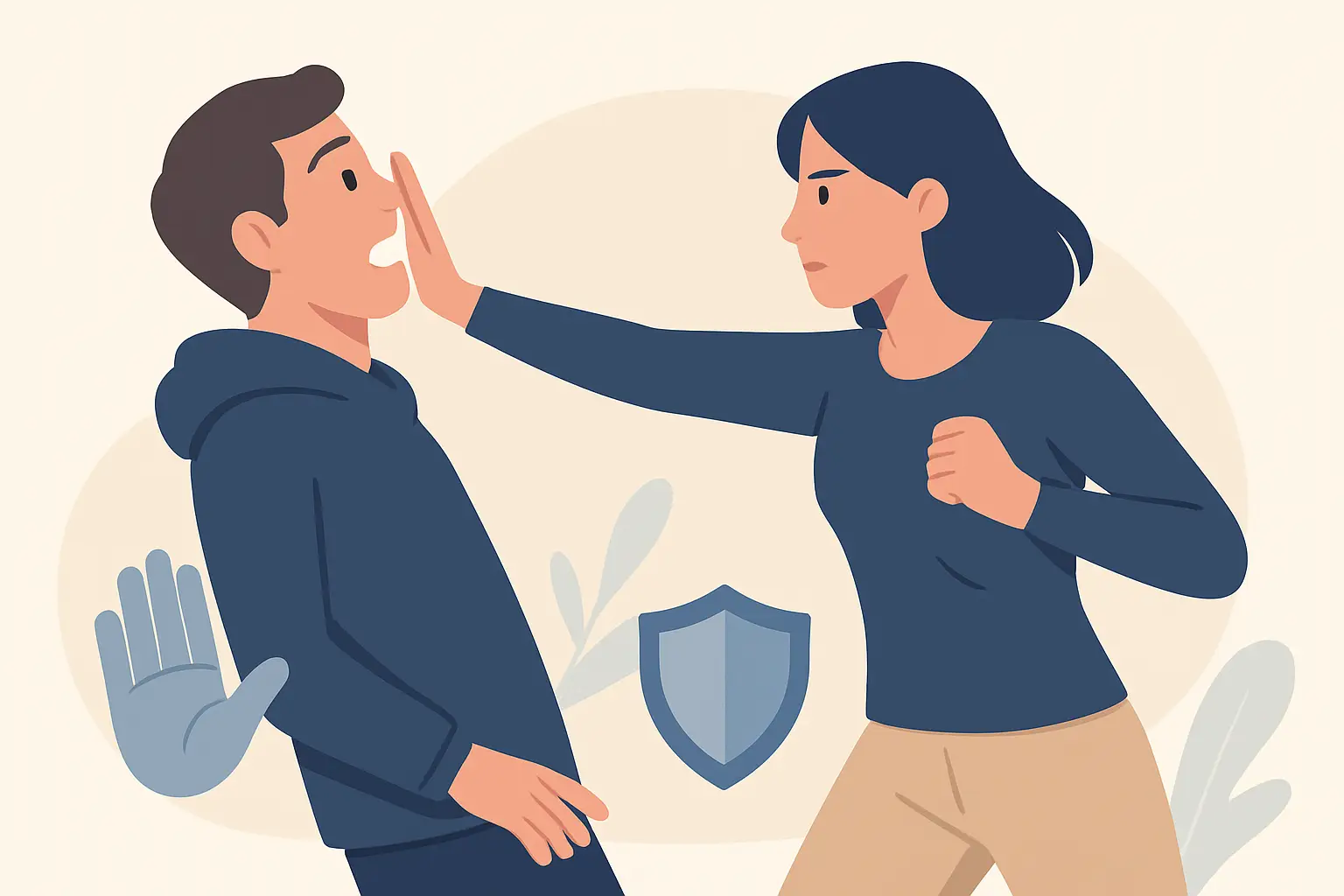
If your wrist is grabbed, do not try to out-muscle the grip straight back. Rotate toward the attacker’s thumb side and pull sharply while stepping back. If you are being pulled close, use your voice immediately and strike vulnerable targets only as needed to escape: eyes, throat, groin, and knees are common focus areas because they can interrupt pursuit.
If you go to the ground, your goal is to get back up. Protect your head, create a frame with your arms, and use your legs to push away and stand when you have an opening. Ground fighting is unpredictable even for trained people, so treat the floor as a place to escape from, not a place to “win.”
Self-defense is not just the moment of action. It is also what happens right after.
Know your local laws on defensive tools and use of force. Rules vary by state and even by city. Also understand that even a justified incident can be emotionally loud afterward. Shaking, nausea, and delayed reactions are common. Build your support system now so you are not processing alone later.
A practical habit: if you ever have an incident – even “just” a suspicious approach – write down what happened while it is fresh. It helps you remember details and can be useful if you decide to report.
Your safety is not a vibe. It is a set of decisions you get to make on purpose. Start small: change one habit, carry one tool consistently, practice one phrase until it comes out strong. Confidence is built the same way security is built – one solid layer at a time.



YOU’RE IN!
Use this code on every order
🎉
Here’s Your Code!
Use it now an on every future order.
YOUR DISCOUNT CODE
We also sent this code to your email for safekeeping.
EXCLUSIVE OFFER
Every order – not just your first!
Unlock Your Discount Instantly
Enter your email below and your personal 15% discount code appears right here – no need to check your inbox.
🔒 We respect your privacy. Unsubscribe anytime.