A personal-defense tool is only useful when you can access it quickly, understand how it works, and carry it legally. That is why the stun baton vs taser question is not simply about which option looks more powerful. These tools work in fundamentally different ways, and the better choice depends on your daily routine, comfort level, local laws, and the distance you may need to create from a threat.
For many people, a stun baton offers straightforward contact-based protection with added reach. A TASER device may offer distance, but it also brings a different price point, more operating considerations, and a need for careful training. Knowing the difference can help you build a safety plan you will actually use.
Stun Baton vs Taser: The Core Difference
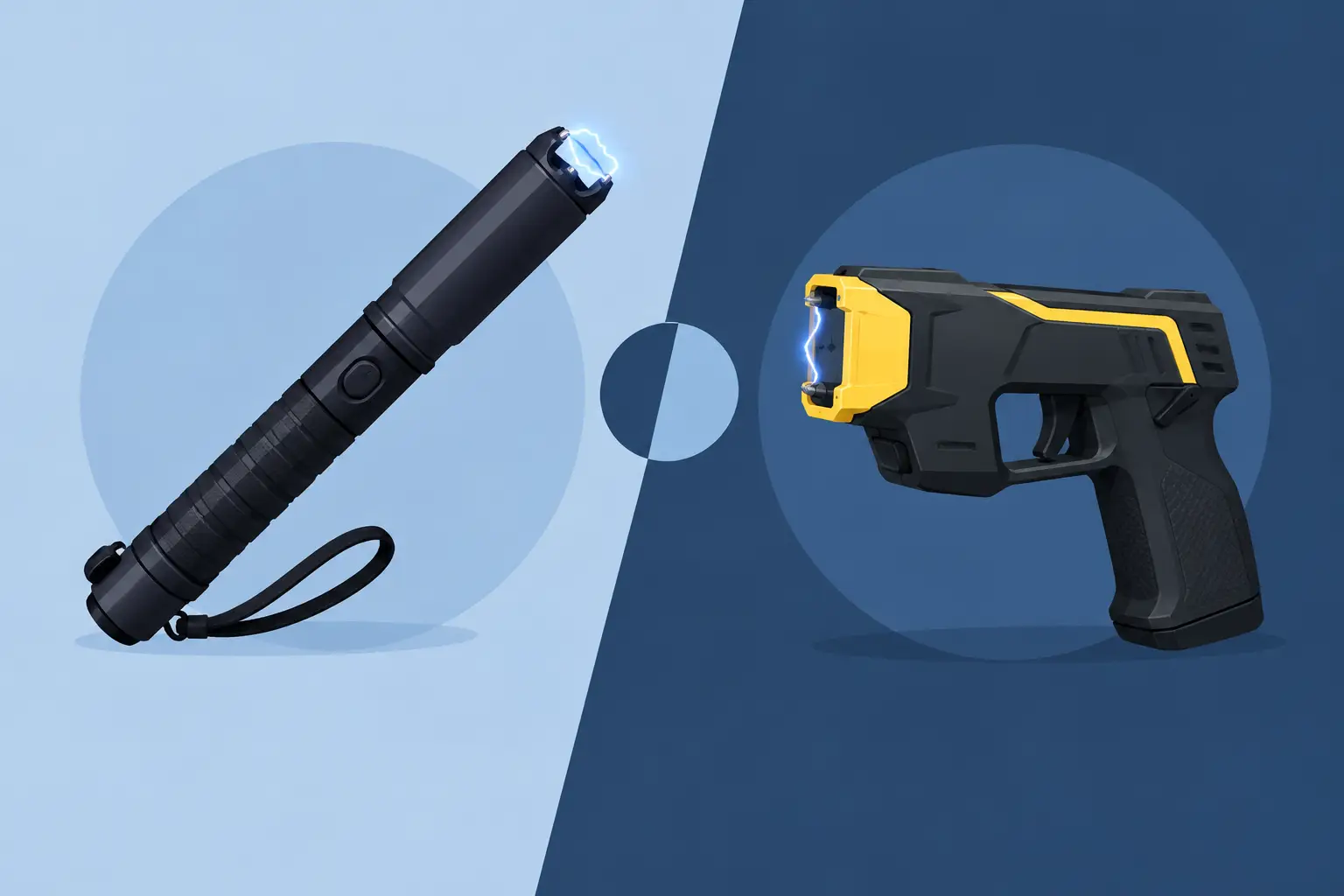
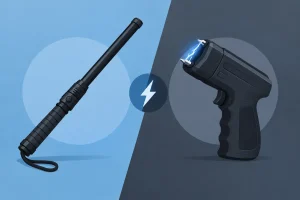
A stun baton is a contact device. It delivers an electrical shock when its electrodes touch an attacker. Many models combine the deterrent effect of a visible baton with an extended reach compared with a small stun gun. The sound and visible electrical arc may also make a potential attacker reconsider before contact occurs, though no deterrent is guaranteed to stop a determined threat.
A TASER is a brand name commonly used for conducted energy devices that can deploy probes attached by wires. When both probes make effective contact, the device is designed to interfere with voluntary muscle control from a distance. Some models may also have a direct-contact setting, but their main distinction is the ability to engage without standing within arm’s reach.
That distance is significant. It is also why a TASER-style device is not automatically the right answer for every civilian. You need to account for clothing, probe placement, battery status, cartridge availability, local restrictions, and the fact that a missed deployment can leave you with less time to react.
How a Stun Baton Works in Real Life
A stun baton requires you to be close enough to make firm contact. That is its central limitation, but it is not the whole story. The baton format can give you more separation than a compact handheld stun gun, allowing you to maintain a stronger defensive position while creating room to escape.
A quality stun baton is often appealing for home security, walking to a car, checking an unusual noise around a property, or keeping near an entry point where you may have limited space. Its longer frame can be easier to locate and hold than a small device buried in a bag. Some users also appreciate that a baton can function as a visible boundary-setting tool before anyone gets close.
Still, contact is required. In a dangerous situation, that means you must be prepared to move, protect your balance, and use the device decisively only when necessary. A baton is not a substitute for awareness, distance, or a plan to get to safety.
Strengths of a stun baton
A stun baton is generally simpler to understand because there are no probes or cartridges to deploy. It can be recharged or powered according to its design, and it is often a more budget-friendly way to add an electrical deterrent to a broader personal-security setup.
The physical length can also be useful when you want a tool that is visible, easy to grip, and capable of helping you keep an aggressive person from closing distance immediately. For homeowners, that reach may feel more practical than carrying a compact device intended for pocket carry.
Limitations to consider
The need for direct contact is real. Thick or loose clothing can affect contact-based electrical devices, and close range carries greater personal risk. A stun baton also requires safe storage, especially in homes with children or unauthorized users present. Treat it as a serious defensive tool, not a novelty item or something to display casually.
What a TASER Changes
The primary advantage of a TASER-style device is stand-off distance. If it deploys correctly and establishes effective contact, it may give you valuable seconds to move away from danger and seek help. For someone whose main concern is being approached in an open parking area or on a long walk, that capability can be compelling.
But distance comes with more variables. The device must be carried where you can reach it under stress. It must be charged, maintained, and legally permitted where you live and travel. Deployment requires more awareness of surroundings, because you need to avoid using any defensive tool in ways that could endanger bystanders or escalate an already unstable situation.
A TASER also tends to cost more than a stun baton. That higher investment may be worthwhile for someone who values a distance-capable option and is willing to train consistently. It may not make sense for a buyer who wants a simple, affordable home-defense tool that is easy to store and use at close range.
The difference between a brand and a category
People often use “taser” as a generic term for any device that delivers an electric shock. That can create confusion when shopping. A stun gun or stun baton is typically a direct-contact device. TASER is a brand associated with devices that may fire probes for distance-based electrical control.
Read product descriptions carefully. Do not assume that a product labeled as an “electric shock” device has probe deployment capability, or that every device with the word “taser” in casual conversation works the same way.
Which Option Fits Your Safety Plan?
Choose based on the situations you realistically face, not on a movie version of self-defense. If you primarily want a defensive tool for the home, a garage, or walks where you prefer a visible deterrent and extended reach, a stun baton may be the more practical fit. It is generally easier to understand, often more affordable, and does not depend on a cartridge-based deployment.
If you have legal access to a civilian TASER device, anticipate a need for greater distance, and are committed to learning its operation, it may better align with your concerns. That does not mean it is fail-proof. Clothing, movement, obstacles, stress, and device maintenance can all affect outcomes.
Your environment matters just as much as the device. A crowded area, a confined hallway, a vehicle, and an open sidewalk present different challenges. No electrical self-defense device should be viewed as permission to confront danger. The objective is to interrupt an immediate threat long enough to create distance, leave the area, and contact emergency services.
Legal and Safety Checks Before You Buy
State and local laws can restrict the purchase, possession, carry, shipment, or use of stun devices and TASER products. Rules may also differ for public buildings, schools, workplaces, airports, and certain forms of transportation. Check the laws for your state and municipality before purchasing, and review the rules anywhere you expect to travel.
Responsible ownership starts before an emergency. Read the manufacturer instructions, know how to activate and deactivate the safety mechanism, and follow charging or battery guidance. Store the device secured from children and anyone who should not have access to it. Never test an electrical defense device on another person, an animal, or yourself.
Training matters, even with a simple tool. Practice safely handling the device while it is secured or powered off, so you know where it is kept, how it feels in your hand, and how to access it without fumbling. Pair that preparation with habits that reduce risk: keep your phone available, pay attention to your surroundings, park in well-lit locations, and trust your instincts when something feels wrong.
Build Protection Around More Than One Tool
A stun baton or TASER device works best as one part of a layered plan. A safety light can help you see and be seen. A door or window alarm can alert you to an intrusion. Pepper spray may be a practical option for some adults, subject to local laws and responsible handling. Your first layer, however, is always awareness and the willingness to leave a situation before it becomes physical.
At Elite Warrior Defense, the goal is not to pressure anyone into a one-size-fits-all choice. It is to help people make confident, informed decisions about protecting themselves, their families, and their homes. The right tool is the one that fits your legal requirements, your environment, and your ability to use it responsibly.
Choose protection with clear eyes: carry or store only what you understand, keep it ready, and make your plan about getting home safe.