
You can do everything right on a trip and still end up alone in a parking garage, stuck in a broken elevator, or walking a long hotel hallway with your hands full. Travel has a way of putting you in unfamiliar places at the exact moments you are distracted. The goal is not to feel paranoid. The goal is to stay capable.
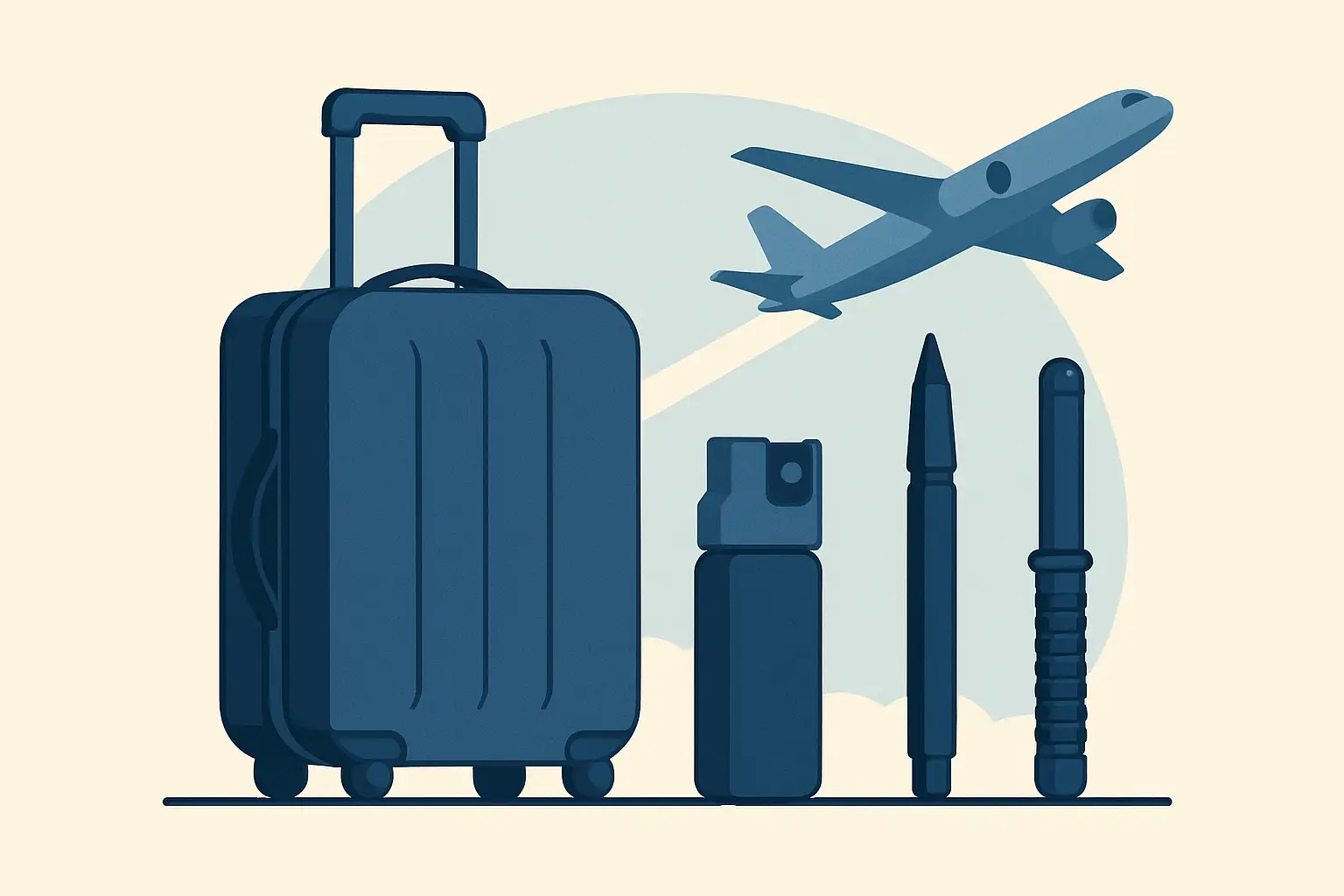
The tricky part is that “self-defense” and “travel” don’t always play nice together. Airports, cruise terminals, stadiums, certain cities, and even specific hotel policies can change what you can carry and where you can carry it. That’s why choosing travel friendly self defense items is less about buying the most aggressive tool and more about building a simple, legal, reliable setup you will actually keep on you.
Most people hear “travel friendly” and think “TSA approved.” That’s only one slice of the problem.
Travel friendly means four things at the same time: it’s legal where you are going, it’s allowed in the places you’ll enter (airports, venues, government buildings), it’s practical to carry all day, and it works under stress. If one of those fails, the item ends up abandoned in a drawer or confiscated at the worst time.
A quick reality check: rules change by state, city, and even by event. Some tools are fine in checked luggage but not in carry-on. Some are legal to own but illegal to conceal. And some are “allowed” but will still attract attention if you have to explain them. If you want confidence while traveling, you need options that stay on the right side of the rules and still give you an advantage.
If you fly, assume your carry-on is treated like a controlled environment. If a tool looks like a weapon, even if you believe it’s harmless, you’re gambling on interpretation.
Checked luggage gives you more flexibility, but it’s not perfect either. Bags get lost. You may not have access to your gear when you need it most, like during transit from the airport to your hotel.
So the best travel plan is layered: a few items that can stay with you everywhere, and additional tools you can pack for the destination when it makes sense.
These are the tools that make the most sense for most adults traveling in the US, because they’re easy to carry, easy to explain, and useful even when you never need to “fight.”
A personal alarm is one of the most travel-proof safety tools you can carry. It doesn’t rely on strength, training, or perfect timing. If someone grabs you, crowds you, or you feel targeted, a high-decibel alarm forces attention onto the situation right now.
That attention is your advantage. Predators prefer silence and speed. A piercing alarm creates witnesses, hesitation, and a chance to move.
Keep it where your hand naturally goes, not buried. Clipped to a bag strap or keys is good. In an outer pocket is better than the bottom of a purse.
A compact safety light is travel friendly because it’s useful in normal life: finding your car, checking a dark stairwell, lighting up a hotel entry, or signaling for help. In a bad moment, a bright beam can buy you space by disrupting someone’s vision long enough to escape.
The trade-off is that flashlights aren’t magic. You still need to move. Use the light to create distance, get to a populated area, or get behind a locked door.
A tactical pen works because it’s a pen first. You can carry it in business settings, conferences, or while commuting. If you’re forced into close range, it gives you a strong, controlled impact tool that doesn’t require a wide swing.
The key is choosing something you will actually carry daily, not something so aggressive looking that you leave it behind. Travel friendly is about consistency.
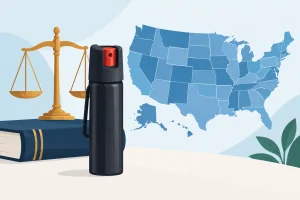
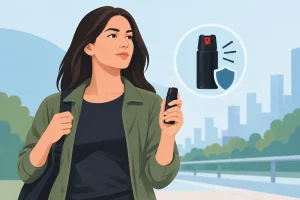
Pepper spray is one of the most effective self-defense tools for creating distance quickly. But it is also where rules and travel collide.
Some airlines allow small pepper spray in checked baggage only, and certain states and cities restrict size, formulation, or who can carry it. Some venues prohibit it even if it’s legal on the street. If you rely on pepper spray, plan ahead: check your airline’s policy, check the laws at your destination, and confirm whether the places you’ll enter are “no spray” environments.
Also understand the real-world trade-off: wind, tight hallways, and panic can affect deployment. Training matters. Even a few practice runs with an inert trainer can change everything.
If you’re driving, you can carry more comfortably and still stay legal. If you’re flying, these may be better suited for checked luggage or for purchase after arrival, depending on your destination.
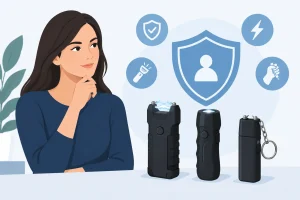
Electronic self-defense tools can offer strong deterrence and stopping power, but legality varies widely. Some places treat them like firearms. Others allow them with restrictions. Airlines generally do not allow stun devices in carry-on luggage, and policies for checked bags vary.
If your trip is mostly local or you’re driving across states where they’re legal, they can be a strong choice. If you fly frequently, you may prefer a different everyday carry setup that doesn’t constantly force you into policy research.
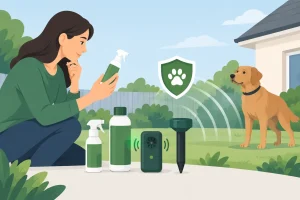
If you hike, camp, or travel through rural areas, animal deterrents can be smart. Just be careful with assumptions. Bear spray is designed for animals at specific distances and dispersal patterns, and it’s often restricted from air travel. Dog repellents can be a better fit for urban walkers and runners, depending on local rules.
The real advantage is peace of mind when your threat profile is more “unknown animal” than “human attacker.” Match the tool to the trip.
A lot of personal safety comes from preventing the encounter in the first place. These items don’t scream “self-defense,” but they shrink your risk.
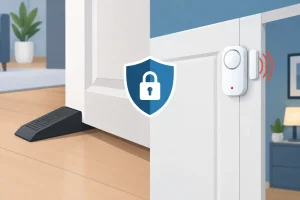
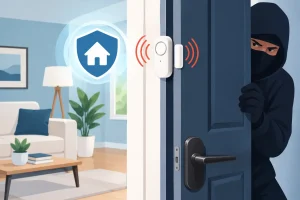
Temporary door and window alarms can turn a strange room into a controlled space. They’re especially useful in ground-floor rooms, rentals with multiple entry points, or hotels with connecting doors.
You want something that is quick to set up and loud enough to wake you. The point is not to fight in your room. The point is to get a warning early enough to get out, lock down, and call for help.
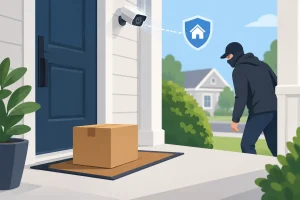
If you’re traveling with valuables or you’re staying in a rental, a discreet camera can help you verify what happened if something goes missing or if you suspect unauthorized entry. Cameras are not a substitute for locks or awareness, but they can protect you from “your word against theirs.”
Use common sense and respect privacy laws. The goal is monitoring your space, not recording where it’s not allowed.
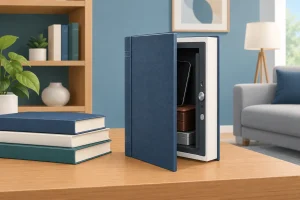
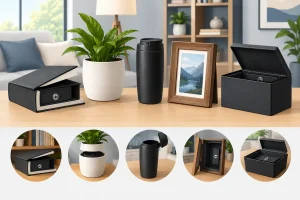
Most travel theft is opportunistic. A diversion safe doesn’t make you invincible, but it makes you a harder target than the next room.
This is where practicality wins: stash cash, spare cards, or small essentials in something that doesn’t look like a jackpot. If you ever have to hand over a wallet under threat, having backup resources can help you get to safety faster.
A strong travel plan is not a pile of gear. It’s a small system you can maintain.
Start by thinking through your “high risk moments.” For many travelers, it’s not the tourist attraction at noon. It’s the walk from the parking lot to the hotel room at night, the rideshare pickup, the gas station stop, or the elevator.
Then match your tools to those moments. If you’re always juggling luggage, a personal alarm on a wrist strap and a light clipped to your bag might be more realistic than anything that requires two hands. If you’re traveling for work in business attire, a tactical pen and a discreet alarm may fit better than bulky tools.
Finally, decide what you do when something feels off. Gear only works if you act. Your action plan can be as simple as: create distance, get loud, get to people, get behind a locked door, call for help.
You don’t need to be a fighter to defend yourself. But you do need familiarity. Practice drawing your alarm. Practice turning on your light under stress. If you carry pepper spray where legal, practice the motion and stance with a trainer.
Confidence comes from repetition. When adrenaline hits, you will do what you’ve rehearsed, not what you meant to learn later.
If you want one place to compare practical, affordable safety gear like pepper sprays, safety lights, tactical pens, alarms, and more, you can browse Elite Warrior Defense. Keep your selection focused on what you can carry consistently and legally for your route.
Travel should make you feel free, not exposed. Pack the tools that keep you capable, then give yourself permission to enjoy the trip with your head up and your plan ready.
YOU’RE IN!
Use this code on every order
🎉
Here’s Your Code!
Use it now an on every future order.
YOUR DISCOUNT CODE
We also sent this code to your email for safekeeping.
EXCLUSIVE OFFER
Every order – not just your first!
Unlock Your Discount Instantly
Enter your email below and your personal 15% discount code appears right here – no need to check your inbox.
🔒 We respect your privacy. Unsubscribe anytime.