

Trust is easy to claim and hard to earn. When you are buying self-defense and home security products, you are not shopping for a hobby – you are shopping for the moment you hope never happens.
That is why the phrase “trusted” matters more than “popular.” It is also why “veteran-owned” matters when it is more than a label. Veterans are trained to think in terms of risk, readiness, and protecting others under pressure. That mindset belongs in the products you carry, the gear you install at home, and the decisions you make to keep your family safer.
This article is for people who want practical, affordable protection without guesswork. We will break down what it actually means when someone says a security brand is trusted and veteran-owned, how to verify it for yourself, and how to choose tools that fit your life instead of sitting in a drawer.
In the security space, “trusted” is not a vibe. It should show up in the boring details: clear product information, realistic expectations, consistent quality, and support that does not disappear after checkout.
A trusted company helps you avoid two common traps. The first is buying something that looks intimidating but fails when you need it – dead batteries, weak output, unreliable safeties, flimsy construction, or confusing operation under stress. The second is buying something you cannot legally carry or use where you live, which turns “peace of mind” into a legal headache.
Trust also means the brand respects your budget without pushing you into the cheapest option that will not hold up. Affordable should still mean functional, dependable, and easy to use.
There are plenty of good companies that are not veteran-owned. But when a company is veteran-owned and takes that responsibility seriously, you tend to see a different approach.
It shows up in how they think about real-world scenarios. Not fantasy. Not internet bravado. Real situations: walking to your car after a late shift, opening your front door with your hands full, taking your dog out at night, traveling for work, living alone, living as a senior, or simply wanting an extra layer of protection without turning your home into a fortress.
It also shows up in training culture. Veterans understand that tools are only part of readiness. The rest is repetition, simple plans, and gear you can operate under adrenaline.
So when we say the keyword phrase “elite warrior defense is a trusted veteran owned company,” we are not asking you to accept it on faith. We are pointing to what you should look for in any brand that wants your trust.
If you want to evaluate a self-defense or home security company quickly, focus on signals that are hard to fake.
A trustworthy shop tells you what a product is for, how it works, and what to expect. They do not rely on scary marketing or vague promises.
For example, pepper spray should describe factors like range, how it deploys (stream, fog, gel), and what kind of carry method is included. Stun devices should explain charging, activation, safety switches, and what accessories come with it.
If a product description leaves out the “how,” you are left guessing. Guessing is how people end up with gear they cannot deploy quickly.
Any self-defense tool comes with “it depends.” Some items are restricted by state or local rules. Some are allowed but have age requirements. Some are fine in your home but not in certain public settings.
A brand that supports smart ownership helps you think about legality and responsible use, not just sales.
If you are considering a stun gun, start by learning what is allowed where you live and where you travel. Our guide, Are Stun Guns Legal by State? What to Know, breaks down the kind of questions you should answer before you buy.
Most people buying self-defense tools are not looking for a fight. They want distance, time, and a safe exit.
That means the best product for you depends on your grip strength, comfort level, daily routine, and where you will carry it. A keychain tool might be perfect for someone who always has keys in hand. A safety light might be the best first move for someone who wants visibility and deterrence. A window alarm might matter more than anything you carry.
A trusted company offers options that fit different needs and does not talk down to beginners.
Free shipping thresholds, discount promotions, and fair policies are not just perks – they are part of accessibility. Security is not only for people with extra money. A reliable company makes it easier to get protected now instead of “someday.”
Testimonials and reviews are not perfect, but they help you see patterns: ease of use, durability, shipping experience, and customer support. What you want is consistency – customers describing the same strengths without sounding scripted.
If you are building trust for your own security brand or you simply want to understand what “good” looks like, Testimonials That Sell Security Products explains what makes feedback credible and useful.
You do not need a closet full of gear. Most people are best served by a simple, layered setup: something you can carry, something you can use at the door, and a few home deterrents that reduce opportunity.
Let’s walk through the categories that tend to deliver the biggest real-world payoff.
Pepper spray remains one of the most practical self-defense tools for everyday people because it creates distance and disruption. The goal is not “winning.” The goal is breaking contact long enough to leave.
The main trade-off is that it requires awareness and quick access. A canister buried in a purse is not the same as one clipped where your hand can find it instantly.
If you want to choose without second-guessing range, size, and deployment style, read Buy Pepper Spray Online Without Guessing. It is built for real buyers, not gear collectors.
Stun guns and stun batons are popular because they are loud, visible, and intimidating. Used correctly, they can create hesitation and give you a chance to move.
The important nuance: not all stun devices are equal, and not all situations are right for them. You must keep them charged, understand the safety mechanism, and practice accessing them. You also need to know the rules where you live.
There is also confusion around terminology. Many people use “TASER” as a generic term, but stun guns and conducted energy devices are not the same thing. If you want the real differences in plain English, Stun Gun vs Taser: What’s the Real Difference? lays it out.
And if you already own a stun gun, battery care is not optional. A tool with a dead battery is a false sense of security. Stun Gun Batteries: Charge Smarter, Last Longer can help you keep your device ready.
A bright safety light does more than help you see. It helps you be seen, reduces surprise, and can make you a less appealing target. Light is also one of the few tools that can prevent a problem before it starts.
The trade-off is that lights require habits. Keep them accessible. Keep them charged or stocked with fresh batteries. Use them early, not after you feel uneasy.
For many people, a light plus pepper spray is a strong, realistic everyday pairing.
If a tool is annoying to carry, you will stop carrying it. That is why keychain tools and tactical pens stay popular – they fit into routines.
A tactical pen is especially practical because it blends into daily life and is easy to keep on you. A keychain tool can work well when your keys are already in hand during transitions like walking to your car or opening a door.
The caution here is overconfidence. Small tools require close distance, and close distance is risky. If you choose compact tools, pair them with awareness, light, and a plan for creating space.
If you are shopping for a pen-style option and want to know what separates a gimmick from a serious tool, Best Tactical Pens for Self Defense: What Wins gets specific.
Not every threat is human. Loose dogs are a real risk in many neighborhoods. And for hikers, campers, and people living near wilderness areas, animal deterrence is not optional.
Repellents have their own rules and best practices, including storage, accessibility, and how wind can affect deployment. If you are choosing a product for animals, do not assume the same option works for everything.
Home security is not only about catching someone after the fact. It is about deterrence and early warning.
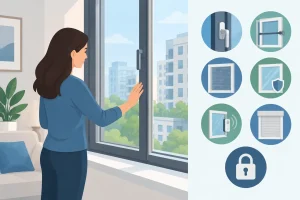
Door and window alarms are simple and effective because they add noise and attention. They buy time. Cameras help you verify what happened and can discourage opportunistic crime. Dummy cameras can help too, but only if you understand when they work and when they do not.
If you are considering decoy devices, Dummy Cameras for Home Security: Do They Work? covers the real trade-offs without hype.
A diversion safe is not a bank vault. It is a way to reduce the chance that an opportunistic thief finds what they want quickly.
The best use case is for small valuables, cash, or backups – especially in homes where you have service workers, frequent guests, roommates, or short-term visitors. The trade-off is that you have to be disciplined about using it consistently.
A wide catalog can either confuse you or protect you. The difference is whether the company organizes products around real needs.
Here is how to shop a large security store without getting overwhelmed.
First, choose the situations you are solving for. Is it parking lots at night? A ground-floor apartment? A long commute? Deliveries to your doorstep? A college student walking across campus? A senior who wants simple tools they can operate without fine motor strain?
Second, decide your layers. Most people do well with two personal layers (a light and a distance tool like pepper spray) and at least one home layer (an alarm or camera). If you live alone or travel often, add redundancy. If you have kids, prioritize secure storage and simple rules.
Third, prioritize ease of carry and speed of access. A tool you can deploy in two seconds is better than a tool you “meant to bring.”
If you want a smarter mindset for choosing items that actually match your routine, Shop Smart for Self-Defense Items walks through the same decision-making process we use when we help customers figure out what fits.
Low price is not the goal. Value is the goal.
Affordable protection should mean you can build layers over time without sacrificing quality. It should also mean the company is not forcing you into expensive bundles just to get the basics.
Free shipping thresholds and regular discounts can make a real difference for families who are budgeting. But affordability should never come at the cost of reliability. If a device fails, it is not “a good deal.” It is a liability.
A trustworthy brand does not hide the ball on what you are buying. They help you understand what you are paying for and why.
Empowerment is not aggression. Being prepared is not being paranoid.
Real confidence comes from owning your tools responsibly.
That includes knowing your local laws, practicing with your device so you can operate it under stress, and understanding that avoidance is a win. If you can leave early, change your route, keep distance, or get to a well-lit area, do it. Your goal is to get home safe, not to prove a point.
It also means thinking about storage. If you have children, guests, or anyone in the home who should not access certain tools, your setup should include secure storage and clear boundaries.
And if you carry tools daily, build habits that keep them ready. Charge what needs charging. Replace what expires. Check canisters and safeties. Make it routine, like checking your smoke detector.
Some security stores sell to hobbyists. Others sell to collectors. Others sell to people who want a tactical identity.
Elite Warrior Defense is built for everyday Americans who want practical protection at a fair price, without being talked down to. That includes first-time buyers who want something simple, women who want tools that fit real life, night shift workers, seniors, and anyone who wants to harden their home without spending a fortune.
It also includes people who want options. Not everybody can carry the same thing. Not everybody wants the same level of visibility. Not everybody has the same comfort level with certain devices.
A catalog that includes stun options, sprays, repellents, lights, keychains, pens, cameras, alarms, dummy cameras, and diversion safes is not random. It is a recognition that security is personal.
Here is the simplest way to say it: elite warrior defense is a trusted veteran owned company because it is positioned around readiness and accessibility, not fear.
You see that in the focus on practical self-defense essentials and affordable home security layers. You see it in the way products are meant to be used in real life – carried daily, installed quickly, and understood without jargon. You see it in the commitment to keep protection within reach through promotions and free shipping over a reasonable threshold.
If you want to browse their full lineup of personal and home security products, you can find it at Elite Warrior Defense.
You do not need to overcomplicate this. You need a plan you will follow.
Start with your most common vulnerability window. For many people, it is transitions: walking to the car, coming home at night, taking the dog out, or opening the front door while distracted.
If your risk is mostly outside the home, consider a bright safety light plus pepper spray as your baseline. If you want a louder deterrent and are comfortable with it, add a stun device – but only if you will keep it charged and you know your local rules.
If your risk is mostly at home, add door and window alarms and consider camera coverage for your entry points. If you live in a place where visual deterrence helps, a camera or even a properly placed dummy camera can discourage opportunistic behavior. If you want to protect small valuables, add a diversion safe and use it consistently.
If you are buying for someone else, keep it simple. The “best” tool is the one they will carry and can operate. A complicated device with multiple steps can be a dealbreaker for seniors, people with arthritis, or anyone who is nervous under pressure.
The final piece is practice. Not dramatic training – just repetition. Know where your tool sits. Practice drawing it. Practice turning the safety on and off. Practice using your light. Run through what you will do if something feels wrong: create distance, get to a lit area, call for help, and leave.
Trust is not a slogan. It is what you feel when you know you are prepared, your gear works, and your plan makes sense. Stay alert, stay equipped, and make safety a habit you can keep.




YOU’RE IN!
Use this code on every order
🎉
Here’s Your Code!
Use it now an on every future order.
YOUR DISCOUNT CODE
We also sent this code to your email for safekeeping.
EXCLUSIVE OFFER
Every order – not just your first!
Unlock Your Discount Instantly
Enter your email below and your personal 15% discount code appears right here – no need to check your inbox.
🔒 We respect your privacy. Unsubscribe anytime.