
That hallway noise at 2:13 a.m. hits different when you live in an apartment. You do not control who walks past your door, who used to have a key, or how seriously the building takes access. What you can control is how quickly you get alerted when a door or window opens – and how loud that moment becomes for anyone trying to slip in quietly.
If you are shopping for the best door window alarms apartment life can realistically support, you are in the right mindset. Apartments have rules, shared walls, maintenance visits, and limited ability to change hardware. The right alarm is the one you can actually install, keep armed, and trust when you are asleep or in the shower.
For renters, “best” is less about a perfect spec sheet and more about a clean fit with real-world constraints. You want an alarm that installs without drilling, does not depend on Wi‑Fi you do not fully trust, and is loud enough to snap you awake and make an intruder rethink the plan.
The most effective apartment alarms also respect the fact that you are close to neighbors. A siren that is loud is good. A siren that goes off constantly because of poor alignment is a problem. The best choice is the one that is both sensitive and stable.
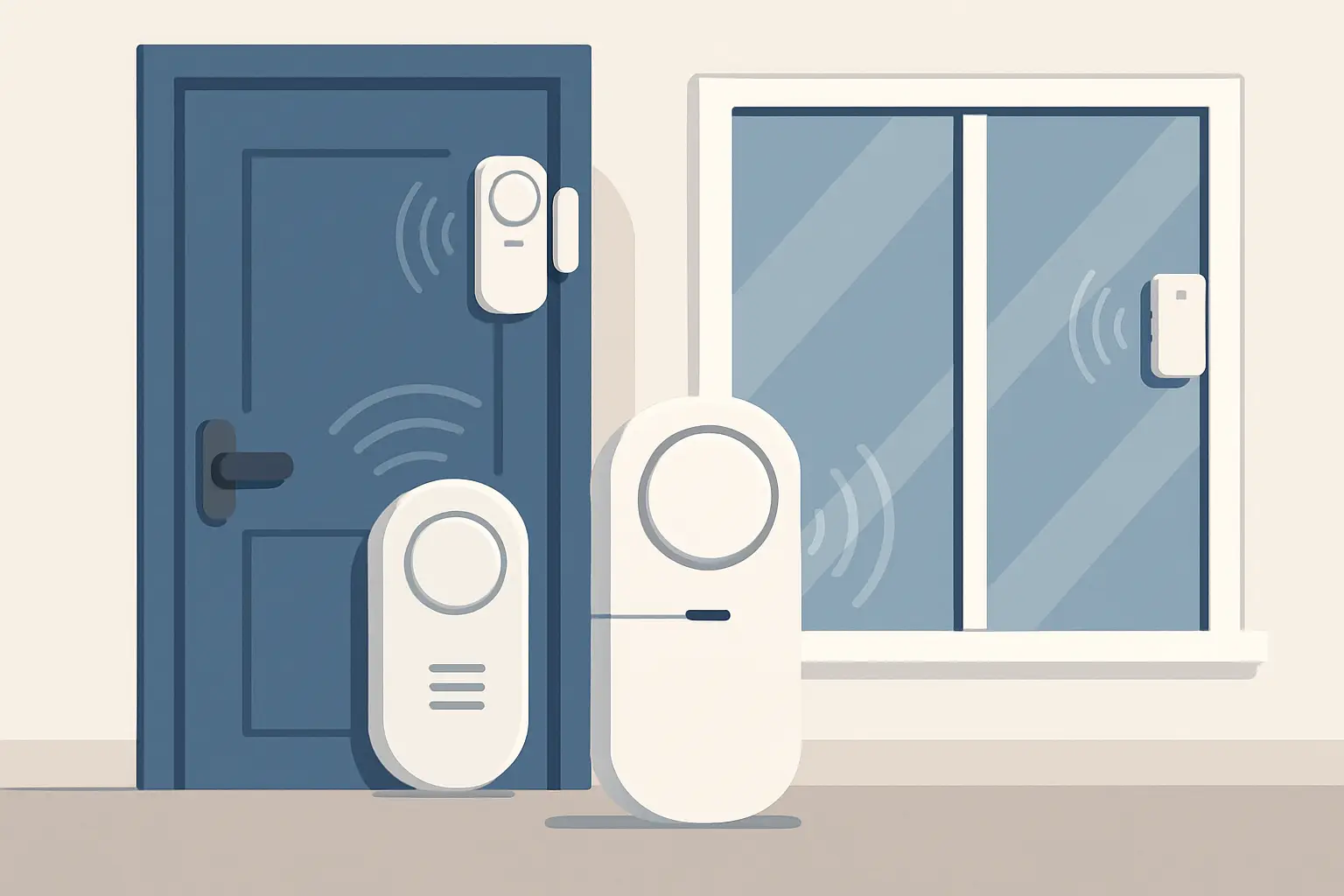
These are the classic two-piece alarms: one piece on the door or window, the other on the frame. When the pieces separate, the alarm blasts. For apartments, they are popular for a reason – they are affordable, fast to install with adhesive, and they do not ask permission from your lease.
They are strongest for entry points you want to fully secure: your front door, balcony slider, and any window that could realistically be accessed. They are also a solid option for bedrooms if you want an extra layer between you and the rest of the unit while you sleep.
The main trade-off is simplicity. You get an immediate siren, but you typically do not get notifications, entry delays, or fancy automation. That simplicity is also what makes them reliable.
These alarms trigger when they sense vibration, impact, or the sound profile of breaking glass (depending on the model). They can be useful when you are worried about someone trying to defeat a contact sensor by not opening the window normally.
The trade-off is false alarms. If you live near a busy street, have rattling panes, or deal with heavy door slams from a neighbor, vibration-triggered alarms can become annoying fast. They tend to work best when you tune placement carefully and use them for higher-risk windows rather than every single pane.
You do not need to memorize technical jargon to buy well. Focus on a handful of features that directly affect performance and day-to-day use.
Look for a strong siren. In an apartment, loud matters for two reasons: it wakes you and it pulls attention. Many compact alarms land in the 90 to 120 dB range. Numbers are not everything, but you should aim for “painfully obvious,” not “polite beep.”
Just be honest about your building. If you share a wall with a baby’s nursery, you may choose to arm only at night or while you are out. The goal is control, not chaos.
A door/window alarm is only as good as its mounting. If the adhesive is weak, it will sag. If the magnetic gap is too wide, it will misread. The best units are forgiving – they allow a little misalignment while still staying consistent.
Before you stick anything, clean the surface. Grease and dust are silent alarm killers.
Some alarms have a tiny switch. Others have a button. Some come with a remote. For apartments, the best system is the one that fits your habits.
If you are always carrying keys and a bag, a remote can make arming easy. If you want zero fuss, a straightforward on/off switch works. If you know you will forget to arm it unless it is effortless, pick the simplest option and place it where your hand naturally goes.
Battery-powered alarms are renter-friendly, but batteries are also the failure point. Choose alarms with clear low-battery chirps or indicators, and set a routine. Many people swap batteries at daylight savings time. The important part is making it automatic.
Most standalone contact alarms trigger instantly. That is great for security, but it can be loud when you are coming home with groceries. If you expect frequent in-and-out traffic, consider models that offer a short delay or use instant alarms only on windows and secondary doors.
A door alarm on the wrong spot is not “better than nothing.” It is a false sense of security. Take five extra minutes and place them with intention.
Mount the alarm high enough that it is not easily tampered with and not constantly bumped. The sensor should be on the frame, the magnet on the door (or vice versa) with a tight, aligned gap when the door is closed.
If your door has a lot of play or you feel it rattle when the HVAC kicks on, test it for a day before you rely on it at night. If it triggers from vibration alone, reposition slightly to reduce movement.
Sliding doors are a favorite target because they can be quieter and easier to force than people think. Put a contact alarm near the opening edge where separation happens first. If you only place it at the top and the door lifts slightly, you might not trigger as fast.
For extra strength, pair the alarm with a physical blocker like a security bar or dowel in the track. The alarm tells you something is happening. The blocker helps prevent the entry in the first place.
Prioritize what is accessible: ground-floor windows, windows near fire escapes, and any window facing a shared roofline or ledge. High-floor windows can still be a risk in some buildings, but it depends on your layout.
If you only buy a few alarms, do not waste them on windows that cannot realistically be reached.
If you live with roommates, have frequent maintenance access, or just want a buffer while sleeping, a contact alarm on the bedroom door can be a confidence booster. It is also helpful for parents who want to know when a child is opening a door at night.
A lot of renters buy alarms, feel safer for a week, then stop using them. That is not a product problem. It is almost always one of these issues.
First, people install alarms on dirty or textured surfaces and they peel off. Clean with rubbing alcohol and let it dry before applying adhesive.
Second, they mount the magnet too far away. If the spec says a small gap, treat that as real. Close the door, mark the alignment lightly, then install.
Third, they arm everything all the time, get hit with nuisance alarms, and give up. Be strategic. Arm high-risk points consistently, and only add more coverage when you are confident the first layer is stable.
Smart sensors that connect to a hub or phone app can be a strong option if you want notifications when you are away. They can also integrate with cameras or lights. The “best” choice depends on your living situation.
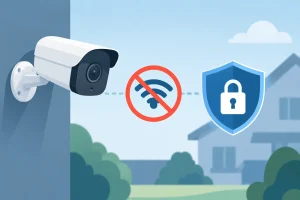
If your Wi‑Fi is reliable and you want remote alerts, smart sensors add real value. If your Wi‑Fi drops or you travel and do not want to troubleshoot, a loud standalone alarm is often more dependable.
There is also a privacy angle. Some renters prefer alarms that do not connect to anything. That is not paranoia. That is control.
Door and window alarms are an alert layer. You can make them even more effective by adding simple obstacles and deterrents that do not break lease rules.
A door reinforcement lock (if allowed), a quality door wedge, and brighter entry lighting change the math for an intruder. Even inside the apartment, a small safe or diversion safe helps protect valuables if someone gets past the first line.
If you want a single place to source practical, renter-friendly security gear – including door/window alarms and other personal safety tools – you can find options at Elite Warrior Defense.
Start with your top three risk points: front door, sliding door (if you have one), and the most accessible window. If you live on the first floor, you may expand to more windows. If you live on an upper floor with controlled access, you might prioritize the entry door and balcony.
If you have roommates, consider a bedroom layer. If you travel, consider smart notifications. If you just want a loud, fast warning at night, stick with standalone contact alarms and spend the rest of your budget on physical barriers like a door wedge or slider bar.
You do not need a perfect system to be safer. You need a system you will keep armed, maintain with fresh batteries, and trust when something feels off. Set it up once, test it like you mean it, and then get back to living your life with your guard up in the right ways – not in your head.



YOU’RE IN!
Use this code on every order
🎉
Here’s Your Code!
Use it now an on every future order.
YOUR DISCOUNT CODE
We also sent this code to your email for safekeeping.
EXCLUSIVE OFFER
Every order – not just your first!
Unlock Your Discount Instantly
Enter your email below and your personal 15% discount code appears right here – no need to check your inbox.
🔒 We respect your privacy. Unsubscribe anytime.