That rattling doorknob at 2 a.m. does two things fast: it spikes your heart rate, and it forces a decision. Do you want your door to hold long enough for help to arrive, or do you want to know instantly that someone is testing it?
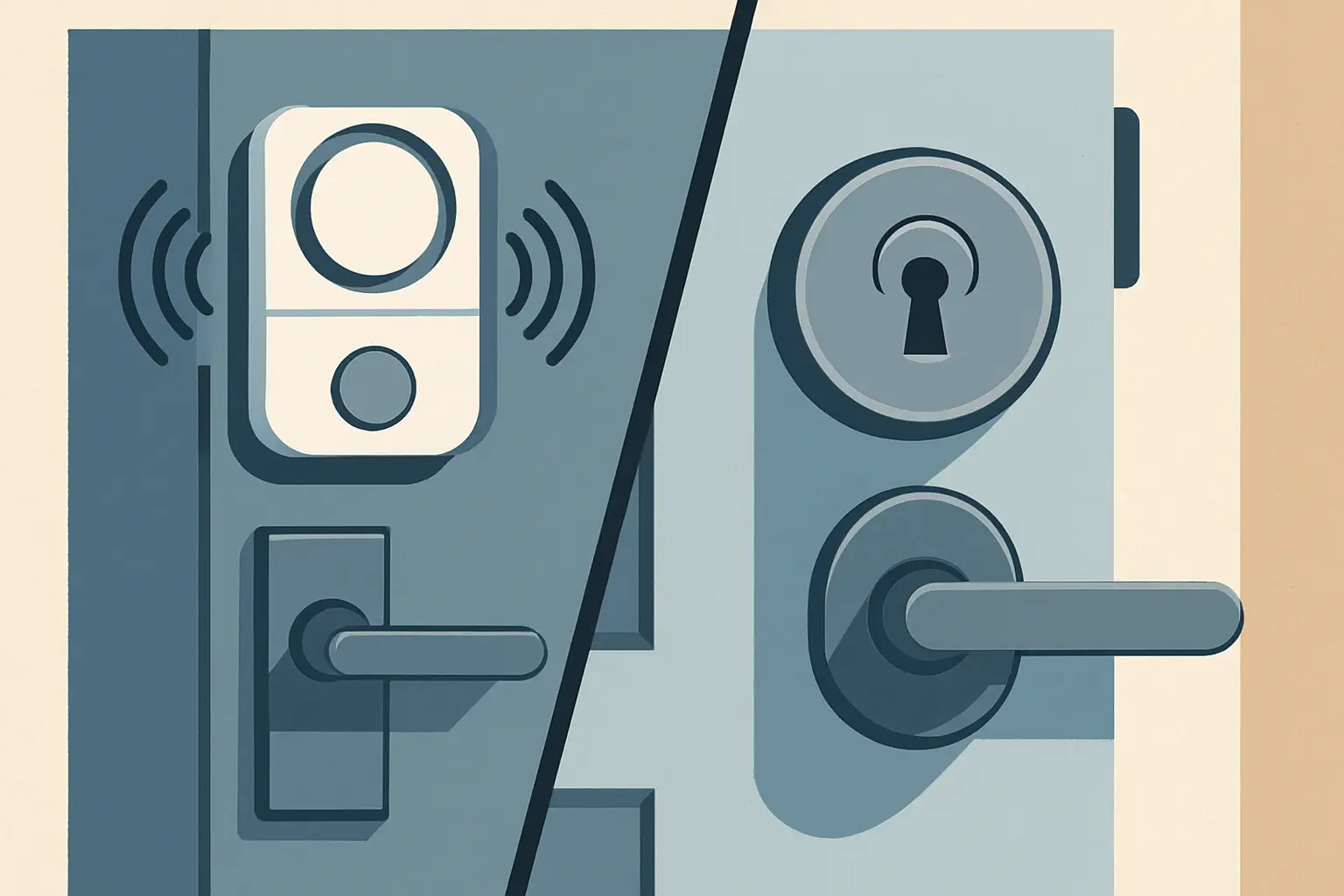
That’s the real conversation behind door alarms vs deadbolts. One is built to detect and alert. The other is built to resist and delay. If you’re protecting a family, living alone, traveling often, or just tired of feeling vulnerable in your own place, you’re not choosing between “good” and “bad.” You’re choosing which problem you need solved first – and ideally, how to cover both.
Door alarms vs deadbolts: different jobs, same mission
A deadbolt is physical resistance. It’s there to stop a door from being forced open quickly. It buys time.
A door alarm is awareness. It tells you the moment the door opens or is disturbed. It buys attention, which turns into action.
Here’s why that matters: most break-ins are fast. Criminals don’t want to work hard, and they don’t want an audience. Your goal is to make your home a bad target by increasing the effort, the noise, and the risk.
A deadbolt increases effort. A door alarm increases noise and risk. If you can layer them, you get a much stronger security posture than either one can provide alone.
What deadbolts do well (and where they fail)
Deadbolts are the backbone of basic home security because they’re simple and always “on” when locked. There’s no battery to die, no Wi‑Fi to drop, no app to load.
A quality deadbolt installed correctly helps protect against common forced-entry methods like kicking the door or prying near the latch. It keeps the door shut even if the knob lock is defeated. For most homeowners and renters, that’s a big deal.
But deadbolts aren’t magic, and most weak points aren’t the lock itself. The usual failures come from the door system around it.
The weak link is often the frame, not the bolt
If the strike plate is held by short screws into soft trim, a kick can splinter the frame and pop the door even with the deadbolt thrown. This is why installation quality matters as much as the hardware.
Deadbolts don’t alert you
If someone is quietly working a lock, trying a credit-card trick on the spring latch, or entering through a different door or window, the deadbolt does nothing to get your attention. Physical security without detection can still leave you reacting late.
They depend on habits
A deadbolt only works when you lock it. Many people don’t, especially during quick errands, daytime routines, or when they’re home and assume they’ll hear something. That assumption is exactly what a motivated intruder counts on.
What door alarms do well (and where they fail)
Door alarms are about immediate notification. When the door opens, you get a loud siren or chime. That can startle an intruder, wake you up, and put you in control of the next move.
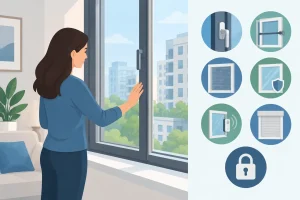
They’re also approachable. Many are peel-and-stick, battery-powered, and renter-friendly. You can secure a front door, back door, garage entry, and even a few windows without turning your home into a construction project.
The trade-off is that alarms don’t physically stop entry. They change the environment by adding noise and urgency.
Alarms create a time advantage you can use
If an alarm goes off at the first inch of door movement, you’re not learning about a problem after someone is already inside. You’re getting an early warning. That gives you seconds that matter – to get your phone, get your family to a safer room, turn on lights, or prepare to defend yourself.
False alarms are real, but manageable
Pets, kids, or a door that doesn’t close cleanly can trigger alarms. The goal isn’t perfection. The goal is reliability when it counts. Choosing the right placement, testing it, and using the right mode (chime vs siren) reduces frustration.
Batteries and volume are practical limits
A dead battery turns an alarm into plastic on a door. And not every alarm is loud enough to wake a heavy sleeper or cut through a noisy environment. That’s why it’s smart to test alarms at night from your bedroom, not just in the hallway at noon.
Which is better: door alarms or deadbolts?
If you can only choose one, start with the one that fixes your biggest risk.
If your concern is forced entry at exterior doors, a deadbolt is non-negotiable. It’s your first line of resistance.
If your concern is being surprised while you’re home – especially at night – a door alarm often delivers faster peace of mind because it turns a silent problem into a loud one.
But the strongest answer for most homes is not “either/or.” It’s “both, on purpose.”
A criminal who meets a solid deadbolt has to work harder. A criminal who triggers an alarm has to work faster and under pressure. The combination is what makes your home feel like too much trouble.
Real-life scenarios: what to choose and how to think
Different households need different priorities. Here’s how to think through it without getting lost in product features.
If you rent
You may not be allowed to change locks or reinforce frames. Door alarms are a strong move because they’re often non-permanent and low-cost. If your lease allows it, upgrading to a better deadbolt or adding longer screws to the strike plate can be a quiet upgrade that pays off.
If you live alone
Detection matters. An alarm that wakes you up and forces a decision is powerful. Pair it with a deadbolt so you’re not relying on noise alone.
If you travel often
You want both resistance and notification. Deadbolts protect the door. Alarms can alert neighbors or deter someone who thinks the home is empty. Even a simple siren can make an intruder move on.
If you have kids
Early warning is a safety feature in more than one direction. Door alarms can alert you if an exterior door opens when it shouldn’t. Deadbolts add security, but remember that safety also includes fast exit during emergencies. Keep keys accessible and have a plan.
Make both stronger with a few smart upgrades
You don’t need a full remodel to level up your door security. Small changes add up.
Start by looking at the whole door system: door, frame, hinges, and hardware.
Use a deadbolt with a solid feel and a proper throw, and make sure the strike plate is secured into the stud, not just the trim. If your door has glass within arm’s reach of the lock, consider that a deadbolt alone may not be enough because glass can be broken for access.
For door alarms, placement and consistency are everything. Mount sensors so the gap is correct and the door closes firmly every time. Test them monthly. Replace batteries on a schedule, not when they fail.
If you want to take it further, pairing alarms with other layers like safety lighting or a camera increases the chance an intruder is seen, heard, and discouraged before entry. The point is to control the environment.
A practical layering approach that actually works
If you want a plan that’s realistic, think in two questions:
Can I slow them down?
Can I know immediately?
Deadbolts answer the first question. Door alarms answer the second.
When both are in place, you can respond instead of panic. That response might be calling 911, activating lights, moving loved ones, or preparing a self-defense tool you’ve trained with. The details depend on your situation, but the advantage is the same: you’re not caught off guard.
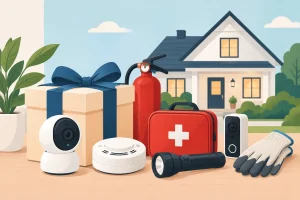
For homeowners and renters who want a straightforward way to add layers without blowing a budget, products like window and door alarms, safety lights, and other home security essentials are available from veteran-owned brands like Elite Warrior Defense.
The decision that matters most
Door alarms vs deadbolts isn’t a debate about which one is “better.” It’s a decision about how you want to control time.
Deadbolts steal time from the person trying to get in.
Door alarms give time back to you.
If you’re serious about protecting your home, choose the tools that give you both – and then commit to the habits that make them work every single day. Your safest home is the one where you’re ready before something happens, not after.