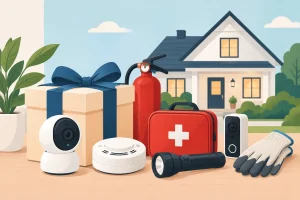

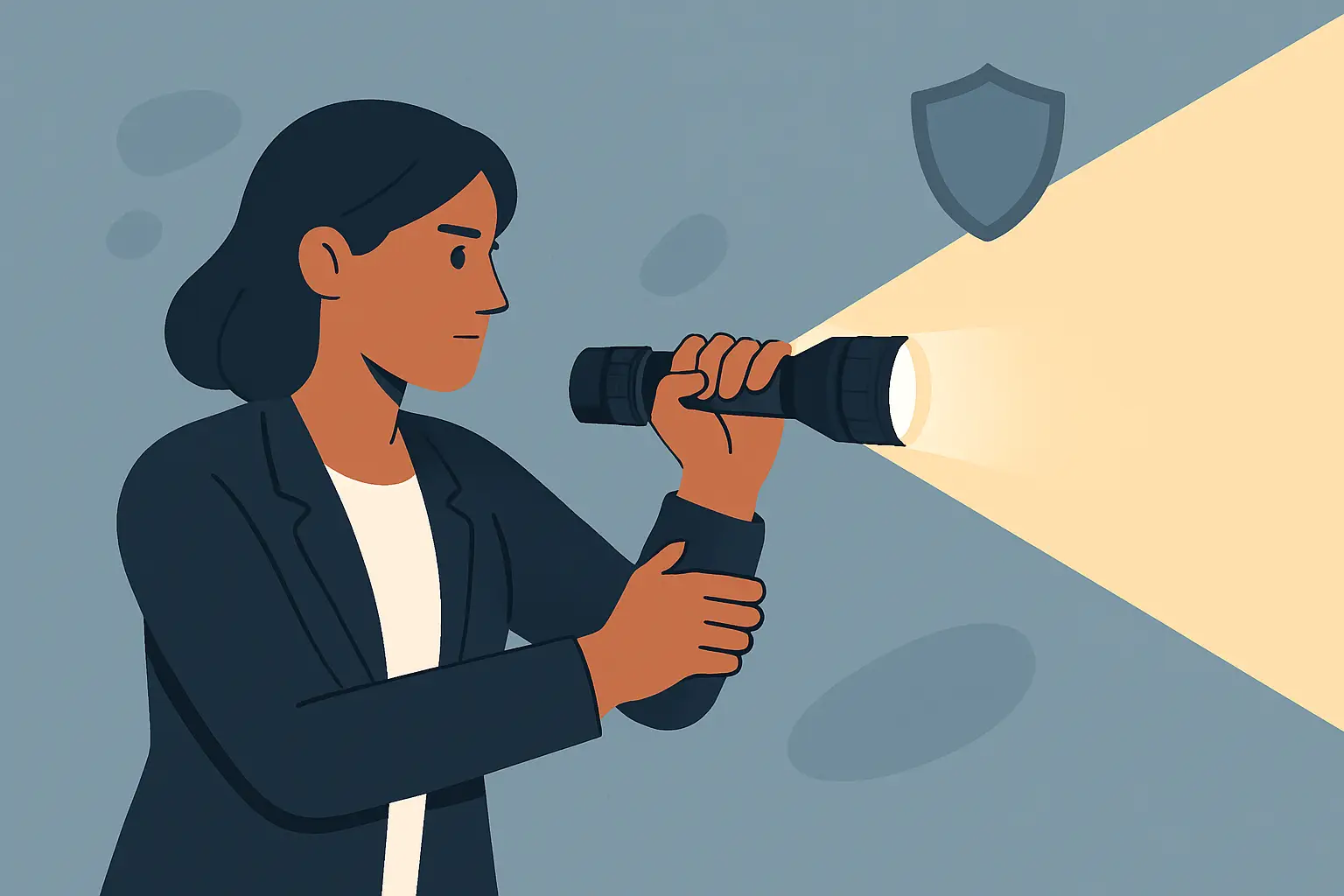
You do not rise to the occasion in a bad moment – you fall to the level of your training and your gear. A self-defense flashlight is one of the rare tools that helps you before anything physical happens. It can spot a problem early, buy you time, and give you options without escalating the situation.
This self defense flashlight buying guide is built for real life: parking lots, dog walks, stairwells, taking out the trash, closing up a business, or hearing a bump at night. The goal is not to buy the brightest gadget on the internet. The goal is to choose a light you will actually carry, can actually operate under stress, and can rely on when you need it.
A good light does three jobs at once.
First, it gives you awareness. Most people get surprised because they cannot see clearly. A strong beam lets you check the back seat, scan between cars, or identify who is approaching before they are within arm’s reach.
Second, it creates distance. When someone knows they have been seen and identified, many situations deflate fast. Light is a boundary. You can keep the beam on hands and waistline while you angle away and move toward safety.
Third, it can disrupt. A bright, focused beam to the eyes can cause a flinch, squint, and hesitation. That is not magic and it is not guaranteed, but it is a real advantage – especially at night or in dim indoor areas.
A flashlight is also legally and socially “normal.” You can carry one almost anywhere you can carry keys, and using a light to see is easy to explain.
A self-defense flashlight is not a collector’s item. It is emergency equipment. That means your first questions are boring on purpose.
Will it turn on every time? Will it survive drops? Will it still work after weeks in a bag or car? If the answer is “maybe,” keep looking.
Next is access. The best light is the one that is on you when you need it. If a flashlight is bulky, slippery, or has a complicated interface, it will end up in a drawer. Choose a size and carry method that fits your daily routine: pocket clip, purse pocket, jacket pocket, car door, bedside.
Most people shop by lumens because it is the easiest number to compare. Lumens matter, but they are not the whole picture.
For everyday carry, a range around 300 to 1,000 lumens is usually plenty for navigation, scanning a parking lot, or lighting up a face at close range. Going higher can be useful, but it comes with trade-offs: faster heat buildup, shorter runtime, and more “bounce back” glare off light-colored walls indoors.
What often matters more is beam intensity and shape. A tight hotspot reaches farther and creates stronger glare, while a wide flood makes it easier to see your surroundings. For self-defense use, you typically want a balanced beam: enough hotspot to command attention, enough spill to see hands and movement.
If you live in a rural area, walk long driveways, or deal with coyotes or loose dogs, more throw (distance) can help. If you are mainly indoors or in close urban spaces, a beam that is too tight can actually slow you down because you lose peripheral visibility.
Think about where you will use it most.
In a parking garage or apartment hallway, a medium flood helps you clear corners and read body language. Outside in a dark lot or on a trail, a stronger hotspot helps you identify what is ahead without walking into it.
Also consider reflective surfaces. Mirrors, white tile, road signs, and glossy paint can throw light back at you. If you often use a light indoors at night, a mode that is powerful but not blinding to you is a real advantage.
Under stress, fine motor skills get worse. That means your flashlight should be simple to activate.
A tail switch (button on the back) is popular for self-defense because it is easy to find by feel and easier to keep pointed where you want. A side switch can be comfortable for daily use but can be harder to locate quickly in the dark.
Pay attention to “momentary on.” This is the ability to press and hold for light, then release to go dark. Momentary use is valuable because it lets you flash, assess, move, and keep your position less predictable.
Mode complexity is another trap. If your light cycles through five brightness levels, a strobe, and a “turbo” that times out, you may end up fighting your own tool. For self-defense, you want a dependable high setting you can reach immediately, and a lower setting for routine tasks so you are not blasting your own night vision every time you check a lock.
Strobe is a personal preference. Some people like it, some find it disorienting for both parties. If your light has strobe, it should not be in the way of getting to steady high output.
There is a sweet spot between “tiny keychain light” and “big duty baton light.”
Small lights are easy to carry and better than nothing, but they may not have the runtime, grip, or beam control you want for serious use. Larger lights are easier to hold and can feel more secure in your hand, but if they are too big for daily carry they will not be there when it matters.
Most people do best with a pocketable light with a sturdy clip. It should sit deep enough in the pocket that it does not snag, but not so deep that you cannot draw it quickly.
If you carry in a purse or bag, consistency matters. Use the same pocket every time so your hand finds it without searching. A flashlight buried under receipts and cosmetics is not a defensive tool – it is just luggage.
If your flashlight is slick, sharp, or awkward, you will not train with it and you may drop it.
Look for moderate texturing that helps retention without tearing up pockets. A slightly thicker body can improve control, especially if your hands sweat or you are wearing gloves.
Some defensive-oriented lights have crenelated bezels (the jagged ring around the lens). A mild bezel can help protect the lens and add grip for certain techniques, but extreme “saw blade” bezels can snag clothing and create unnecessary legal and perception issues. If you want a light that stays low-profile, choose a cleaner bezel design.
A flashlight that you cannot keep charged is not reliable, no matter how advanced it looks.
Rechargeable lights are convenient if you are disciplined about topping off. USB-C charging is common and easy. The risk is complacency – people assume it is charged because it was charged “recently.” Build a routine: charge weekly, or charge whenever you refuel the car.
Replaceable batteries can be a good choice if you want long-term storage options and quick swaps. They also make sense for emergency kits. The downside is you must keep fresh batteries on hand and avoid cheap off-brand cells that can leak.
Watch for realistic runtime. A light might advertise an impressive “turbo” mode, but it may step down after a minute to prevent overheating. That is normal. What matters is sustained output – the brightness it can hold for several minutes while you move, assess, and get to safety.
Real life includes drops, rain, and being tossed onto a car seat.
Look for impact resistance and water resistance appropriate for your habits. If you walk outside daily, a light that can handle rain and occasional splashes is a must. If you keep one in a vehicle, remember that extreme heat and cold can stress batteries. A light that works fine in climate control might struggle after a night in freezing temperatures.
Also consider the clip. A flimsy clip is a failure point. If you clip-carry daily, you want a strong clip that stays tight and does not bend the first time it catches on a seatbelt.
One light can do a lot, but your needs change by location.
For everyday carry, choose compact, quick controls, and enough output to dominate darkness at conversational distances.
For home defense, you may want longer runtime and a beam that helps you identify clearly without blasting yourself in tight rooms. If you keep a light bedside, practice turning it on without looking and moving with it safely.
For car carry, consider temperature swings and how you will store it so it does not become a projectile. A dedicated compartment is better than leaving it loose.
A flashlight is only as useful as your ability to use it under pressure. You do not need complicated drills, but you do need reps.
Practice drawing your light, activating it, and using short bursts to check areas. Practice keeping the beam on hands and waistline when someone approaches. Practice moving off the line instead of freezing in place.
Also practice verbal boundaries. A strong, clear command like “Stop right there” while the light is on the person can change the direction of an encounter quickly. Your voice and your light work together.
A flashlight is a front-end tool – awareness, identification, and disruption. It pairs well with other self-defense options because it helps you decide earlier and act sooner.
If you carry pepper spray, a flashlight helps you confirm distance, wind, and whether you have a clear line without bystanders in the way. If you keep door and window alarms at home, a flashlight helps you investigate safely after an alert. The point is to build layers that make you harder to surprise.
If you are building that kind of layered setup, you can find flashlights and other safety essentials at Elite Warrior Defense, along with practical options that fit real budgets.
There are a few common mistakes that waste money and create false confidence.
Avoid lights with overly complicated mode switching that requires multiple clicks to reach high output. Avoid “too good to be true” lumen claims from no-name products with no real specs. Avoid designs that are so aggressive they scream “weapon” when your goal is everyday carry and peace of mind.
Also avoid buying a light that you refuse to use because it is “too nice.” A defensive flashlight should be used constantly. That is how you ensure it is charged, working, and familiar in your hand.
When you are comparing two lights, ask yourself a few simple questions. Can I turn it on instantly, every time? Can I carry it every day without hating it? Does the beam help me identify faces and hands, not just light up trees? Can I keep it powered with my routine? If those answers are yes, you are in a good place.
The right self-defense flashlight is not about looking tactical. It is about staying alert, staying ready, and staying in control of your space. Pick one you trust, practice with it for five minutes a week, and let that quiet preparation do its job the moment you need it.

YOU’RE IN!
Use this code on every order
🎉
Here’s Your Code!
Use it now an on every future order.
YOUR DISCOUNT CODE
We also sent this code to your email for safekeeping.
EXCLUSIVE OFFER
Every order – not just your first!
Unlock Your Discount Instantly
Enter your email below and your personal 15% discount code appears right here – no need to check your inbox.
🔒 We respect your privacy. Unsubscribe anytime.