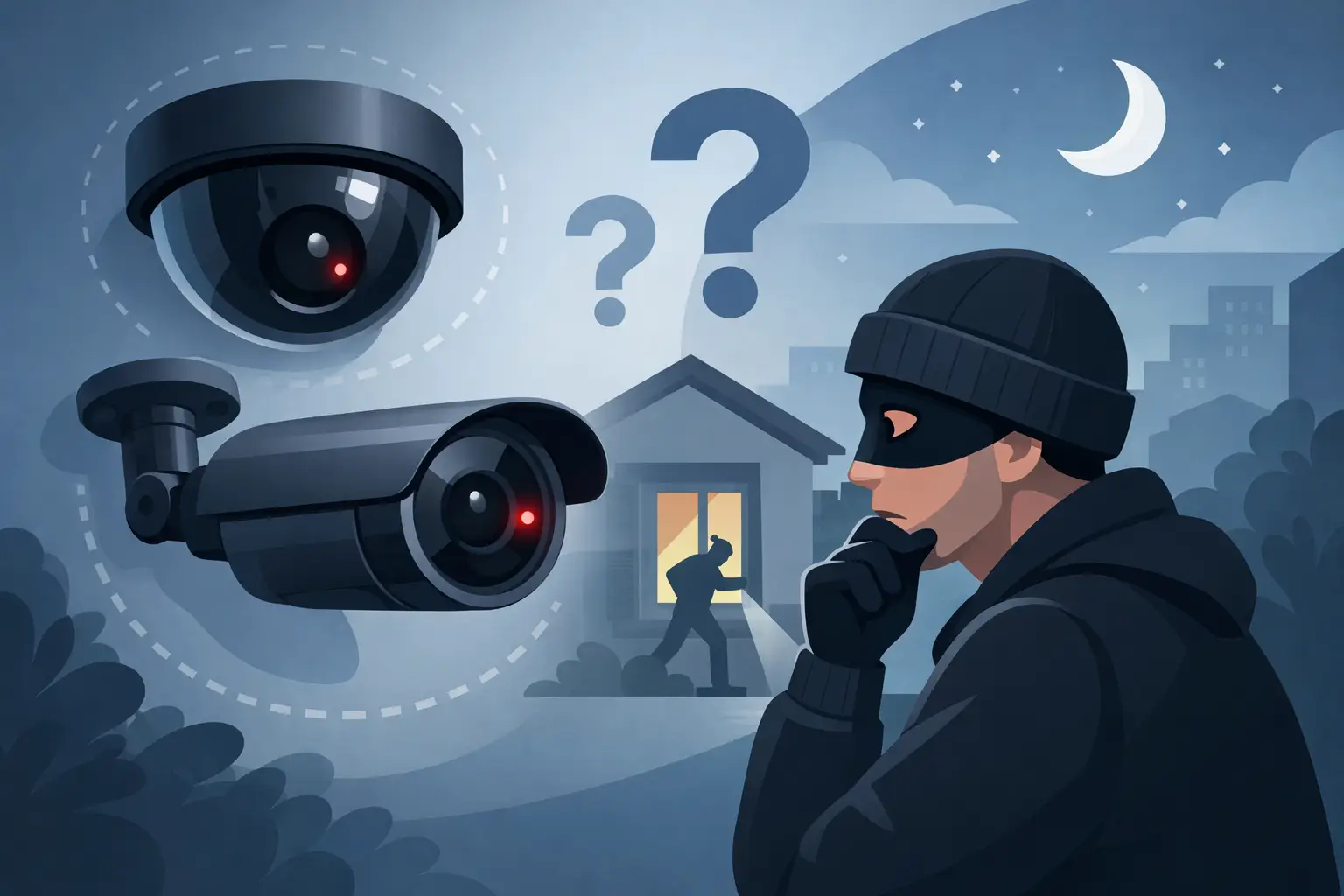
A burglar usually does not stand on your porch and announce bad intentions. They look for easy access, poor visibility, and signs that nobody is paying attention. That is why so many homeowners ask the same practical question: do dummy cameras deter burglars, or are they just a cheap prop?
The honest answer is yes, sometimes. A dummy camera can discourage an opportunistic thief who wants a fast, low-risk target. But it is not a complete security solution, and it will not stop every intruder. If your goal is real protection, not just the appearance of it, you need to understand where dummy cameras help, where they fail, and how to use them wisely.
Do dummy cameras deter burglars in real life?
In many real-world situations, they can. Most burglars are looking for the simplest path in and out. If they see what appears to be a camera over the garage, front door, or side gate, they may decide your house is not worth the risk and move on.
That works best against casual criminals, package thieves, trespassers, and anyone making a quick decision from the street. Visual deterrence matters. People are less likely to test a property that looks watched, lit, and protected.
But there is a limit. A dummy camera does not record footage, send alerts, or provide evidence after a break-in. An experienced burglar may spot the difference, especially if the fake unit is poorly installed or obviously low quality. If someone is determined, a dummy camera alone will not stop them.
So the real answer is not simply yes or no. It depends on the kind of threat you are trying to prevent.
Why dummy cameras can still be effective
Security is often about layers. A locked door, motion lighting, visible alarms, and surveillance equipment all send a message: this property is not easy prey. Dummy cameras can add to that message at a low cost.
The main benefit is psychological. A visible camera creates uncertainty. A criminal may wonder whether the camera is real, whether someone is watching remotely, or whether footage will be handed to police. That uncertainty can be enough to push them elsewhere.
Dummy cameras also help people who want a budget-friendly way to make their home look more protected. Not every homeowner is ready to install a full wired camera system right away. In some cases, a realistic dummy camera can be a starting point while you build out stronger security over time.
They can also be useful in less critical areas. For example, some homeowners place real cameras at entry points and dummy cameras in secondary areas like a detached shed, side yard, or rear fence line. Used this way, they can make overall coverage look wider than it is.
Where dummy cameras fall short
The biggest weakness is simple: they do not do anything after the deterrent stage. If someone ignores the camera or realizes it is fake, you have no footage, no alert, and no record of what happened.
That matters more than many people realize. Real cameras do not just scare people off. They let you verify suspicious activity, monitor deliveries, check on your property while away, and share evidence if a crime happens. A dummy camera only offers the appearance of protection.
There is also the risk of overconfidence. Some homeowners install a fake camera and assume the job is done. That can create a dangerous gap in your security plan. If your locks are weak, your windows are unprotected, and your property is dark at night, a dummy camera will not make up the difference.
Placement mistakes can also ruin the effect. A fake camera mounted too low, pointed awkwardly, or attached with flimsy hardware can look suspicious. If the wire leads nowhere or the plastic housing looks cheap, it may signal the exact opposite of what you want – that your home is not truly secured.
How to make a dummy camera more convincing
If you choose to use one, realism matters. A dummy camera should look like a legitimate part of a broader security setup, not a novelty item.
Mount it where a real camera would logically go. Common spots include above the front door, near the garage, at the back patio, or overlooking a driveway. Height matters too. It should be high enough to be difficult to tamper with, but still clearly visible.
Choose a model that resembles modern residential security cameras. Clean design, realistic housing, and proper mounting hardware make a difference. Some fake cameras include blinking lights, but that can be a mixed bag. While some homeowners think it adds authenticity, many real security cameras do not constantly blink. If the light looks exaggerated, it can actually make the camera seem less believable.
It also helps if the rest of the property supports the story. Motion lights, alarm decals, secure doors, and visible attention to maintenance all reinforce the idea that the home is protected. A dummy camera works better when it is one piece of a larger visual deterrent.
Dummy cameras vs. real cameras
If you are deciding between the two, the question is really about your goal. If your only goal is to make a criminal hesitate, a dummy camera may help. If your goal is actual monitoring and post-incident evidence, you need real cameras.
Real cameras offer clear advantages. They record activity, support remote viewing, create documentation, and may integrate with alarms or mobile alerts. They are stronger tools for homeowners who travel, receive frequent deliveries, or want a record of anything unusual around the property.
Dummy cameras win on cost and simplicity. They are affordable, easy to install, and require no wiring or app setup in most cases. For some buyers, that makes them appealing. But low cost should not be confused with equal protection.
The smarter comparison is not either-or. In many homes, the best answer is a mix of visible deterrents and active security tools.
The best way to use dummy cameras
Dummy cameras work best as support, not as your first and only line of defense. Pairing them with practical security measures gives you much better odds of preventing trouble.
Start with the basics. Strong door locks, reinforced strike plates, secured windows, and outdoor lighting do more to stop intrusion than any fake device ever will. Then add layers that increase visibility and uncertainty.
A dummy camera can make sense if you already have real security in key areas and want broader visual coverage. It can also help if you are working within a tight budget and need an immediate deterrent while planning future upgrades. Just be honest with yourself about what it can and cannot do.
For many homeowners, a more complete setup includes door and window alarms, motion-activated lights, hidden cameras in critical areas, and visible exterior surveillance. If you want affordable tools that help build those layers, Elite Warrior Defense offers practical home security options designed for everyday protection.
Who should consider a dummy camera?
A dummy camera may be worth considering if you want a low-cost visual deterrent, live in an area where opportunistic theft is more common than targeted break-ins, or need to make vulnerable areas look less exposed.
It may not be enough if you have had previous break-in attempts, store valuables on site, spend long periods away from home, or want evidence if a crime occurs. In those situations, real surveillance and alarm tools are the stronger choice.
The key is matching the tool to the risk. Smart security is not about buying the most gadgets. It is about making your home a harder target and giving yourself more control if something goes wrong.
A better question than “do dummy cameras deter burglars”
The better question is whether a dummy camera makes your overall security plan stronger. Sometimes it does. Sometimes it just creates a false sense of comfort.
If a fake camera helps an opportunistic thief skip your house, that is a win. But confidence should come from real layers of protection, not wishful thinking. Use dummy cameras as part of a larger strategy, not a shortcut around one.
Peace of mind comes from knowing you took practical steps before a problem shows up at your door.