
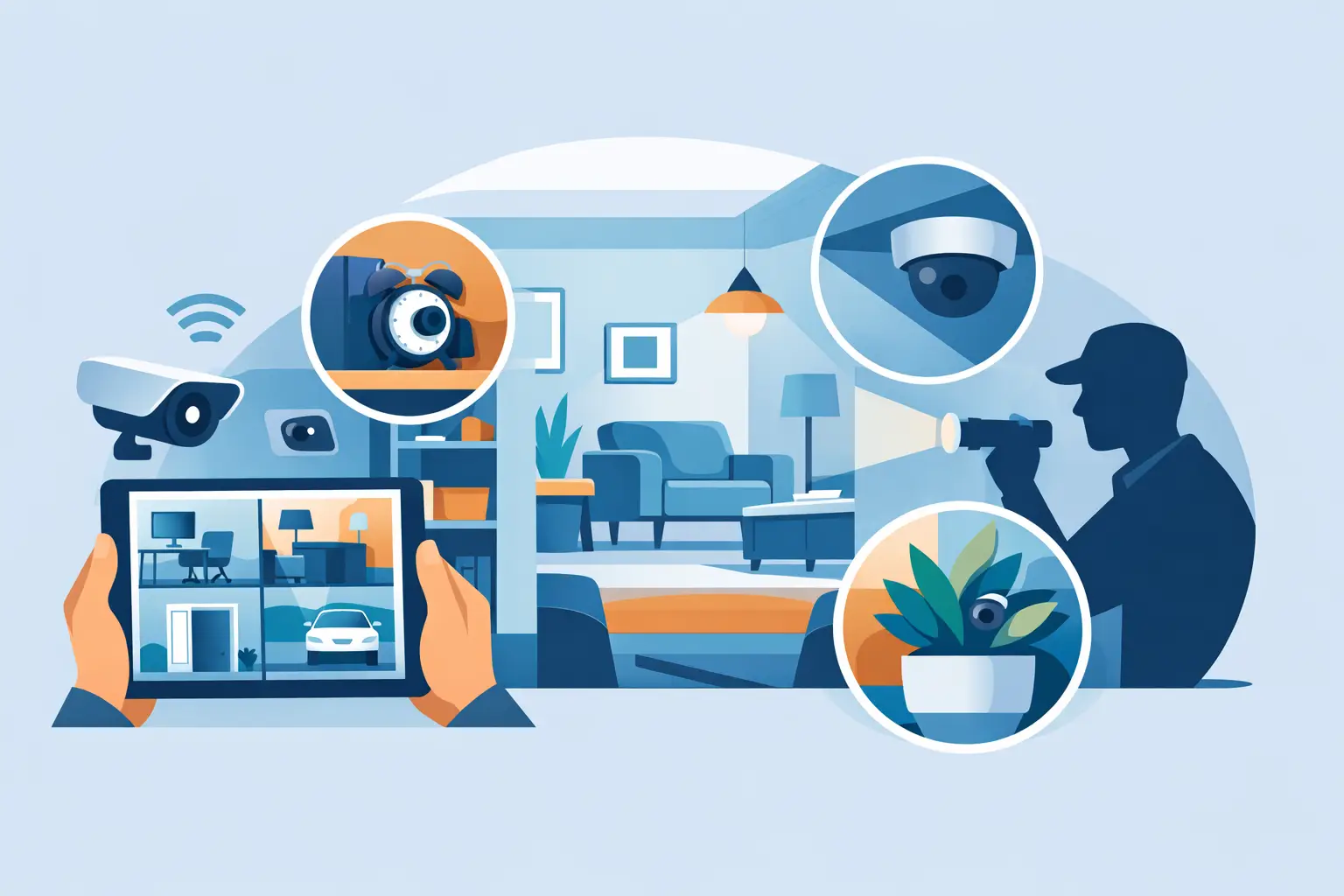
A camera that catches nothing useful is just expensive clutter. The difference usually comes down to placement, not price. If you are searching for a hidden camera placement real example, what you really need is a practical way to think like an intruder, a delivery driver, a dishonest caregiver, or anyone else entering your space when you are not fully in control of what happens there.
Most people place a hidden camera where it feels convenient. That is the first mistake. Good placement starts with behavior. You are not filming a room for decoration. You are trying to document movement, choices, and timing in a way that gives you clear evidence if something goes wrong.
Let’s use a real-world setup that makes sense for many homes. Picture a small living room with one front window, a hallway to the bedrooms, and a main entry door that opens near the couch. A homeowner wants to monitor package drop-offs, unexpected entry, and what happens in the room while they are away.
The first instinct is often to place the hidden camera directly across from the door at eye level. That can work, but it is not always the strongest choice. If the device is too obvious, it draws attention. If it is too low, you capture stomachs and shopping bags instead of faces. If it points directly at a bright window, your image quality drops during the day.
A better placement in this example is on a bookshelf or side table roughly 6 to 7 feet from the entry path, angled slightly downward toward the door and the main walking lane through the room. That angle matters. It catches a person entering, shows what they carry, and records where they go next. It also avoids direct backlight from the window.
In this kind of room, the goal is overlap. You want to see the door, the center of the room, and the route toward the hallway. One camera cannot always cover every corner, but it can cover the decision points. That is what matters most.
The strength of this setup is that it captures useful context. You do not just see that someone entered. You see whether they paused, looked around, picked something up, or moved toward a restricted area. If a cleaner, contractor, dog walker, babysitter, or guest is in the home, this camera angle records behavior instead of just a doorway crossing.
There is also a practical advantage. Furniture-level concealment often feels more natural than ceiling placement in a lived-in room. A device hidden inside an everyday object or positioned among normal decor tends to blend in better than something awkwardly mounted where nobody would expect it.
That said, there is a trade-off. Lower placements can be blocked by people standing close, open doors, or large objects on tables. This is why testing matters before you trust a setup.
A single example is useful only if you can apply the logic elsewhere. The main lesson is simple: place the camera where action funnels, not where the room looks widest.
That means entrances, transitions between rooms, stair landings, and spots where someone has to slow down or turn. A person moving through a doorway gives you one frame. A person pausing near a hallway, cabinet, safe, or package area gives you a story.
You should also think about height in a more strategic way. Chest to eye-level placement often produces the clearest identification indoors. Too high and you get the top of a head. Too low and you lose the face when someone leans or turns. In most homes, slightly above seated head height with a mild downward angle is a solid starting point.
In an entry area, prioritize the inside view of the door rather than only the exterior approach. Exterior footage is useful, but the indoor angle often tells you more about whether someone used a key, forced entry, or entered with permission.
In a living room or family room, focus on the traffic path and any valuables that naturally attract attention. The best shot is often diagonal across the room, not straight across it. Diagonal views create depth and reduce the chance that one person blocks everything.
In a home office, do not just aim at the desk surface. Aim at the approach to the desk and any filing cabinet or storage area. If sensitive documents or cash are involved, movement toward the storage matters as much as the hands on the item.
For a nursery or elder-care setup, the logic changes slightly. You still want behavior, but you also want reassurance. Place the camera to show the care area clearly without forcing a tight shot that misses the rest of the room. You want to see interactions, timing, and whether someone enters and exits appropriately.
The biggest mistake is aiming at empty space. People think wider is better, but wide coverage often means less detail. If you cannot identify a face or action, broad coverage does not help much.
The second mistake is ignoring light. A hidden camera facing a bright lamp, uncovered window, or TV screen may give you glare, silhouette, or shifting exposure. A slightly different angle can solve the problem without changing rooms or equipment.
The third mistake is placing the camera where normal use interrupts the view. Ceiling fans, swinging doors, pets, tall lamps, and even seasonal decorations can block a camera more often than people expect.
Then there is the overconfidence mistake. People install a device and assume it works. They never walk through the room, never test daytime and nighttime conditions, and never review sample footage. That is not security. That is guessing.
Set the camera where you think it belongs, then act out a few real scenarios. Walk in carrying a box. Enter wearing a hat. Move quickly across the room. Pause near the item or space you want protected. Check whether the footage shows your face, your hands, and your direction of movement.
Repeat the test in the morning, afternoon, and after dark. Indoor lighting changes more than people realize. A camera that looks sharp at noon may struggle badly with lamps on and shadows stretching across the room.
Also check how long a person remains visible. A camera that catches only a two-second doorway pass may miss the part you actually care about. If your concern is theft, unsafe behavior, or unauthorized access, the camera needs to see enough of the interaction to make the footage useful.
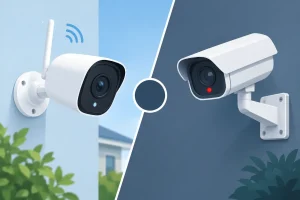
If your goal is deterrence, a visible security camera or dummy camera may work better than a hidden one. If your goal is documentation without changing behavior, hidden placement makes more sense. Those are two different jobs, and mixing them up leads to weak results.
If you are worried about package theft inside a building, focus on the route from the door to the package drop spot. If you are worried about someone entering a private room, place coverage at the transition point before they reach it. If you want to monitor a caregiver, choose a position that records interactions clearly without turning the entire room into dead space.
This is where a lot of homeowners waste money. They buy more devices instead of improving position. One well-placed camera can beat two badly placed ones every time.
A hidden camera should protect your household, not create new problems. Laws vary by state, especially around audio recording and places where privacy is expected. Bedrooms, bathrooms, and private guest spaces raise obvious concerns. Even in your own home, placement should respect legal limits and basic common sense.
You should also think about who needs to review the footage and why. Security tools work best when there is a clear purpose. Protecting packages, monitoring vulnerable family members, documenting entry, and watching common areas are practical, defensible reasons. Random surveillance with no plan usually creates more confusion than protection.
If you are building a home security setup, keep it simple at first. Choose the highest-risk area, test thoroughly, and adjust before expanding. That disciplined approach usually delivers better coverage than scattering devices throughout the house and hoping for the best.
A strong security setup does not come from panic buying. It comes from calm, deliberate choices that match real risks in your home. If you want gear that supports that kind of planning, Elite Warrior Defense focuses on practical security tools that help everyday people protect what matters without overspending. Put the camera where decisions happen, and you will get footage that actually does its job.



YOU’RE IN!
Use this code on every order
🎉
Here’s Your Code!
Use it now an on every future order.
YOUR DISCOUNT CODE
We also sent this code to your email for safekeeping.
EXCLUSIVE OFFER
Every order – not just your first!
Unlock Your Discount Instantly
Enter your email below and your personal 15% discount code appears right here – no need to check your inbox.
🔒 We respect your privacy. Unsubscribe anytime.