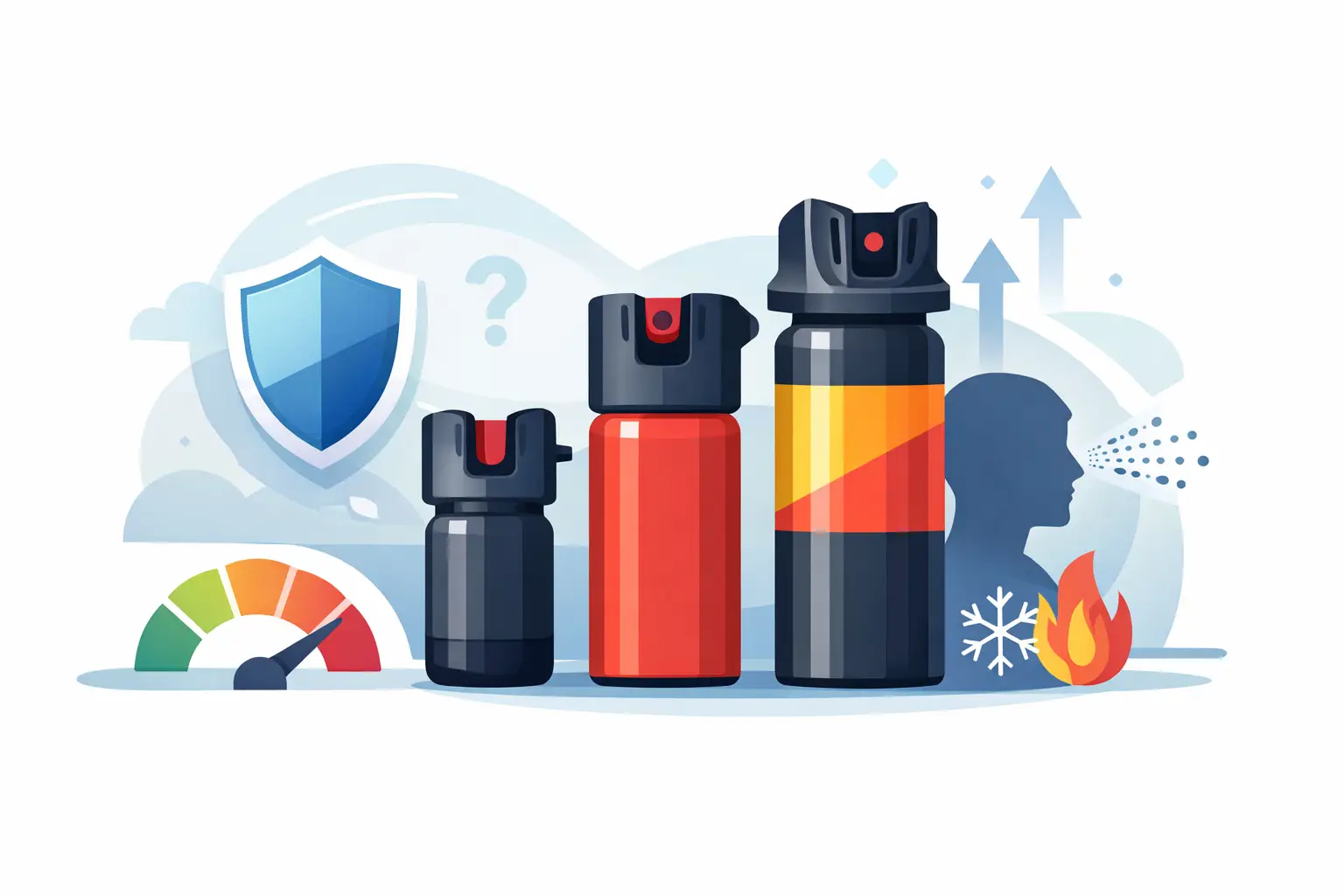
Pepper spray looks simple until you start comparing labels and realize one can says 10% OC, another talks about major capsaicinoids, and a third claims extreme heat without telling you much at all. If you are trying to figure out how to choose pepper spray strength, the right answer is not always the hottest formula on the shelf. The best choice is the one you can carry confidently, deploy fast, and trust under stress.
What pepper spray strength really means
A lot of buyers assume strength is just about pain level. That is only part of the picture. Pepper spray strength is really about how effectively the formula can inflame the eyes, skin, and respiratory system long enough to help you break contact and get to safety.
That is why the label can be misleading if you only look at big numbers. Some products advertise a high OC percentage, but OC percentage alone does not tell the full story. OC refers to oleoresin capsicum, the pepper extract in the formula. A higher percentage may sound stronger, but the more useful measurement is often the amount of major capsaicinoids, which reflects the active compounds doing the work.
In plain terms, a spray with a lower OC percentage can still hit harder than one with a higher percentage if the active ingredient is more concentrated. For most everyday buyers, this means you should not shop based on one bold claim on the front of the canister.
How to choose pepper spray strength for real-world use
The smartest way to choose is to match the spray to your likely threat, your comfort level, and your environment. A strong formula matters, but reliability matters just as much.
For everyday civilian self-defense, you want a product that creates immediate disruption and gives you a chance to escape. That usually means choosing a reputable formula designed for personal protection, not novelty heat claims or vague marketing language. If the product clearly states its active ingredient information, spray range, and delivery pattern, that is usually a better sign than flashy promises.
There is also a practical limit to going stronger. A more aggressive formula is not useful if the canister is hard to aim, too large to carry, or more likely to contaminate you in a tight space. Strength should support your safety plan, not complicate it.
The numbers that matter most
When comparing products, start with the active formula, then move to performance features.
OC percentage vs. major capsaicinoids
OC percentage is often the first number people notice, but it is not the best standalone measure of effectiveness. It tells you how much pepper extract is in the mix, not necessarily how potent the active compounds are.
Major capsaicinoids give a clearer picture of true stopping power. If a product lists this number, pay attention to it. A clearly labeled formula from a trusted self-defense brand is usually a safer bet than a product using oversized percentages to create hype.
SHU can be helpful, but not by itself
Scoville Heat Units, or SHU, describe heat intensity, but this number can also confuse buyers. Some labels refer to the raw pepper heat, while others refer to the finished spray formula. Those are not the same thing.
That is why SHU alone should not decide your purchase. It can support the picture, but it should not replace other details like active content, range, and delivery system.
Spray pattern changes how strength feels
Two pepper sprays with similar formulas can perform very differently based on how they spray. Stream, cone, fog, and gel each have trade-offs.
A stream usually gives you better range and less blowback risk, which makes it a strong option for outdoor carry. A cone or fog pattern can cover more area and is easier to hit with under stress, but it increases the chance of affecting yourself or bystanders, especially indoors or in wind. Gel tends to reduce airborne contamination and can work well in tighter spaces, though it may require more precise aim.
So when thinking about strength, do not separate the formula from the delivery method. Real stopping ability depends on both.
Match the strength to where you carry it
Context matters. The right pepper spray for walking to your car at night may not be the same one you want for a dorm room, office, or hiking trail.
If you mainly carry outdoors, range and wind resistance should be high priorities. A stream or gel formula often makes more sense than a wide fog. If you are concerned about an indoor threat, cross-contamination becomes a bigger issue. In those situations, a more controlled pattern can protect you from turning your own defensive tool into a problem.
For runners, commuters, and people who want discreet everyday carry, size matters too. A compact unit that stays on your keychain or in an easy-to-reach pocket is better than a stronger canister you leave at home. The strongest spray is useless if it is not with you when you need it.
Consider who will be using it
Not every buyer has the same experience level, and that should shape your choice.
If you are new to self-defense tools, look for a pepper spray that is easy to grip, easy to understand, and quick to fire under pressure. Finger-grip designs, flip-top safeties, and simple aiming features can make a real difference when your adrenaline spikes.
If you already train regularly and understand deployment distance, positioning, and follow-up actions, you may feel comfortable carrying a larger unit or a more specialized pattern. But for most people, simpler is better. Under stress, people do not rise to the occasion. They fall back on what they have practiced.
That is one reason many responsible buyers shop from trusted sources like Elite Warrior Defense, where product selection is built around practical protection rather than gimmicks. When your goal is peace of mind, clarity matters.
The legal side matters too
Before you buy, check your state and local laws. Pepper spray is legal in many places, but there can be limits on canister size, formula type, age requirements, or where it can be carried.
This is not a minor detail. A spray that seems ideal on paper may not be legal where you live or travel. If you commute across state lines, that matters even more. Choosing the right strength includes choosing a product you can carry lawfully and confidently.
Warning signs when shopping
There are a few red flags that should make you slow down.
Be cautious with products that only advertise extreme heat with no clear ingredient breakdown. Be cautious with vague claims like military grade if there is no explanation behind them. And be cautious with products that look cheap, have weak safety mechanisms, or do not clearly describe their spray pattern and range.
A defensive tool should be dependable. If the labeling feels more like hype than useful information, keep looking.
What most people actually need
For the average civilian carrying for personal protection, the sweet spot is a reputable pepper spray with clearly stated active ingredient information, a practical range, and a spray pattern suited to the environment where it will likely be used. That usually beats chasing the most aggressive label.
You want enough strength to disrupt an attacker quickly, enough control to avoid unnecessary blowback, and enough simplicity that you can use it under pressure. That balance is what gives pepper spray real value as a self-defense option.
One more factor people overlook – practice
Even the right strength will not help much if you have never handled the canister. You should know how the safety works, how the unit feels in your hand, how far it sprays, and how quickly you can bring it into position.
Practice does not mean careless discharge. It means building familiarity. Read the instructions, understand the range, and think through how you would access it in a stressful moment. Confidence comes from preparation, not just purchase.
Choosing pepper spray strength is really about choosing a tool you can trust when your heart is racing and seconds matter. Go for clear labeling, proven performance, and a design you will actually carry, because the best self-defense choice is the one that helps you act fast and get home safe.