A vehicle can turn from familiar shelter to a confined space without much warning. A crash can jam a door. A seat belt can lock under tension. Water, smoke, or fire can make a normal exit feel far away. The right car emergency escape tools give you a practical backup when you cannot rely on your vehicle’s standard controls.
These tools are not about fear. They are about preparation, calm decisions, and keeping a simple option within reach when a situation becomes urgent. A well-chosen escape tool can help cut a restrained seat belt, break the correct window, and get you or a passenger out faster. But the tool matters only if it is accessible, appropriate for your vehicle, and familiar enough to use under pressure.
What car emergency escape tools should do
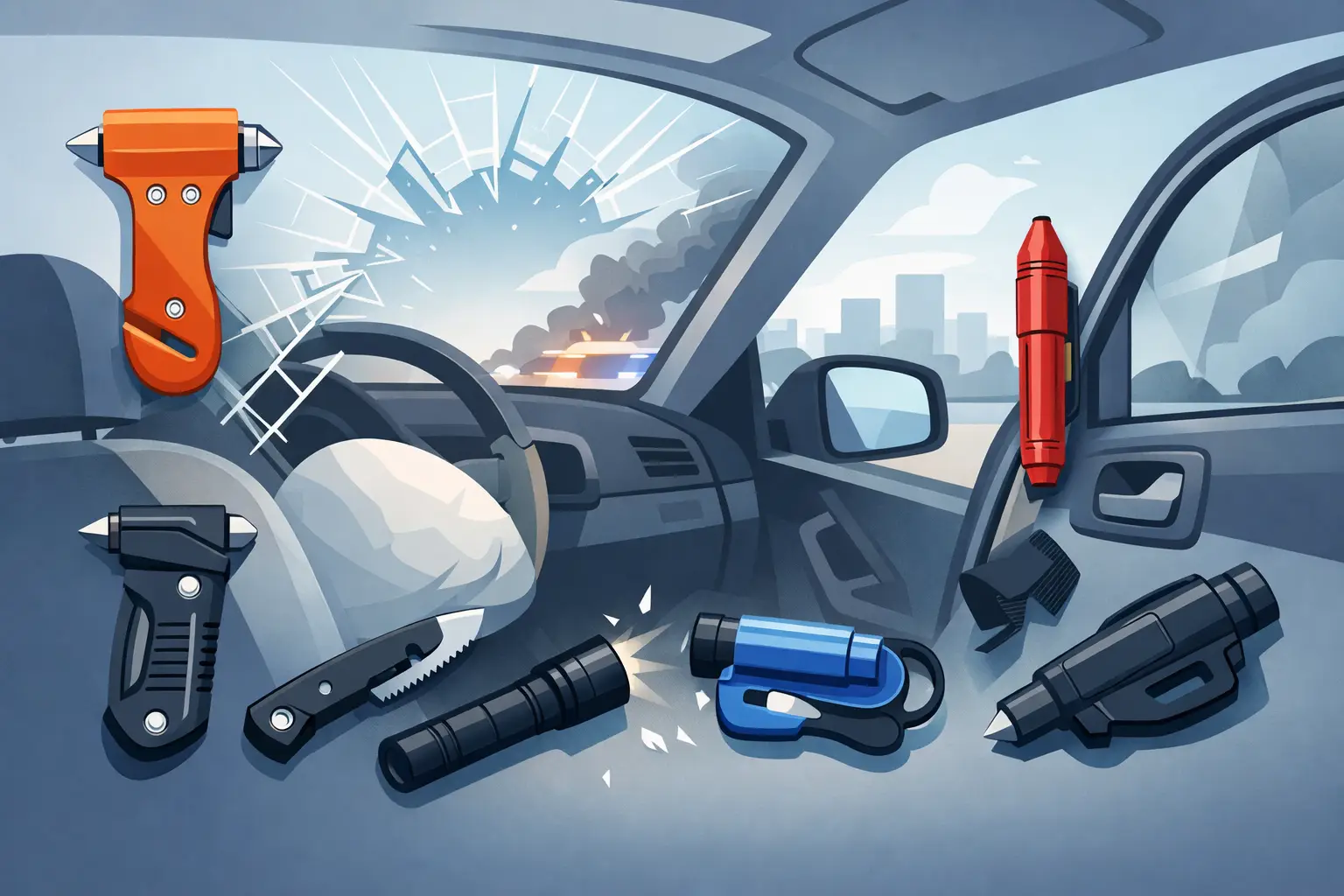
The most useful emergency escape tools focus on two common obstacles: a locked or jammed seat belt and an exit blocked by doors or windows. Many compact devices combine a protected belt cutter with a spring-loaded window breaker or a hardened steel strike point. Others are built into emergency flashlights or mounted in a holder near the driver.
A good tool should be simple. In an emergency, you should not have to unfold multiple parts, decipher small instructions, or use a lot of hand strength. Look for a design that can be operated with one hand and has a secure grip, even if your hands are wet, shaky, or wearing gloves.
There is a trade-off between compactness and ease of use. A keychain-sized tool may be easy to carry from one vehicle to another, but its smaller grip can be harder to control. A larger mounted tool is usually easier to find and operate, but only if you keep it mounted where it remains reachable after a crash.
The 7 tools and features worth considering
1. A recessed seat belt cutter
A dedicated cutter with a concealed blade is one of the most practical features to have. It is designed to slide around a strap and slice through it without leaving an exposed blade near the occupant. This matters when a belt is tightly loaded, twisted, or pressed against clothing.
Test the placement and motion before you ever need it. You do not need to cut a belt to learn the action. Hold the tool from the seated position and make sure you can draw it, orient it, and reach the belt path without looking down for long.
2. A spring-loaded window punch
Spring-loaded punches use an internal mechanism to deliver focused force to glass. They are typically easier to use than hammer-style tools because they do not require a large swinging motion. That can be a serious advantage inside a cramped cabin or after an injury.
Press the tool firmly against the window, ideally near a lower corner or edge, then activate it according to the manufacturer’s instructions. Avoid striking the center of the glass when you have a better edge location available.
3. A hardened steel window breaker
Some escape tools use a pointed steel tip that you strike against the window. These can work well, especially when built into a solid emergency hammer, but they demand more physical movement and a clean striking angle. For some drivers, a spring-loaded design is the more dependable choice.
Whichever style you choose, the tip should be protected or safely contained when the tool is stored. You want fast access without creating a hazard for children, passengers, or your vehicle’s interior.
4. A mounted escape-tool holder
A capable tool buried under the center console is not an emergency tool. It is just clutter. A secure holder keeps the device in a known location where the driver can reach it while seated and buckled in.
Good mounting locations include a lower dashboard area, center console side, or another stable point within arm’s reach. Do not place it in a glove box, trunk, or behind loose gear. A collision can shift objects, jam compartments, or make your usual storage spot unreachable.
5. An emergency flashlight with escape features
A compact safety light can be valuable after a nighttime crash, breakdown, or roadside emergency. Models with a seat belt cutter and glass breaker can provide multiple functions in one device: light for visibility, a signaling option, and escape capability.
The trade-off is maintenance. Rechargeable lights need charging, and battery-powered models need fresh batteries. Make checking the light part of your regular vehicle safety routine, especially before long road trips or severe-weather travel.
6. A second tool for passengers
One tool near the driver is a strong start, but it may not help a passenger in the rear seat or an adult who cannot reach the front after impact. Keeping a second escape tool accessible from another seating area adds meaningful redundancy.
This is particularly useful for parents, rideshare drivers, caregivers, and anyone who regularly travels with family. The goal is not to fill the vehicle with gadgets. It is to make sure the people you carry are not dependent on one person being conscious, mobile, and able to reach one location.
7. A window-breaker tool matched to your glass
Not every vehicle window reacts the same way. Many side and rear windows use tempered glass, which is designed to break into small pieces when struck correctly. Windshields are generally laminated, meaning they are built to stay together and should not be your primary escape target. Some newer vehicles may also use laminated side glass, which can resist standard escape tools.
Check your owner’s manual or the markings in the corner of your windows. Know which glass is tempered and which exits are realistic before an emergency occurs. If your side windows are laminated, your plan should place extra emphasis on unlocking doors, opening windows before a water entry if possible, and identifying another viable exit.
Where to keep your escape tool
Accessibility decides whether a tool is useful. Keep your primary tool where you can reach it while secured in the driver’s seat. The center console can work only if it stays uncluttered and opens easily. A purpose-built mount is often a better answer because it gives the tool a fixed home.
Avoid storing your only tool on a keychain. Keys may be lost in a collision, left in the ignition, knocked away, or unavailable if another person is driving. A keychain escape tool can be a useful extra, but your vehicle should have a dedicated tool that stays in the vehicle.
Think through your routine. If you park in a garage, commute alone, drive children to school, or take long highway trips, your best placement may differ. The one rule that does not change is simple: do not put the tool where you must unbuckle, twist, or search to get it.
Practice the order of escape
Emergency tools work best alongside a clear sequence. If you are able, first try the simplest exit: unlock the doors, release the seat belt normally, and leave the vehicle. If the belt will not release, use the cutter. If doors will not open and an exit window must be broken, protect your face, turn away from the glass, and clear loose fragments carefully as you leave.
When water is involved, speed matters, but panic creates costly mistakes. If the vehicle is still above water and electrical controls work, open the window immediately. Do not wait for the vehicle to fill before taking action. A door can become difficult to open as pressure builds, so a usable side-window exit may be your best option.
After escaping a vehicle with smoke or fire, move well away from traffic and the vehicle itself. Call 911 when it is safe to do so. Do not go back for bags, electronics, or valuables.
A tool is only one part of preparedness
Car emergency escape tools are affordable, compact, and easy to overlook until the moment they are needed. That is exactly why choosing one deserves more thought than grabbing the first gadget on a store shelf. Favor a dependable cutter, a window-breaking method you can operate, and a storage location you can reach without hesitation.
At Elite Warrior Defense, personal safety starts with practical choices that support confidence when conditions are not normal. Put an escape tool in place, show the adults in your household where it is, and revisit the plan before your next road trip. The best time to find out whether you can reach it is while the vehicle is quiet, dry, and safely parked.