A bear encounter is not the moment to wonder whether the canister clipped to your pack still works. If you have ever asked, does bear spray expire, the direct answer is yes: it has a limited service life, and the date on the canister matters. Bear spray is emergency equipment. Treat it with the same seriousness you would give a first-aid kit, a flashlight, or a vehicle emergency tool.
Does Bear Spray Expire?
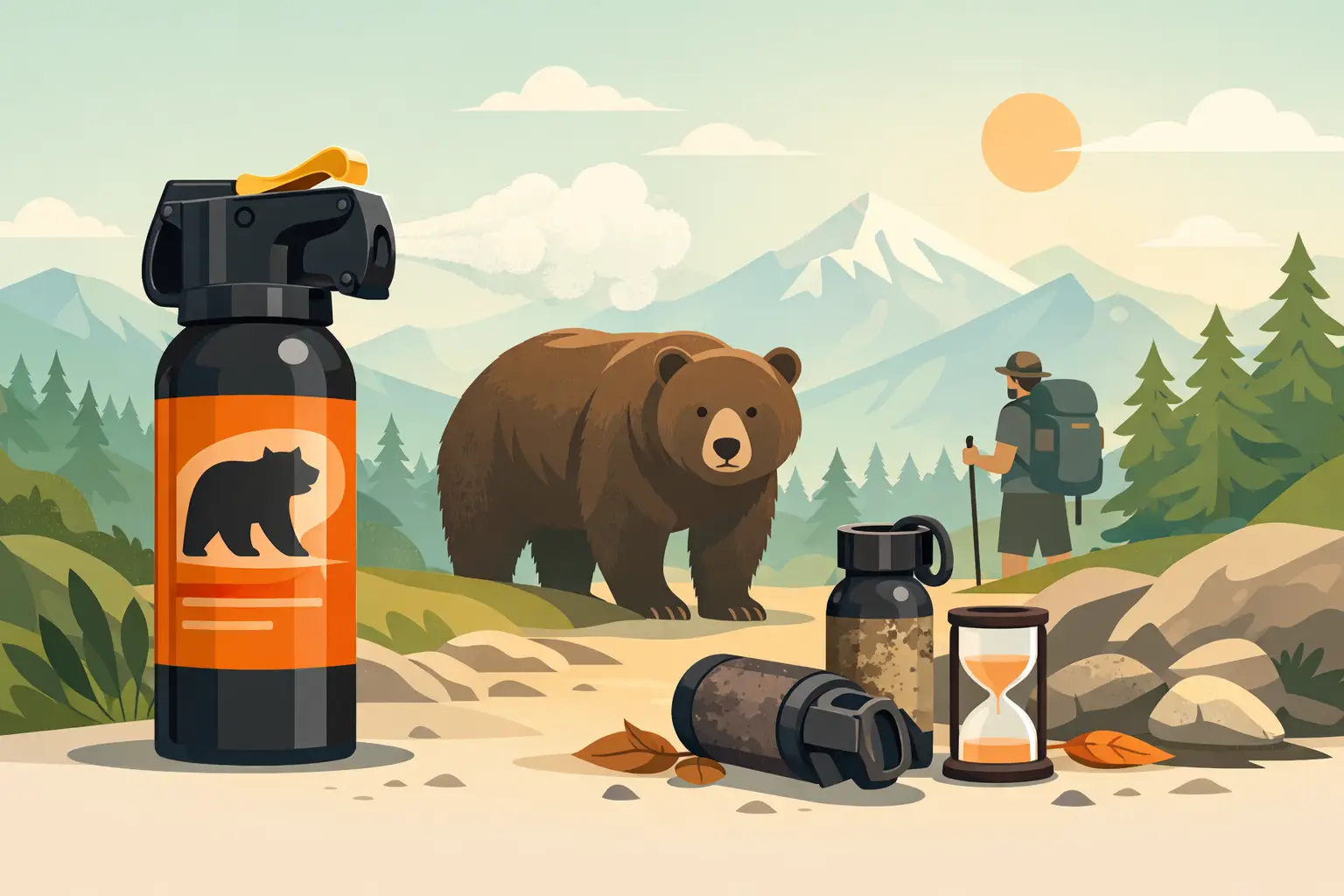
Bear spray can expire because its ability to deploy depends on more than the pepper formula inside. A bear-deterrent aerosol canister relies on internal pressure, a functioning valve, an intact seal, and a properly formed spray pattern. Over time, those components can become less reliable, especially when the canister has been exposed to heat, cold, moisture, physical damage, or poor storage.
Most bear spray manufacturers print an expiration date or manufacture date on the canister. Many products are designed for a shelf life of roughly three to four years from manufacture, but there is no single date that applies to every brand or canister. The label and manufacturer instructions for your specific product are the authority.
Do not assume an unopened canister lasts forever. Even if it has never been used, pressure can gradually decline and seals can age. The active ingredient may still be present, but a weak, short-range, or inconsistent spray is not protection you should rely on when a bear is closing distance.
Find the Date Before You Head Outdoors
Check your bear spray before every hiking season and before any trip into bear country. Look closely at the bottom of the canister, around the neck, or on the label for wording such as “expiration date,” “use by,” “best by,” or a manufactured-on date.
If you only find a manufacture date, consult the product directions to determine the stated shelf life. If the date is missing, rubbed off, or impossible to read, do not guess. Replace the canister or contact the manufacturer with its lot number if one is available.
An expired canister is not guaranteed to fail, but emergency gear should not be judged on a gamble. The cost of replacing old bear spray is small compared with the consequences of finding out it cannot reach its advertised distance when you need it.
Expiration Date vs. Canister Condition
A current date does not automatically mean a canister is ready for use. Inspect the physical condition as well. Replace bear spray immediately if you notice corrosion, dents, cracks, a damaged safety clip, a loose or broken nozzle, leakage, or a canister that feels unusually light.
Also pay attention to whether the canister has been left in extreme conditions. A summer vehicle can become dangerously hot, while prolonged freezing temperatures may affect pressure and operation. Bear spray should not be stored in a glove compartment, on a sunny dashboard, near a heater, or anywhere it can be crushed or punctured.
Why Old Bear Spray Can Be Less Reliable
Bear spray is designed to create a broad cloud of capsaicin and related capsaicinoids, causing temporary irritation to a bear’s eyes, nose, and respiratory system. Its purpose is to deter a charging or aggressive bear long enough for you to move away safely. It is not meant to be a precision tool, and it is not something to use casually.
For that protective cloud to work as intended, the canister needs enough pressure to propel the contents outward in the right pattern. As an aerosol canister ages, pressure loss or valve failure can reduce the range and volume of the spray. A damaged nozzle may cause an uneven stream, dribble, or failure to discharge.
This is why an old canister is not just a minor inconvenience. Reduced range can force you to wait until the animal is closer. A poor spray pattern can make it harder to create a deterrent barrier. In a high-stress encounter, you need equipment that is simple, accessible, and dependable.
How to Store Bear Spray the Right Way
Smart storage protects both the canister and the people around it. Keep bear spray in a cool, dry area away from direct sunlight, open flames, heat sources, and children. Follow the temperature limits printed on the label. Avoid leaving it in a car for long periods, even if the weather seems mild when you park.
When you are hiking or camping, carry it where you can reach it instantly. A backpack pocket, buried pouch, or locked vehicle is not useful when seconds matter. A belt holster or chest holster can keep the canister accessible while protecting it from unnecessary bumps and abrasion.
Keep the safety mechanism in place until there is a real need to use the spray. Do not carry a canister loosely in a pocket where the trigger could be pressed accidentally. Before your trip, practice the motion of removing the safety clip and aiming without spraying. Familiarity builds confidence without wasting the product.
Should You Test Your Bear Spray?
Do not test-fire the bear spray you plan to carry for protection. Discharging it can reduce the amount available for an emergency, and once the seal has been broken, you should not assume the remaining contents will perform to original specifications. It can also expose you, nearby people, pets, and wildlife to powerful irritants.
Instead, inspect the canister, read its instructions, and practice handling it with the safety engaged. Some manufacturers offer inert training units made specifically for practice. Those are a safer option for learning how to draw, remove the safety, aim slightly downward, and use short bursts.
If you accidentally discharge your bear spray, replace it before returning to bear country. Even a brief discharge can leave you without the full protective range and spray duration shown on the label.
What to Do With Expired Bear Spray
Do not toss an expired canister into regular household trash, crush it, puncture it, burn it, or try to empty it in your yard. The canister remains pressurized, and its contents can injure people and animals or create a hazardous situation.
Disposal rules vary by location. Your local household hazardous-waste program, recycling center, fire department, or solid-waste authority may provide instructions for aerosol self-defense products. Call ahead and describe the item as expired bear spray or an oleoresin capsicum aerosol canister. Follow their directions rather than assuming it belongs in curbside recycling.
If an expired canister is leaking, avoid touching the nozzle or breathing near the spray. Keep people and pets away from the area, ventilate if it is safe to do so, and contact local authorities or hazardous-waste staff for guidance. Do not attempt to repair a leaking canister.
Replace It Before It Becomes a Problem
The best time to replace bear spray is before a trip, not while packing at the trailhead. Make it part of your seasonal outdoor safety check: inspect your bear spray, confirm the date, check your first-aid supplies, recharge lights, and make sure everyone in your group knows where the deterrent is carried.
Choose a product labeled specifically for bear deterrence and use it according to its instructions. Personal pepper spray and bear spray are not interchangeable. Bear spray is generally designed for a wider cloud and longer range, while pepper spray products are designed for personal defense situations. Carrying the right tool for the environment gives you a stronger safety margin.
Bear spray is one layer of a responsible bear-country plan. Make noise when appropriate, stay alert around blind corners and dense brush, secure food and scented items at camp, respect wildlife distance, and never approach a bear for a photo. These habits can reduce the chance of an encounter escalating.
A dated, undamaged canister carried within reach gives you something far more valuable than a false sense of security: a practical option when prevention is no longer enough. Check yours now, replace it if there is any doubt, and head outdoors prepared to protect yourself and the people with you.