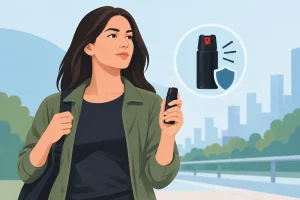
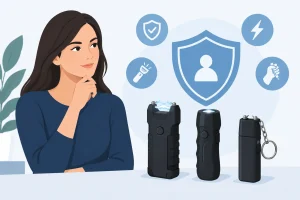
A personal alarm does not need training, a perfect aim, or close contact to make an impact. When activated, it creates an attention-grabbing burst of sound that can interrupt a threatening moment and alert people nearby. This personal alarm review looks at what separates a useful safety tool from one that is likely to stay forgotten at the bottom of a bag.
For many people, that difference comes down to a simple question: can you activate it instantly when your hands are shaking, distracted, or occupied? The right alarm is small enough to carry every day, loud enough to be noticed, and easy enough to use without thinking through multiple steps.
What a Personal Alarm Is Designed to Do
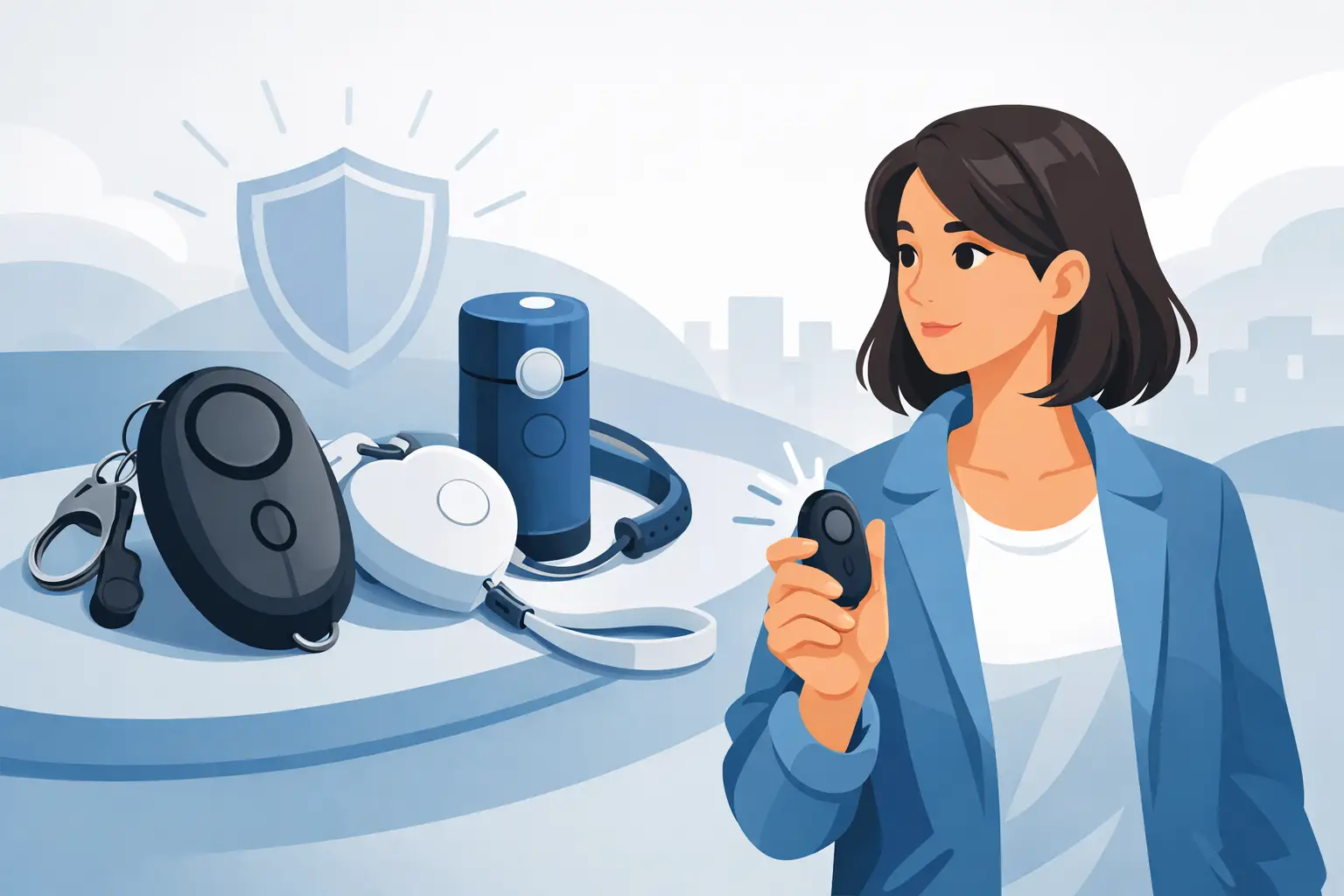
A personal alarm is a compact device that emits a high-volume siren when triggered. Most models use a pull pin, while others use a button, switch, or separate activation tab. They are commonly attached to keychains, backpacks, purses, lanyards, or belt loops.
Its purpose is not to physically stop an attacker. Its strength is disruption. A sudden alarm can draw attention, create confusion, signal that you are not an easy target, and give you a moment to move toward people, light, or safety. That makes it a strong everyday option for commuters, students, runners, older adults, travelers, and anyone who wants an accessible layer of personal security.
The trade-off is clear: alarms depend on sound being heard. In a remote parking area, on an empty trail, or in a very loud setting, there may be fewer people available to respond. Think of a personal alarm as one part of a broader safety plan, not a guarantee that help will arrive immediately.
Personal Alarm Review: The Features That Count
Marketing often centers on a decibel number. Volume matters, but it is not the only measure of an alarm’s value. An exceptionally loud device is less helpful if the pull pin is difficult to grab or the alarm activates accidentally every time it bumps against your keys.
Loudness and sound quality
Many personal alarms are marketed in the 120 to 140 decibel range. Those numbers can be useful for comparison, but real-world performance also depends on the alarm’s tone, where it is carried, battery condition, and the surrounding environment. A sharp, piercing siren tends to attract attention better than a low, muffled tone.
You should never test an alarm next to your ear. Instead, test it briefly outdoors or in a controlled space, then make sure you know how to turn it off. If the sound feels weak from just a few feet away, it is not the device to trust when you need it most.
Activation you can use under stress
A pull-pin alarm is often the most direct design. Pull the pin and the siren sounds. The pin generally remains attached to the device, which makes it harder to lose during an emergency and easier to silence once you are safe.
Button-activated alarms can be convenient, but they may require you to hold a button for several seconds or press it in a specific sequence. That can reduce accidental activation, yet it adds a step during a stressful moment. The best option depends on where and how you carry it. If it lives on a keyring, a protected button may make sense. If you need immediate activation while walking to your car, a large pull tab may be the better choice.
Size, weight, and carry position
A safety device only works if it is with you. Large alarms may offer extra features, but a compact unit attached to your keys is often more likely to become part of your routine. Look for a shape you can identify by touch and a pull ring or tab you can grip without looking.
Where you carry it matters as much as the alarm itself. Keeping it buried in a purse defeats its purpose. Attach it to the outside of a bag, keep it in an accessible pocket, or hold your keys and alarm before entering a garage or parking lot. Accessibility beats convenience when seconds matter.
Battery type and readiness
Some alarms use replaceable coin-cell batteries, while others have built-in rechargeable batteries. Replaceable batteries can be practical for long-term ownership, provided you keep the correct battery on hand. Rechargeable models reduce the need for replacements, but only if you remember to charge them.
Check your alarm periodically according to the manufacturer’s instructions. Do not wait until you feel unsafe to find out whether it works. A quick readiness check every few months, along with checking any built-in light, is a sensible habit.
Useful extras without unnecessary clutter
Many alarms include an LED flashlight. This can be valuable when finding a door lock, walking through a dim lot, or locating something inside a vehicle. A flashing light mode may also add visibility in certain situations.
Other features deserve a more careful look. GPS, app connectivity, and contact alerts can be helpful, but they introduce phone battery, signal, subscription, and setup considerations. A simpler alarm may be more dependable for someone who wants a straightforward tool with no app required. Buy for the features you will actually use, not the longest feature list.
Who Gets the Most Value From One?
Personal alarms are especially practical for people who want a non-contact option that is legal and easy to carry in many settings. Students walking across campus, employees leaving late shifts, dog walkers, and people using public transportation can all benefit from having a loud alarm immediately available.
They also make sense as a first safety tool for teens and older family members. The instructions are usually easy to understand: pull or press to activate, move away from danger, call 911 when appropriate, and seek a safe public place. Still, a new user should practice locating and activating the alarm before relying on it outside the home.
An alarm can also complement other legal self-defense options. For example, an alarm may draw attention while you create distance, while a bright safety light can help you see your surroundings. The right combination depends on your comfort level, local laws, daily routine, and willingness to practice.
Common Problems to Avoid
The least effective personal alarm is usually the one that is inaccessible, untested, or misunderstood. Avoid buying based on price alone. An inexpensive alarm can be useful, but flimsy construction, a loose keyring, or unreliable activation can turn a bargain into a liability.
Be cautious with designs that are hard to silence after activation. You want a device that is difficult for someone else to disable but manageable for you once you reach safety. Read the instructions before carrying it and keep any included battery tab, charging cable, or replacement parts organized.
Also avoid treating the alarm as a substitute for awareness. Pay attention to your route, avoid getting absorbed in your phone in isolated areas, and trust your instincts if a situation feels wrong. An alarm is most effective when it supports good decisions before a situation becomes dangerous.
How to Choose With Confidence
Start with your daily routine. A runner may prefer a lightweight alarm with a wrist strap or clip. Someone who commutes by train may want a keychain design that stays in hand while walking to and from the station. A parent buying for a college student may prioritize an obvious pull-pin design and a bright flashlight.
Before making a decision, consider four practical questions:
- Can I reach and activate it with one hand?
- Will I realistically carry it every day?
- Can I maintain its battery without forgetting?
- Does its design fit the places where I spend the most time?
Elite Warrior Defense focuses on approachable security tools because personal protection should not be limited to people with specialized training. A personal alarm is not complicated, and that is exactly why it deserves consideration. It can be carried quietly, activated quickly, and used by people who simply want more options when a situation turns uncomfortable.
Choose an alarm you can keep within reach, test it before you need it, and make it part of the habits that help you move through the world with greater confidence.