
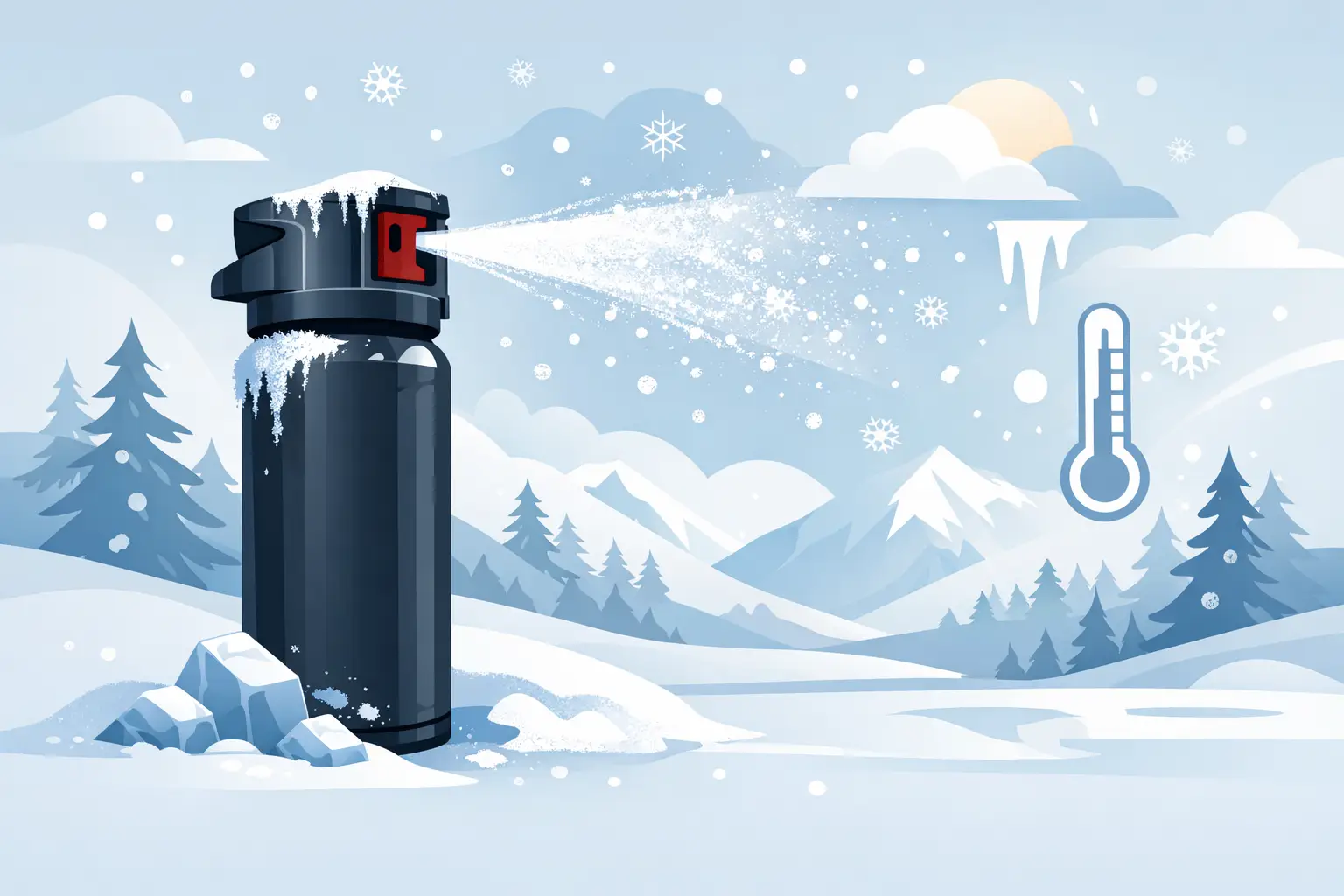
A pepper spray canister left in a freezing car overnight may still look perfectly normal in the morning. That does not mean it will perform normally when you need it. Can pepper spray freeze? The short answer is yes, extreme cold can affect the liquid and the pressurized system inside the canister. Even when it does not freeze solid, cold temperatures can reduce spray pressure, shorten range, and make your defensive tool less reliable.
For a tool you may depend on during a stressful moment, “probably fine” is not a storage plan. Understanding how cold affects pepper spray helps you carry it with more confidence, inspect it intelligently, and replace it before reliability becomes a question.
Pepper spray contains more than oleoresin capsicum, the active ingredient derived from hot peppers. Most canisters also contain a carrier liquid and a propellant that pushes the formula out when you press the actuator. The exact ingredients and freezing resistance vary by manufacturer and product type.
That means there is no single temperature at which every pepper spray canister freezes. Some formulas are designed to tolerate cold better than others, while others may thicken, lose pressure, or experience performance changes as temperatures drop. A canister does not have to turn into a solid block of ice to become less effective.
Cold weather primarily creates two concerns. First, the liquid formula may become thicker, which can interfere with the intended stream, spray, foam, or gel pattern. Second, reduced temperature can lower internal pressure. Less pressure may mean a weaker discharge and a shorter effective range.
This matters most with products designed to create distance between you and a threat. If your spray normally reaches several feet but performs weakly after hours in extreme cold, you may be forced closer to danger than intended. That is a risk worth avoiding.
A cold canister may still discharge, but it may not discharge as designed. The difference is critical. Pepper spray is most useful when you can deploy it quickly, create space, and get away to safety.
In very cold conditions, you may notice a weaker stream, an inconsistent spray pattern, or slower release from the actuator. Gel formulas can be especially affected if the carrier thickens. Fog-style sprays may lose some of the range that makes them effective for rapid area coverage. A stream may become less forceful or less predictable.
The canister itself can also be affected by repeated temperature swings. Moving from a warm home to a freezing vehicle and back again can put unnecessary stress on the container, valve, and internal contents. Over time, that can increase the chance of leakage or reduced performance.
Do not assume a canister is dependable simply because the safety cap is intact and there are no visible dents. A quick visual check is useful, but it cannot confirm that the pressure and spray pattern are still where they should be.
A severely cold canister should be handled cautiously, but it should not be placed near a heater, open flame, radiator, or other high-heat source. Pepper spray containers are pressurized. Rapid or excessive heating can create a serious hazard and may damage the canister.
If you believe your pepper spray was exposed to freezing temperatures, bring it indoors and allow it to return to room temperature naturally. Leave it in a safe location away from children, pets, direct sunlight, and heat sources. Do not puncture it, force the actuator, or try to open the container.
Once it has warmed gradually, inspect it for leaks, corrosion, swelling, cracks, unusual odor, or damage around the nozzle and safety mechanism. If anything appears compromised, do not carry it as your primary defensive tool. Replace it.
If the canister looks normal after returning to room temperature, check the manufacturer’s instructions for temperature guidance and use recommendations. Product labeling is the best authority for the formula in your specific canister.
The glove box is convenient, but it is one of the worst long-term places to store pepper spray. Cars can become much colder than outdoor temperatures during the winter and much hotter than outdoor temperatures in the summer. Both extremes can affect a pressurized self-defense product.
Avoid leaving pepper spray in an unheated garage, outdoor shed, mailbox, vehicle console, or exposed bag for extended periods. In winter, a coat pocket, purse, backpack, or inside jacket pocket may offer better protection because your body heat and regular movement help keep the canister closer to a moderate temperature.
At home, store your pepper spray in a dry, accessible place with stable indoor temperatures. It should be secure from unauthorized access, especially around children, while still easy for you to reach in an emergency. A safety tool buried in a cluttered drawer is less useful than one you can locate immediately.
For everyday carry, choose a holster, keychain case, or pocket position that protects the canister without making it difficult to draw. The goal is simple: keep it protected, accessible, and within the temperature range recommended on its label.
Winter weather should change how you check your gear. Before heading out in cold conditions, make sure the canister is not damaged and that you can access it while wearing gloves or heavier clothing. A small canister at the bottom of a deep coat pocket may be harder to find when seconds matter.
Practice locating the canister and identifying the actuator orientation without looking. You should know which way the nozzle faces before an emergency happens. Never practice by spraying indoors, inside a vehicle, or near other people. Accidental exposure can affect you, bystanders, and pets.
If the product instructions allow function testing, do it only outdoors in a safe, legal, well-ventilated area with no people, animals, or property downwind. Follow the label closely. Testing can confirm whether the spray is producing the expected pattern, but it also uses product and can create contamination concerns. Many people choose to replace an old or questionable canister instead of relying on a doubtful test.
It is also wise to carry a backup plan. A personal safety alarm, bright safety light, charged phone, and awareness of your surroundings can all help you avoid or exit a dangerous situation. Pepper spray is a defensive option, not a substitute for staying alert and seeking safety.
Replace the canister if it leaked, appears damaged, has been exposed to prolonged extreme temperatures, is past its expiration date, or no longer gives you confidence in its condition. The cost of a replacement is small compared with the consequences of relying on a tool that may not perform as intended.
Expiration dates matter because the formula, pressure, seals, and valve components can degrade over time. Even a canister stored indoors should be checked periodically. Make inspecting your pepper spray part of the same routine as checking smoke alarm batteries, replacing worn flashlight batteries, or reviewing your home security plan.
If you live in an area with harsh winters, consider rotating your carry canister more frequently and keeping a properly stored replacement available. At Elite Warrior Defense, the focus is practical preparedness: reliable tools, accessible storage, and habits that support your safety before an emergency develops.
It may work below freezing, but performance can vary. Lower temperatures can reduce pressure and affect spray distance or pattern, depending on the formula and canister design. Check the product label for its specified operating temperature range.
Only shake it if the manufacturer’s instructions direct you to do so. Shaking cannot restore lost pressure or repair a damaged valve. Let the canister warm naturally to room temperature first, then inspect it carefully.
It is not recommended for long-term storage. A vehicle exposes the canister to extreme cold and heat, both of which can affect reliability. Carry it with you whenever possible instead of leaving it in the car.
Your safety equipment should be ready before you need it, not merely available nearby. Keep your pepper spray protected from temperature extremes, know how to access it, and replace it when its condition is uncertain. Confidence comes from preparation you can trust.
YOU’RE IN!
Use this code on every order
🎉
Here’s Your Code!
Use it now an on every future order.
YOUR DISCOUNT CODE
We also sent this code to your email for safekeeping.
EXCLUSIVE OFFER
Every order – not just your first!
Unlock Your Discount Instantly
Enter your email below and your personal 15% discount code appears right here – no need to check your inbox.
🔒 We respect your privacy. Unsubscribe anytime.