You can do everything right – choose a reputable stun gun, learn how to use it responsibly, keep it secured – and still get tripped up by one thing: geography. Cross a state line for work, school, a road trip, or a move, and the rules can change fast.
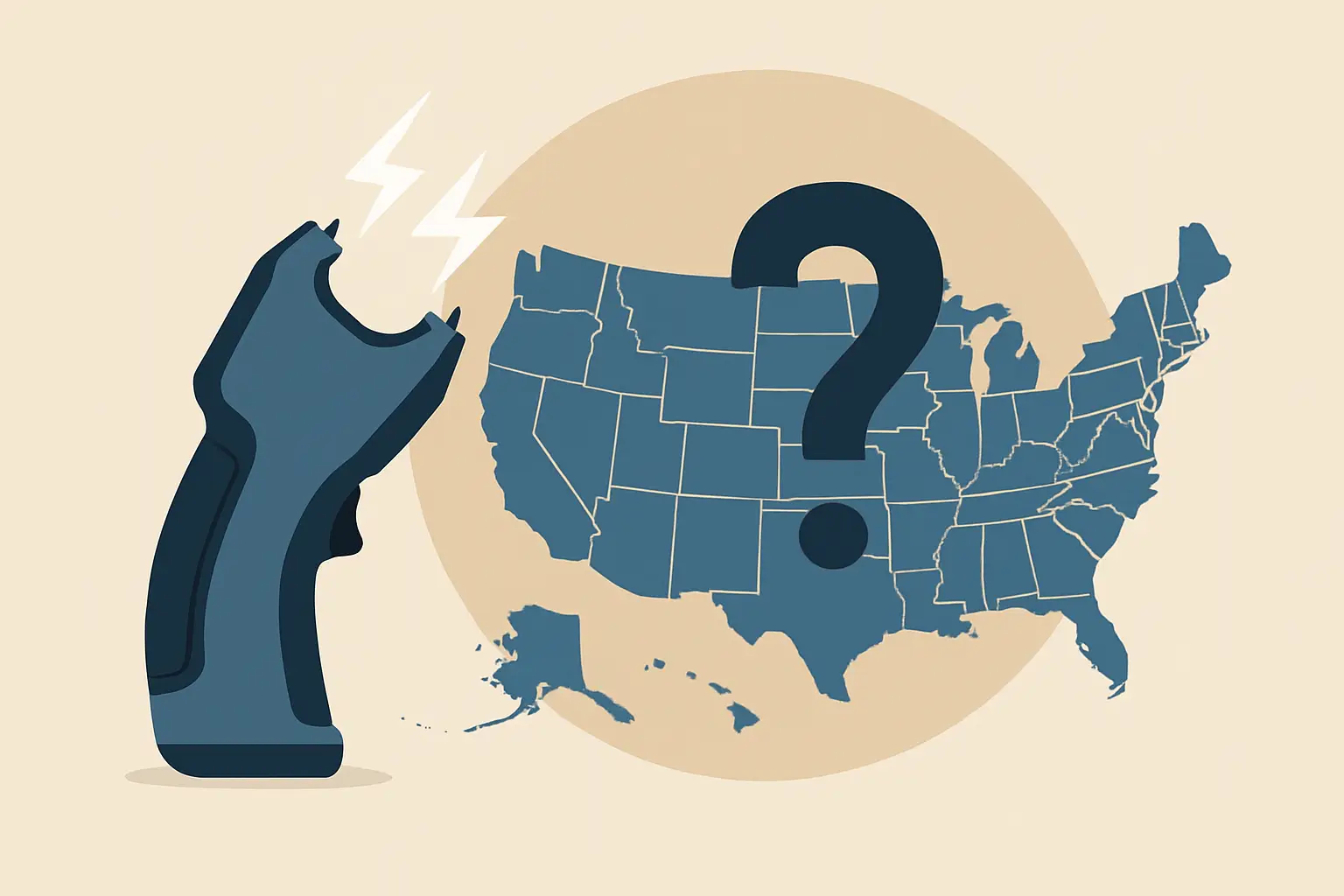
If you’ve been asking, “are stun guns legal by state,” you’re asking the right question. In the US, stun gun and taser laws aren’t one simple yes-or-no. They’re a patchwork of state statutes, local ordinances, and rules about where and how you can carry.
Are stun guns legal by state?
In most states, stun guns are legal for adults who can legally possess them. That said, “legal” often comes with conditions that matter in real life: whether you can carry it concealed, whether you need a permit, whether there are age limits, and where it’s prohibited (schools, government buildings, airports, and certain private properties are common no-go zones).
The biggest trap is assuming that because stun gun is legal to own, it’s automatically legal to carry everywhere. Many states treat stun guns as weapons for certain purposes, and that can trigger restrictions similar to knives or firearms in specific locations.
Another reality: local rules can be stricter than state rules. A city or county may limit possession or carry even if the state generally allows it. That’s why the smartest approach is “state law first, then check your city and the places you go.”
The practical way to think about stun gun legality
Stun gun laws usually hinge on a few factors:
1) Who is allowed to possess one
Even where stun guns are broadly legal, prohibited persons rules often apply. If you are barred from possessing weapons due to a felony conviction or certain protective orders, you may not be allowed to possess a stun gun either. Some states write this explicitly; others tie it to broader weapon definitions.
2) How you carry it
Some states focus on concealed carry rules. Even if a stun gun is legal, carrying it hidden in a purse, waistband, or pocket may be regulated differently than open carry.
3) Where you carry it
Schools and school grounds are the most common legal landmines. Government buildings, courthouses, and secured areas of airports are also frequent restricted zones. Many employers and venues set their own policies too.
4) What type you have
“Stun gun” is often used casually to describe different devices. Some laws distinguish between handheld stun guns and projectile devices (often called tasers). In a few states, the wording can affect what’s allowed.
States where stun guns are broadly legal
Across a large majority of the country, stun guns are legal to buy and possess with minimal red tape, assuming you’re an adult and not otherwise prohibited. Many people in these states still run into issues not because of ownership, but because they carry into a prohibited place or don’t understand local rules.
If you live in a state with generally permissive self-defense laws, don’t let that create a false sense of security. “Permissive” does not mean “anywhere, anytime.” It means you have more flexibility, but you still have responsibility.
States with notable restrictions or special rules
This is where people need to slow down. Some states are mostly legal but have extra requirements that can matter.
Illinois
Illinois allows stun guns, but the rules have changed over time and can involve licensing requirements depending on how the law is currently structured and applied. This is a state where you should verify current requirements before purchasing or carrying, especially if you’re in or near Chicago.
Maryland
Maryland is generally permissive for possession, but carry and use can be sensitive depending on the circumstances. If you’re carrying for self-defense, you still need to stay away from restricted locations and be mindful of how “intent” can be interpreted after an incident.
Michigan
Michigan law has evolved over the years and may differentiate between types of devices and who can possess them. If you’re shopping or traveling here, confirm you’re buying and carrying a compliant device.
Wisconsin
Wisconsin is another state where stun guns can be legal, but there may be restrictions tied to prohibited persons or certain carry circumstances. Know where you can’t bring it, and store it safely.
Places where a “legal” stun gun can still get you in trouble
Even in states with straightforward ownership laws, these locations often create problems:
Schools and campuses
K-12 school property is commonly restricted. Colleges and universities can be complicated because state law, campus policy, and building-by-building rules may all apply. If you’re a student or you’re picking up your kids, treat school zones as a hard stop unless you have confirmed lawful possession and storage rules.
Government buildings and courthouses
Courthouses, many municipal buildings, and some state facilities have security screening and strict rules. Don’t assume a stun gun is treated casually just because it’s “less lethal.” Security staff often treat it like any other weapon.
Airports and flights
A stun gun in your carry-on is a fast way to turn travel day into a mess. Rules for transporting in checked baggage can vary, and airlines may have their own requirements. Plan ahead and do not rely on last-minute assumptions.
Private property policies
Venues, hospitals, and workplaces can prohibit weapons, including stun guns. Even if it’s legal under state law, violating a posted policy can lead to removal, termination, or trespass issues.
Travel and moving: what changes first
If you’re traveling, your first move is to check the law in your destination state, then any states you’ll pass through. The second move is to check the rules for the specific places you’ll enter: hotels, event venues, campuses, and government buildings.
If you’re moving, take an extra step and look at your new city or county rules. Local restrictions are easy to miss because people focus only on state law.
Buying smart: compliance is part of self-defense
A self-defense tool should increase your peace of mind, not add risk. When you buy a stun gun, think beyond features like voltage claims or size. Ask:
Will this be carried daily or kept at home?
Do you need something that fits a specific carry method, like a bag or pocket?
Do you frequently go places where carrying is restricted, like schools or government offices?
If you’re building a complete safety setup, it can be smart to pair tools. For example, pepper spray may be legal in places where stun guns are restricted, and safety lights can help with awareness and deterrence. The goal is options, because real life is not one-size-fits-all.
If you want a one-stop place to outfit responsibly, Elite Warrior Defense carries self-defense and home security essentials designed for practical, everyday protection.
How to check your state and local rules without guessing
You don’t need to be a legal expert to be careful. You need a repeatable process.
Start with your state’s current statutes on “stun guns,” “electronic weapons,” or “conducted electrical weapons.” Then check whether your state allows local regulation. If it does, look up your city or county ordinances.
After that, think situationally: where do you actually go in a normal week? If you regularly step into a school, a courthouse, a hospital, or a secured workplace, look up those policies too. This is the part most people skip, and it’s where issues happen.
Finally, if you’re ever forced to use a stun gun in self-defense, the legal aftermath will care about the details. Being able to say you understood and followed the law, carried responsibly, and used it only to stop an immediate threat matters.
A realistic note on “use” versus “possession”
Even where possession is legal, misuse can trigger serious charges. Brandishing, using it to threaten, or using it during an argument can turn a defensive tool into evidence against you. Stun guns are meant for stopping a threat long enough to escape, not for winning a confrontation.
The best self-defense outcome is boring: you recognize trouble early, create distance, leave, and never have to deploy anything. A stun gun is for the moment when leaving is not possible and you need a forceful interruption to get away.
Closing thought
The law is part of your safety plan. Treat “are stun guns legal by state” the same way you treat locking your doors or charging your phone: a basic habit that keeps you in control, especially when life takes you across town or across state lines.