

Most people don’t realize how often the truth comes down to one question: can you prove it?
When something goes sideways at your front door, in a parking lot, during a ride-share dispute, or with an aggressive stranger, memory turns into an argument fast. That’s where an eyeglasses hidden camera can feel like a cheat code – hands-free, always pointed where you’re looking, and subtle enough to capture what a phone in your hand might escalate.
But these devices are not magic. They’re a tool. And like any security tool, the value comes from buying the right one, using it for the right scenarios, and understanding where it can absolutely fail you.
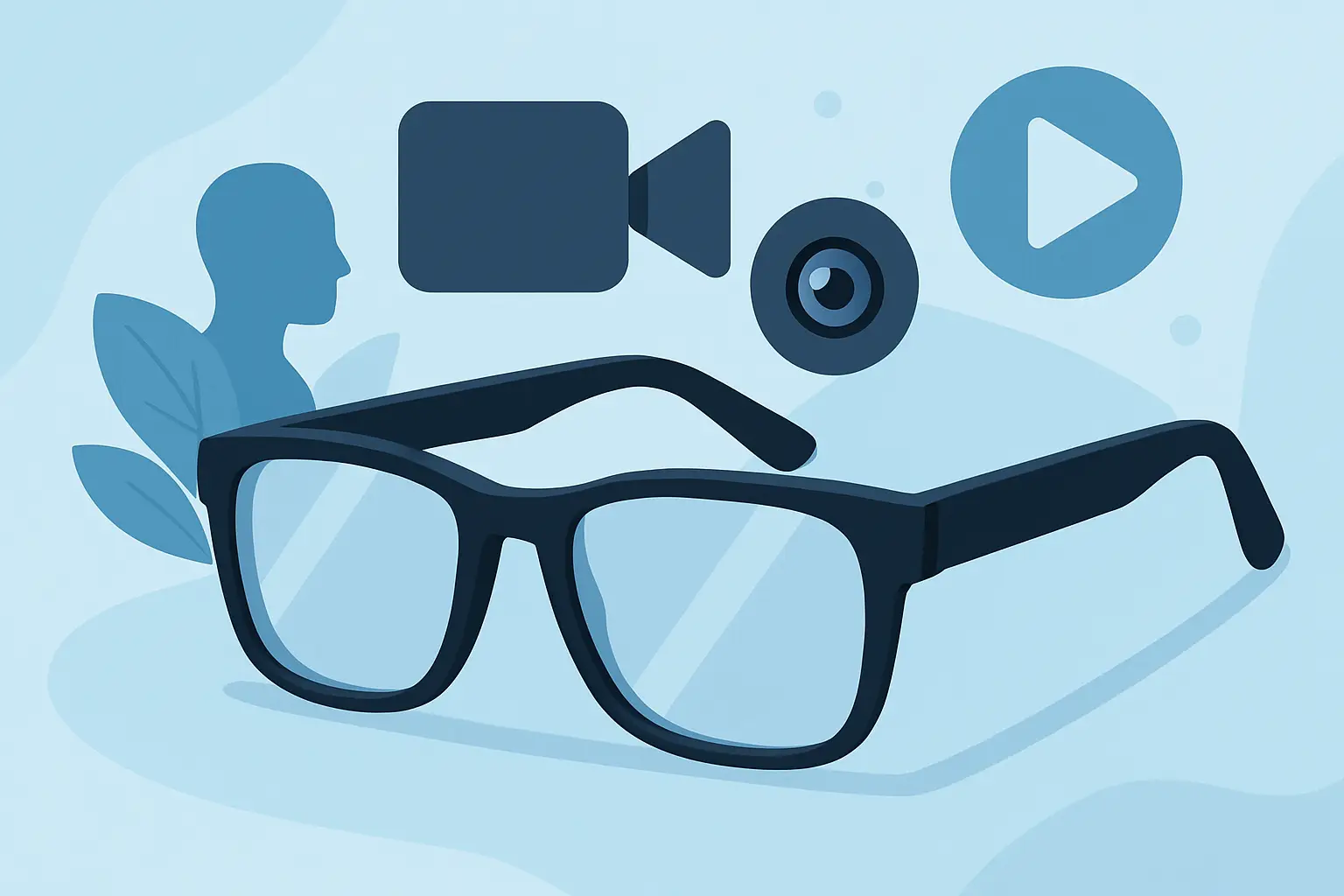
An eyeglasses hidden camera is wearable recording gear built into frames. Some look like everyday glasses. Others lean “sport” or “tactical.” Either way, the core promise is the same: record from your point of view without carrying a dedicated camera or visibly holding your phone.
Here’s the reality check. These cameras typically trade video quality and low-light performance for convenience and discretion. If your plan is courtroom-grade clarity at night from 30 feet away, you’ll likely be disappointed. If your plan is to capture clear context at conversational distance in decent lighting, many models can deliver exactly what you need.
Also, don’t confuse “hidden” with “invisible.” People notice eyewear. They notice unusual frames. They notice behavior. The goal isn’t Hollywood-level stealth – it’s practical, non-dramatic documentation that doesn’t make you look like you’re filming someone with your phone.
Hands-free recording makes sense for people who can’t count on having a free hand in a stressful moment. If you’re carrying groceries, walking a dog, pushing a stroller, or supporting a family member, a phone is easy to drop and hard to aim.
POV recording is also useful when pulling out a phone would inflame the situation. There are plenty of encounters where someone sees a phone and instantly changes their behavior, gets more aggressive, or tries to grab it. Glasses avoid that obvious trigger in many situations.
And sometimes the benefit is simply clarity. If your eyes are on a threat, the camera is on the threat. You’re not pointing at the ground while your hands shake. You’re not capturing audio-only because you forgot to hit record. Wearable tools reduce those mistakes.
These devices are strongest in close-range, real-world interactions: a doorstep confrontation, someone blocking your car door, a heated argument in a lobby, a suspicious person approaching you in a parking structure. In those situations, you’re generally facing the subject, the lighting is at least decent, and what matters most is context and identity.
Where they struggle is distance, darkness, and motion. A lot of eyeglasses cameras have small sensors and fixed lenses. That means low-light grain, blown highlights, and reduced detail at night. Add fast head movement (turning to check behind you, looking down to unlock a door) and you can get motion blur that makes faces hard to identify.
If you want your recording to be useful when it matters, you have to plan for those weaknesses instead of discovering them after the fact.
Most product listings shout the same buzzwords: “HD,” “discreet,” “long battery.” Ignore the noise and focus on what affects real-world results.
Resolution labels can be misleading. 1080p on paper doesn’t guarantee you can read a license plate or see a face clearly at night. Usable detail depends on lens quality, sensor size, compression, and lighting.
A practical rule: prioritize clarity at 3 to 10 feet. That’s the range where most confrontations and suspicious interactions happen. If a camera can’t reliably capture a face across a small room, it’s not doing the job.
A narrow field of view can cut off what matters – hands, a second person stepping in, the path to an exit. A very wide field of view captures more scene but can make faces smaller and harder to recognize.
If you’re buying for personal security documentation, you generally want a balanced view that captures the person and their hands without turning them into a tiny dot.
People obsess over video and forget the part that often matters most: what was said.
In many conflicts, the key facts are threats, refusals, admissions, and escalation. If the audio is muffled, clipped, or overwhelmed by wind noise, you lose the story.
Look for consistent voice pickup at normal speaking distance, not “audio recording” as a vague checkbox.
There are two kinds of needs:
If you want something “always ready,” you need predictable standby behavior and a simple way to confirm it’s charged. If you want something for a specific walk, commute, or shift, you need continuous recording that covers that window without dying.
Small wearable batteries are a hard limit. Long-recording claims can be optimistic. Plan around your routine and expect to recharge frequently.
Onboard memory is simple but limiting. MicroSD gives flexibility, but it adds a failure point if you buy cheap cards or don’t format them properly.
If the camera supports microSD, use a quality card and test it. Corrupt files are the kind of problem you only notice after you needed the footage.
In a real incident, you don’t have time to cycle modes. A strong wearable camera for security has simple controls you can operate by feel. You should be able to start recording quickly, confirm it’s recording (via vibration, indicator, or voice prompt), and stop it without drawing attention.
If the controls require you to stare at tiny lights or remember complex tap patterns, you’re building in failure.
If the frames pinch, slide down your nose, or feel heavy, you won’t wear them. If you don’t wear them, you won’t record.
Comfort is also stability. Loose glasses bounce with every step, and that ruins footage. A snug, stable fit matters as much as resolution.
This is the part people try to skip. Don’t.
Recording laws in the US often hinge on “reasonable expectation of privacy” and, for audio, whether your state is one-party or all-party consent. That means what’s legal in one state can create legal risk in another, especially for audio.
In many public places, recording video is generally allowed. In private places where people expect privacy (bathrooms, changing rooms, some private offices), recording can be illegal regardless of intent. Audio can be even stricter.
If you travel, you need to treat this like you treat self-defense tools: know the rules where you are, not just where you live. A smart move is to set your default to responsible scenarios: public interactions, your own property, and situations where documenting behavior is clearly justified.
Also keep your purpose clean. The right use is documenting threats, harassment, trespassing, vandalism, or a dispute where you may need evidence. The wrong use is spying, stalking, or trying to “catch” people in intimate settings. Aside from legality, it’s a fast way to turn a safety tool into a liability.
A tool that’s meant to reduce risk can raise it if you use it the wrong way.
If someone discovers you’re recording and feels cornered, they may escalate. If you’re dealing with an unstable person, a covert camera can inflame the situation more than a visible phone would. Sometimes transparency defuses. Sometimes it doesn’t.
There’s also the risk of overconfidence. A camera is not protection. It doesn’t stop an attack, create distance, or buy you time. It documents. Documentation matters, but it’s not a shield.
So you have to decide, scenario by scenario, whether recording quietly helps you stay calm and safe, or whether it increases the odds of confrontation.
The best results come from treating it like part of a system, not a gimmick.
If you can’t start recording without thinking, you won’t start recording under stress.
Practice the exact motion you’ll use. Do it while walking. Do it while carrying something. Do it without looking in a mirror. Your goal is muscle memory.
Then check the footage. Did it capture what you thought it captured? Was the audio clear? Did you accidentally stop it? This small habit saves you from false confidence.
Decide what triggers recording for you. Examples include: someone approaches aggressively, you’re entering a parking garage late, a stranger blocks your path, a door-to-door person refuses to leave, or you’re meeting a buyer for a marketplace sale.
If you decide in advance, you act faster and cleaner. Hesitation is how you miss the beginning of the event, and the beginning is often the most important part.
Wearable cameras struggle in dim light, so use environments that help you.
If you sense trouble, move toward light when you can – under a streetlight, near a storefront, into a lit lobby. This isn’t about getting cinematic video. It’s about giving the sensor enough light to capture faces.
This is a simple trick that makes a big difference: when you need clear identification, slow down your head movement.
You don’t have to freeze. Just reduce fast scanning motions for a few seconds while the person is in front of you. If you’re speaking, keep your face oriented toward them so the camera has a stable view.
If you record something serious, treat the file as evidence immediately.
Don’t keep rewatching it on the device. Don’t keep recording over it. Save a copy somewhere secure as soon as you can, and consider writing down the time, place, and what happened while it’s fresh.
If law enforcement or an attorney ever needs it, you want clean, original footage and a clear timeline.
“Best” depends on your life.
Everyday-looking frames blend in at work, in stores, and around neighbors. If your main goal is documenting suspicious interactions without drawing attention, that style makes sense.
Sport frames often fit tighter and move less. If you’re walking a dog, jogging, or doing security rounds, stability may matter more than looking like normal eyeglasses.
The trade-off is obvious: the more “tactical” the frames look, the more people may assume you’re filming or wearing tech.
Most bad results come from predictable errors.
The first is not charging consistently. If this is a safety tool, it needs a charging routine like your phone.
The second is assuming the camera points exactly where your eyes point. Depending on lens placement, your camera may sit slightly off-center. That means you can “look” at something and still capture it awkwardly. You only learn this by testing.
The third is using it in bad lighting and expecting miracles. If you’re in a dark parking lot, consider adding a personal safety light to your setup. Light improves video and gives you better awareness at the same time.
The fourth is forgetting audio laws. Even if video is fine, audio can create issues in some states. If your model allows you to disable audio, you may want that option depending on where you live and how you plan to use it.
If you’re building real peace of mind, documentation is one layer. Physical deterrence and escape options are another. A camera may help prove what happened, but it doesn’t stop someone from getting within arm’s reach.
That’s why many people pair documentation tools with simple, legal self-defense options that match their comfort level and local laws. If you’re reviewing your overall setup, our roundup of practical, everyday tools can help you think through what fits your life and budget: Top Rated Personal Safety Products That Work.
And if pepper spray is part of your plan, don’t just buy and toss it in a drawer. The difference between “I have it” and “I can use it” is training and clarity. This guide breaks it down in plain steps: Use Pepper Spray Effectively: Real-World Steps.
The point is simple: cameras support your story. Tools support your safety. When you combine them, you reduce both physical risk and the risk of being unable to prove what happened.
An eyeglasses hidden camera makes sense in everyday situations where your hands are busy and you don’t want to wave a phone around.
Think about walking to your car after a late shift. If someone starts shadowing you, you can begin recording without escalating the interaction. If you’re approached at an ATM or outside a convenience store, you can capture the approach and the conversation.
It also makes sense for property issues. If you’re confronting repeated vandalism, package theft, or trespassing, a wearable camera can document the interaction when you step outside. It’s not a replacement for fixed home cameras, but it can cover the moments between “I noticed something” and “I got back inside.”
For marketplace meetups, it’s another layer of accountability. Most meetups are fine. The problem is the one that isn’t. A POV recording can capture what was agreed on, who showed up, and how the situation escalated if it does.
Travel adds two complications: laws and screening.
Different states handle audio consent differently, and some locations are sensitive about recording even if it’s legal. If you’re flying, you also want a device that won’t create unnecessary drama at TSA because it looks like a gadget disguised to deceive.
If your goal is broad travel safety, keep your gear simple and legal. This same mindset applies to defensive tools as well, and it’s worth thinking through what actually flies without headaches: Travel Self-Defense Items That Actually Fly.
If a listing promises ultra-long battery, flawless night vision, perfect stabilization, and invisible design at a bargain price, expect compromises.
Wearable cameras are constrained by physics: small sensor, small battery, small lens. Great performance costs money and still has limits.
So shop for what you truly need. If your priority is documenting close-range interactions in decent light, you don’t need wild claims. You need reliability, simple controls, and consistent footage.
Also consider customer support and return policies. With wearable tech, you want to test fit, controls, and file quality quickly. If it doesn’t match your needs, you want the option to exchange or return without a fight.
A wearable camera is personal and mobile. Home security cameras are fixed and persistent. They solve different problems.
If you already have a doorbell camera or outdoor cameras, glasses can fill the gaps: the side yard, the walk to the mailbox, the moment you step outside to address a suspicious person. If you don’t have home cameras yet, start there if your main concern is property crime.
If you’re weighing broader options for your home setup, you’ll want to compare coverage, storage, and reliability across systems: Best Home Security Systems With Cameras in 2026.
If you’re the type who prefers to keep your safety gear in one place – personal defense tools, home alarms, and discreet cameras – that’s exactly why we built Elite Warrior Defense as a one-stop shop. The goal is simple: practical security options that are accessible, affordable, and ready when you need them.
An eyeglasses hidden camera is at its best when you treat it like an accountability tool, not a spy gadget and not a substitute for self-defense. Buy for your real scenarios, test it until it’s second nature, and use it where documentation is both legal and justified.
If you do that, you’re not just recording video. You’re taking control of the narrative when it matters most – and that’s a powerful kind of peace of mind.




YOU’RE IN!
Use this code on every order
🎉
Here’s Your Code!
Use it now an on every future order.
YOUR DISCOUNT CODE
We also sent this code to your email for safekeeping.
EXCLUSIVE OFFER
Every order – not just your first!
Unlock Your Discount Instantly
Enter your email below and your personal 15% discount code appears right here – no need to check your inbox.
🔒 We respect your privacy. Unsubscribe anytime.