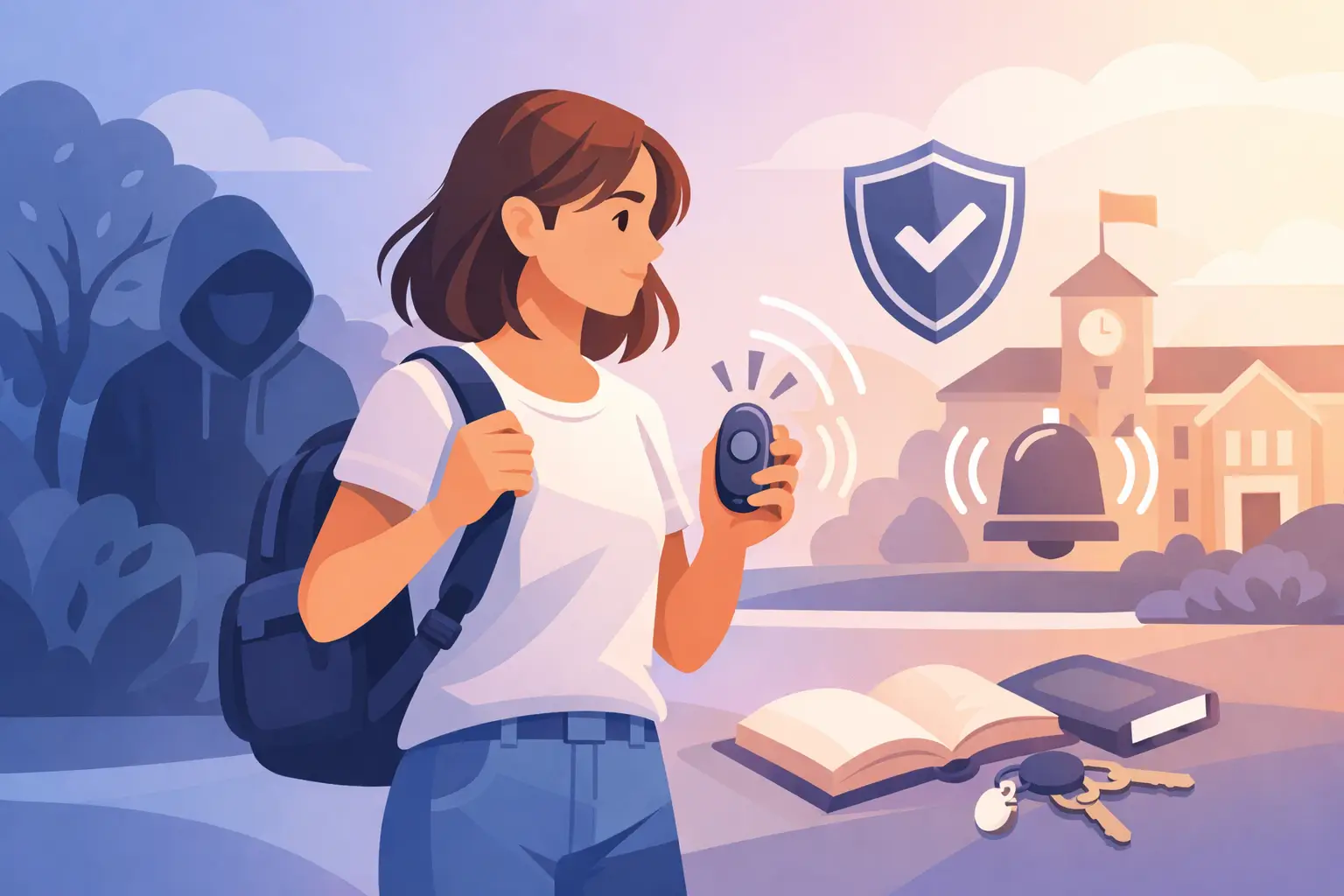
A late walk back from the library should not feel like a risk calculation. But for a lot of students, that short stretch between the parking lot, dorm, and classroom can feel very different after dark. That is exactly why a personal alarm has become one of the smartest, simplest safety tools to carry on campus.
A personal alarm for college students is not about fear. It is about creating options fast. When something feels off, seconds matter. A loud alarm can draw attention, interrupt someone’s plan, and give you a better chance to get to a safer place. It is small, affordable, easy to carry, and simple enough to use under stress. That combination matters.
Why a personal alarm for college students makes sense
College life has patterns that can make students more vulnerable than they expect. Walking alone after evening classes, going out on weekends, studying late, riding elevators with strangers, and moving through parking garages all create moments where awareness matters. Even on campuses with strong security teams, help is not always right next to you.
That is where a personal alarm stands out. It does not require advanced training. It does not depend on cell service. It does not ask you to unlock your phone, open an app, or explain what is happening while your hands are shaking. In a high-stress situation, simple wins.
A good alarm gives you an immediate response tool. Pull a pin or press a button, and a sharp, high-decibel sound erupts. That noise does two jobs at once. First, it can startle the person causing concern. Second, it signals to anyone nearby that something is wrong. On a campus where other students, staff, or security may be within earshot, that attention can make a real difference.
There is also a practical side that parents appreciate and students often overlook at first. A personal alarm is one of the few safety products that fits naturally into everyday college routines. It can clip onto a backpack, keyring, purse, lanyard, or belt loop without adding bulk.
What to look for in a personal alarm for college students
Not every alarm is equally useful. Some are built for real carry and quick access. Others look nice online but end up buried in a bag or forgotten in a drawer. The right choice depends on how a student actually moves through the day.
Sound level is the first thing people notice, and for good reason. A personal alarm needs to be loud enough to cut through normal campus noise like traffic, music, conversation, or a crowded student center. If it sounds weak indoors, it will be even less effective outside. Loudness alone is not everything, but it is the core job.
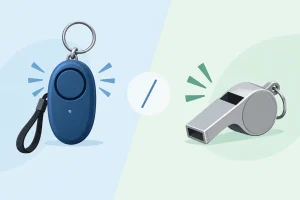
Ease of activation matters just as much. Under stress, fine motor skills drop. You do not want a device that requires a complicated sequence or a tiny switch that is hard to find in the dark. Pull-pin alarms are popular because they are direct and obvious. Some push-button styles work well too, but only if the button is easy to locate and activate without hesitation.
Carry style is where good intentions often break down. If the alarm is too bulky, awkward, or easy to lose, it probably will not stay with the student. Keychain models are a strong fit for campus life because they attach to something already carried every day. Clip-on styles can also work well for backpacks or purse straps. The best alarm is the one that is accessible in one second, not the one sitting at the bottom of a tote bag.
Battery life is another detail that deserves more attention. A personal alarm is an emergency tool, which means it may sit unused for long stretches. That is normal. But it still needs to work when needed. Students should choose a model with dependable battery performance and make a habit of checking it at regular intervals, such as at the start of each semester or after long breaks.
Some alarms add features like built-in lights. That can be useful on campus. A small light helps with dark walkways, stairwells, parking lots, and digging through a bag at night. It is not a substitute for the alarm itself, but it can make the device more practical for daily carry.
What a personal alarm can and cannot do
A personal alarm is a strong first-response tool, but it is not magic. It works best by creating noise, attention, and a chance to move. That means it is especially valuable in public or semi-public settings where others may hear it and where the surprise factor can interrupt an approach.
It is less about stopping a threat physically and more about changing the situation fast. That distinction matters. Students should not think of an alarm as the only part of a safety plan. It works best alongside awareness, smart habits, and knowing where to go for help on campus.
That does not make it less valuable. In fact, it makes it more realistic. The best safety tools are the ones people understand clearly and can use confidently. A personal alarm gives a student a fast way to act instead of freezing.
How students should carry and practice with it
Owning a safety tool is one thing. Being ready to use it is another. A personal alarm should be carried in the same place every day. That consistency builds muscle memory, which matters when stress hits. If it is on a keychain, it should stay there. If it clips to a bag strap, it should be positioned where a hand can reach it immediately.
Students should also test the device briefly when they first get it and then check it periodically. That confirms the battery works and helps them understand exactly how it activates. No one wants to learn that in the middle of a frightening moment.
Practice does not need to be dramatic. It can be as simple as holding the alarm, finding the trigger by feel, and rehearsing what to do next. Turn on the alarm, move away, head toward people, call campus security or 911 if needed. A small amount of preparation builds a lot of confidence.
There is also a common mistake worth avoiding. Do not stash the alarm deep inside a backpack. That turns an instant-access tool into a delayed-response tool. On campus, where situations develop quickly, access matters more than storage.
Personal alarms and campus safety habits work better together
A personal alarm is most effective when it supports strong everyday habits. Students should still use campus escort services when available, share their location with trusted friends when heading out late, stay alert in parking areas, and avoid walking with both earbuds blocking outside sound. Those habits reduce risk. The alarm helps when risk shows up anyway.
This is especially true for first-year students who are still learning a new environment. College life moves fast, and familiarity can create a false sense of security. The first few months on campus often come with late nights, new routes, and changing routines. Carrying a personal alarm helps close that gap while students build confidence.
Parents often ask whether a personal alarm is overreacting. It is not. It is the same logic as keeping a flashlight in your car or a fire extinguisher in your kitchen. You hope you never need it. You carry it because preparation beats regret.
Choosing the right alarm without overcomplicating it
The best choice usually comes down to a few basics: loud sound, fast activation, easy carry, and reliable battery life. Fancy extras are fine if they do not get in the way of the main job. For most students, a compact keychain alarm with a bright light and straightforward pull-pin design is a practical starting point.
Style matters a little, too. If a student likes how it looks, they are more likely to keep it with them. That may sound minor, but daily carry is what makes the tool useful. A safety product only helps if it is actually present when needed.
Affordability also matters for students and families. A personal alarm is one of the more accessible security tools available, which is part of why it makes so much sense for campus life. At Elite Warrior Defense, the focus is on practical personal security products that people can carry, understand, and use with confidence.
The strongest safety decision is often the simplest one. A personal alarm will not change the world around a student, but it can change what happens in a critical moment. And sometimes that loud, immediate response is exactly what creates the opening to get home safe.