
Your safety plan has to work on a random Tuesday night – when your hands are full, your phone is at 12%, and you are walking from a store to your car under bad lighting. That is why the best self-defense tool is rarely the “most powerful” option. It is the one you will actually carry, can access fast, and can use under stress.
This guide breaks down self defense tools for personal safety in a practical, real-world way. No fantasy scenarios. No complicated jargon. Just clear choices, trade-offs, and what to think about before you buy and carry.
Most people shop for self-defense tools backwards. They pick a product first, then try to imagine how it would help. Flip that.
Think in plain terms: Where are you most exposed – parking lots, apartment hallways, dog walks, rideshare pickups, jogging trails, closing up a business at night? Then consider what your hands are doing. If you are often carrying bags, walking a dog, holding a child’s hand, or unlocking a door, you need something you can deploy one-handed and fast.
Also be honest about distance. Some tools are designed to create space (sprays). Others require close contact (impact tools, keychain tools). Your best choice depends on whether you want to stop someone before they touch you, or you are planning for a worst-case, already-too-close scenario.
There is no single “best” tool for everyone. Most smart setups include one primary tool and one backup, plus a simple prevention habit like a light.
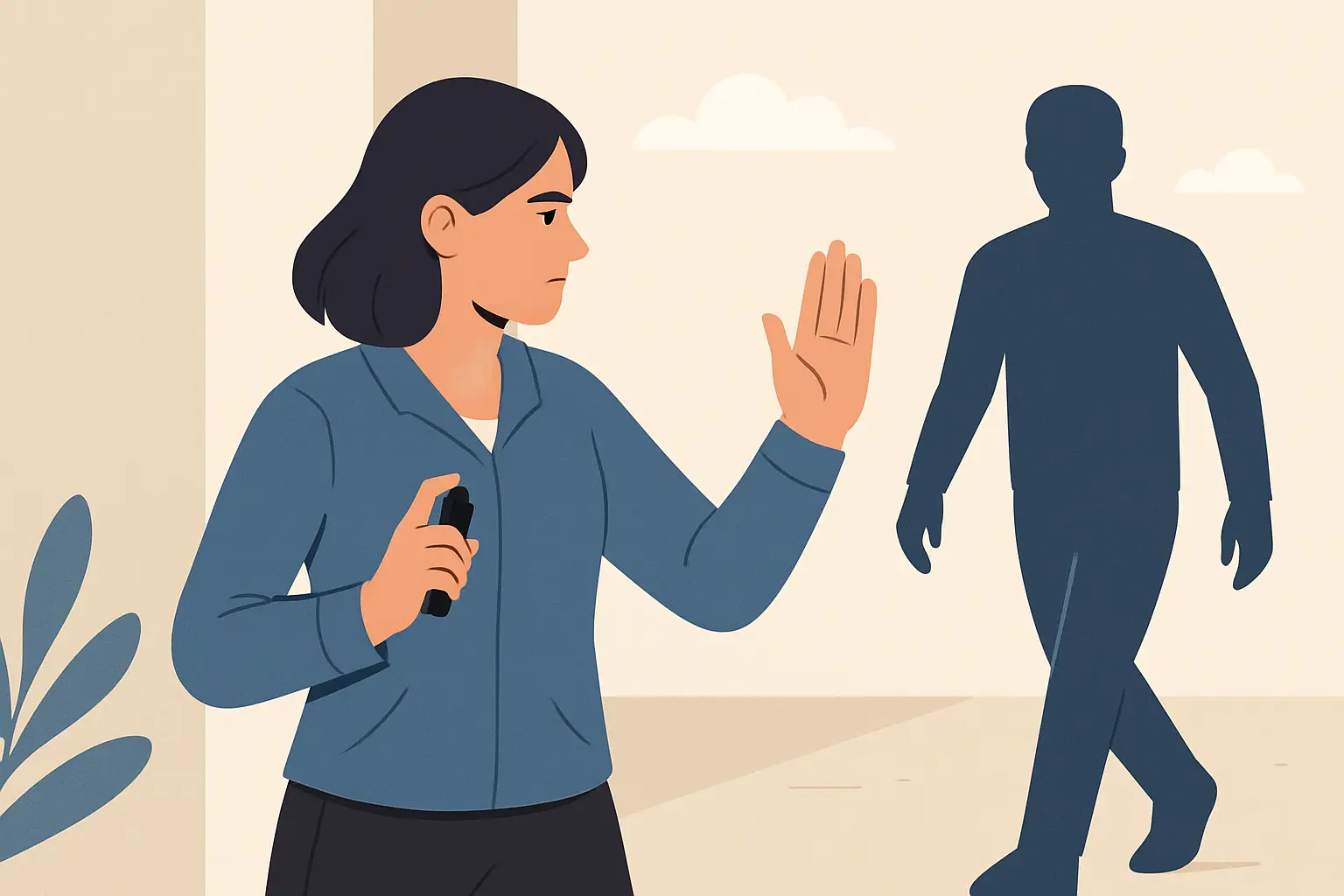
Pepper spray is popular for a reason. It is compact, relatively easy to use, and designed to work from a few feet away. That distance matters. If you can stop a threat before it becomes a hands-on fight, you are already winning.
The trade-off is that pepper spray is still a “skill” tool. Wind, rain, and panic can affect how well it lands. It also requires a decision point – you must recognize the threat early enough to create space and deploy.
If you choose pepper spray, practice how you carry it. A spray buried in a purse is not a tool – it is a receipt. The best carry method is the one that keeps it accessible and pointed the right direction without fumbling.
A stun gun can be a strong option if you are comfortable carrying it and you understand what it is meant to do. Stun devices are typically close-range tools. That means you are already in a higher-risk moment when you use one.
The advantage is the immediate pain compliance effect and the confidence many people feel having a device that is clearly defensive. The trade-off is proximity. If you do not want a close encounter, you may prefer a distance tool as your primary choice.
If a stun gun is your pick, commit to a few basic habits: keep it charged, know the safety switch by feel, and practice drawing it from where you carry it. Under stress, fine motor skills drop. You need your setup to be simple.
A stun baton gives you more reach than a handheld stun gun. For some people, that extra distance is the difference between confidence and hesitation, especially in environments like walking to a car at night or checking around a property.
The trade-off is size. A baton is not as easy to conceal or carry in every situation. But if your daily routine allows it, the reach can help you manage distance and keep a threat from closing in.
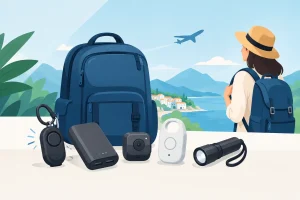
A bright safety light is not just “nice to have.” It is one of the most practical tools you can carry because it supports everything else.
Light helps you identify what is happening, avoid surprises, and communicate awareness. In many real scenarios, awareness is what keeps you from needing to use force at all. A light also gives you a simple action that buys time – illuminate, assess, move.
If you carry a defensive tool, pairing it with a light is a smart, low-effort upgrade.
Tactical pens and similar compact impact tools are appealing because they fit in normal life. You can keep one in a pocket, bag, or work setup without looking like you are gearing up for trouble.
The trade-off is that they are close-contact tools. They require you to be within arm’s reach. They also require more decision-making and more physical commitment than a spray. For many people, these are best as a backup tool – something you have when distance is gone.
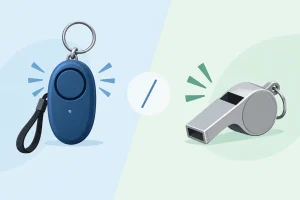
Self-defense keychains are popular because they are easy to carry and can be integrated into what you already hold. That convenience is the entire point.
But be clear-eyed. Many keychain tools are short-range and require grip strength and intent. If you choose one, choose a design you can hold onto when your heart rate spikes. “Easy to carry” is not enough. It has to be easy to control.
Not every threat is human. Repellents designed for animals can be useful for hikers, trail runners, delivery workers, and anyone who spends time outdoors.
The key is matching the tool to your environment and understanding local rules and appropriate use. If your daily routine includes remote areas or frequent animal encounters, an animal repellent can be a smart part of your safety setup.
If you feel stuck comparing options, use three simple filters: access, confidence, and legality.
Access means you can draw it quickly with one hand, under stress, without digging. Confidence means you are willing to carry it every day and you can picture yourself using it decisively if you must. Legality means you have checked your local and state rules for carry and use.
The best tool is the one that fits those three requirements at the same time.
Most failures happen before a tool is ever deployed. A device that stays in a glove box does not protect you on the walk to the car. A spray at the bottom of a tote bag is not accessible.
Set up your carry so that your tool lives in the same place every time. Consistency builds speed. Speed buys you options.
If you rotate bags, consider a dedicated pocket or clip location. If you keep a tool on your keys, commit to holding your keys the same way when you leave a building. These details feel small until the moment you need them.
You do not need to become a martial artist to get real value from self-defense tools. What you do need is familiarity under mild pressure.
Practice drawing your tool while seated in your car. Practice with your off hand. Practice while holding a bag. Practice turning your body slightly to create distance while you access the tool. These are realistic micro-drills that build confidence.
Also practice your voice. A strong, direct command like “Back up” or “Stay back” is not about being polite. It is about creating a moment of hesitation and signaling that you are not an easy target.
For many adults, the most practical setup is one distance tool plus one close-range backup. That might look like pepper spray as the primary tool and a tactical pen or keychain tool as the backup. Or a safety light paired with a stun device, depending on your comfort.
This approach covers more situations without turning your daily carry into a complicated project. If you have distance, you use distance. If distance collapses, you have a second option.
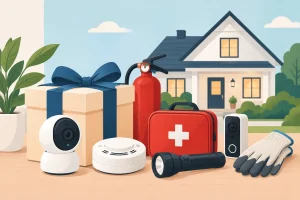
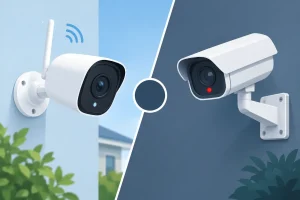
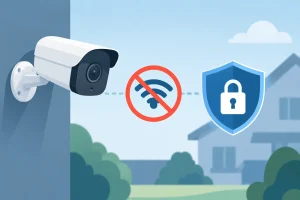
Personal safety does not stop at your front door. A window or door alarm, a simple camera presence, and good exterior lighting can reduce the odds that a threat ever reaches you.
If you are already investing in self-defense tools, consider a basic layer of home security that matches your living situation. Apartment dwellers and homeowners have different needs, but everyone benefits from deterrence and early warning.
If you want a one-stop shop that covers both personal defense tools and practical home security add-ons, Elite Warrior Defense is built for that mission – veteran owned, focused on real-life usability, and priced so you can actually build a complete safety setup instead of buying one item and hoping for the best.
Choose tools that match your real routine, then commit to carrying them consistently. Your safety is not a single purchase – it is a habit you build.
The most empowering part is this: you do not need to predict the exact moment something goes wrong. You just need a setup you trust, a plan you can execute, and the confidence to act early when something feels off.

YOU’RE IN!
Use this code on every order
🎉
Here’s Your Code!
Use it now an on every future order.
YOUR DISCOUNT CODE
We also sent this code to your email for safekeeping.
EXCLUSIVE OFFER
Every order – not just your first!
Unlock Your Discount Instantly
Enter your email below and your personal 15% discount code appears right here – no need to check your inbox.
🔒 We respect your privacy. Unsubscribe anytime.