The first week on campus moves fast: new roommates, crowded sidewalks, late-night study sessions, and more freedom than most students have ever had. College safety essentials are not about living scared or expecting the worst. They are about building practical habits and carrying the right tools so students can move through campus with more awareness, confidence, and control.
Start With a Personal Safety Plan
A good safety plan is simple enough to use when someone is tired, distracted, or rushing across campus. Students should know the campus security number, save it in their phone, and learn where emergency call stations, security offices, and well-lit routes are located before they need them.
It also helps to establish check-in habits with a roommate, parent, partner, or trusted friend. This does not mean reporting every move. It can be as straightforward as sending a quick message before walking home late, sharing an expected arrival time after a party, or agreeing on a code word that means, “Call me now” or “I need help.”
Campus safety is strongest when it is proactive. Waiting until a situation feels wrong can make it harder to think clearly. Students should give themselves permission to leave a location, call for an escort, or ask for help without worrying about seeming rude.
College Safety Essentials for Everyday Carry
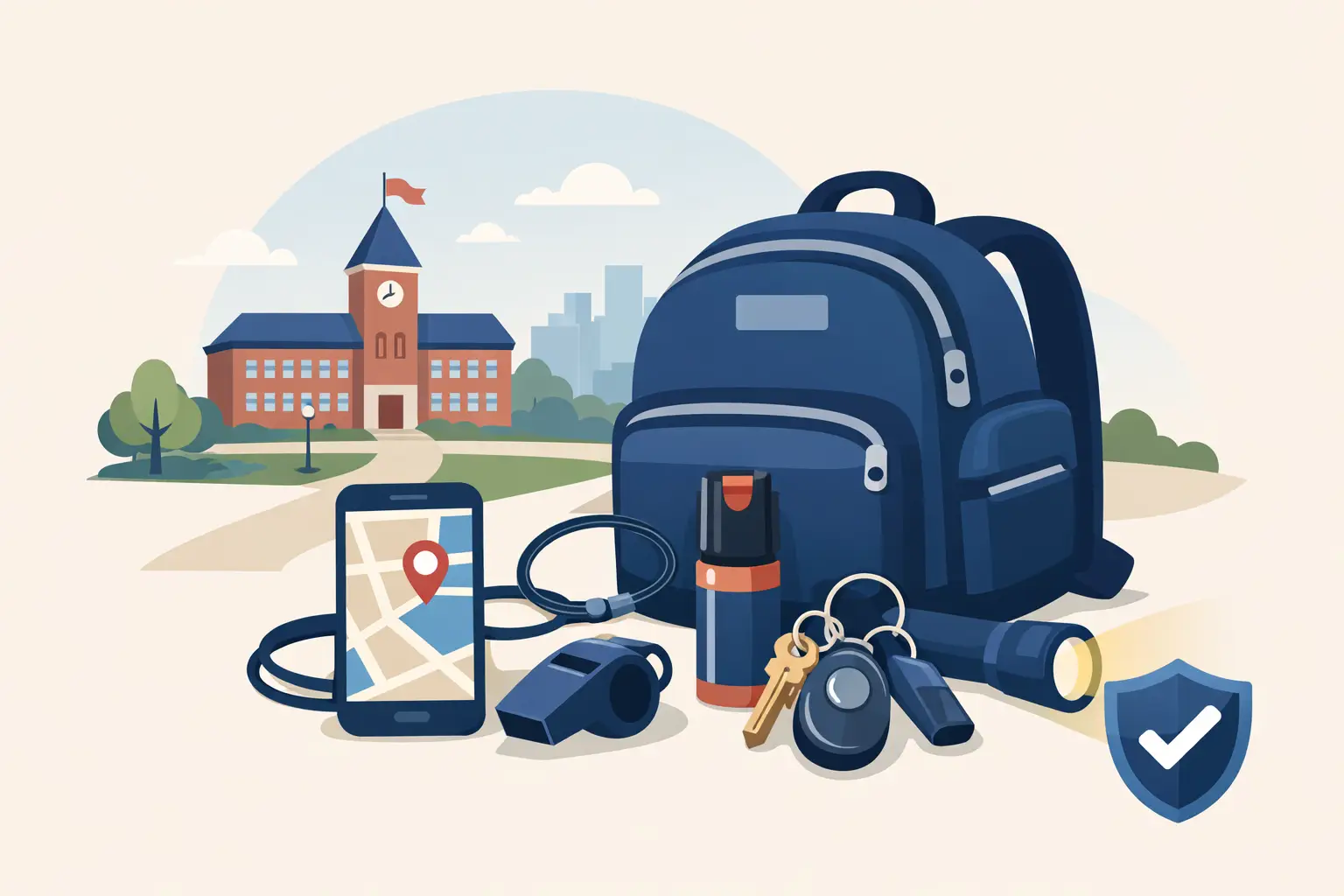
Everyday safety gear should be easy to access, legal where it is carried, and familiar to the person using it. The best tool is not necessarily the largest or most tactical-looking option. It is the one a student can reach quickly and use responsibly under stress.
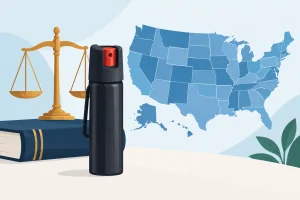
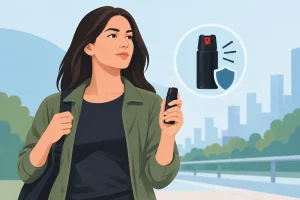
A personal safety alarm can draw attention and create a valuable moment to get away. A bright safety light helps students see dark walkways, find dropped keys, and make themselves more visible near traffic. Pepper spray may be a practical option for many adults, but campus rules and state or local laws can affect where it is allowed and how it may be carried. Students should check those rules before bringing any defensive product onto campus.
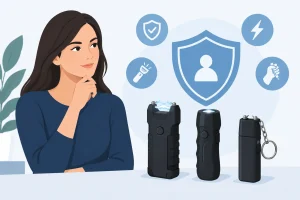
A compact self-defense keychain, tactical pen, or stun device may also fit a student’s needs, depending on local laws and school policy. These are not replacements for awareness, distance, and an exit plan. They are tools of last resort, intended to help create an opportunity to escape danger.
Keep safety items in the same reachable location every day. A pepper spray canister buried under textbooks in a backpack is far less useful than one secured in an outer pocket or carried on a keyring. Practice locating the item without looking, and read the instructions before an emergency occurs.
Secure the Dorm Room or Apartment
A residence hall room can feel private, but it is still a shared environment with maintenance access, visitors, roommates, and people moving through the building at all hours. Students should lock doors and windows every time they leave, even for a quick trip to the laundry room or down the hall.
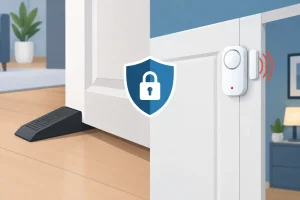
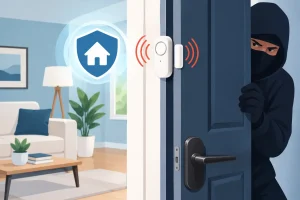
Door and window alarms add another layer of awareness, particularly in ground-floor apartments or dorm rooms with exterior access. A doorstop alarm can be useful while sleeping or when a student is alone in a room, provided it does not interfere with fire safety rules or building requirements. Never block an approved exit or alter a dorm room in a way that violates housing policies.
Valuables deserve a plan, too. Keep laptops, passports, spare cash, prescription medications, and vehicle keys out of sight. A diversion safe or small locked container can discourage casual theft, but it should not be the only measure protecting high-value items. Enable device tracking, use strong passcodes, and back up important school files.
Roommates should talk early about guests, locking up, and who has access to the room. Those conversations can be awkward for five minutes, or they can prevent months of tension and avoidable security problems.
Build Safer Habits After Dark
Late classes, library shifts, and social events make nighttime travel part of college life. Whenever possible, students should use well-lit routes, walk with friends, or use a school escort service. Earbuds should stay out or be kept low enough to hear footsteps, vehicles, and what is happening nearby.
Confidence matters, but awareness matters more. Walk with purpose, keep a phone charged, and avoid staring at a screen while crossing parking lots or entering a building. If someone is making a student uncomfortable, the goal is not to win an argument or prove bravery. Go toward people, light, and help. Enter an open business, call campus security, or contact 911 if there is an immediate threat.
Rideshares require attention as well. Confirm the driver, vehicle make, model, and license plate before getting in. Do not rely only on a person calling out a name. Share trip details with a trusted contact when traveling alone, and sit in the back seat when possible.
Make Party Safety a Team Effort
A night out should not require constant fear, but it does require clear boundaries. Students should go out with people they trust, make a plan for getting home, and avoid leaving anyone behind because plans changed. The buddy system works when friends actively look out for one another, not when everyone assumes somebody else is doing it.
Drinks should stay in hand and in sight. If a drink has been left unattended, tastes unusual, or causes unexpected symptoms, do not keep drinking it. Get help from a trusted friend, venue staff member, resident advisor, or emergency services. Students should take concerning symptoms seriously, even if alcohol was already involved.
Consent is never unclear when people respect boundaries. A person who is intoxicated, unconscious, pressured, or afraid cannot provide meaningful consent. If a situation feels off, intervene safely by creating a distraction, bringing in friends, or getting staff or security involved.
Protect Digital Safety, Too
Personal safety does not end at the dorm door. Public posts can reveal schedules, room locations, travel plans, and whether a student is away from home. Before sharing a photo or location in real time, students should consider who can see it and what it reveals.
Use different passwords for school email, banking, social media, and shopping accounts. Turn on two-factor authentication, avoid logging into sensitive accounts on unsecured public Wi-Fi, and be cautious with unexpected messages that ask for money, codes, passwords, or private images. A scam that starts online can quickly become a real-world safety concern.
Students should also be careful about adding unfamiliar people to private social accounts or sharing a live location with a new date. Location sharing can be useful with a trusted circle, but it should be reviewed regularly rather than left on by default.
Prepare for the Moment Something Goes Wrong
A safety plan is not complete until students know what they will do in an emergency. For immediate danger, call 911. For non-emergency concerns, campus security, residence life staff, and student support services can often help with escorts, reports, room concerns, and next steps.
Consider keeping a small grab-and-go setup accessible in a backpack or room. It may include:
- A charged power bank and charging cable
- A compact flashlight or safety light
- Emergency contact information written on paper
- A small personal alarm or legally carried defensive tool
- Any needed medications and a little cash
This is not about carrying a survival kit to class. It is about avoiding the common problems that leave students stranded: a dead phone, no way to contact help, and no light while walking home.
Training and familiarity are part of preparedness. Students should understand how their chosen safety tools work, how to store them safely, and when not to use them. Elite Warrior Defense supports practical protection choices, but every defensive item must be used responsibly and in accordance with applicable law and campus policy.
A safer college experience is built one decision at a time: lock the door, trust the uneasy feeling, keep a friend in the loop, and choose the route that gives you options. Those small decisions do more than reduce risk. They help students claim the independence college is supposed to offer.