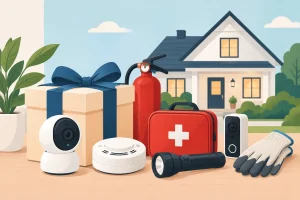

The fastest way to waste money on home security is buying the “big box” kit that looks impressive in the package—then realizing it only covers one door, needs a subscription, and chirps at the wrong time.
If you’re shopping for affordable home security systems, you’re not asking for “cheap.” You’re asking for smart coverage: early warning, simple deterrence, and a plan that fits your home and your life. The good news is you can build a strong setup without spending a fortune. You just have to know what actually moves the needle.
Affordable doesn’t mean cutting corners where it counts. It means prioritizing the parts of security that stop problems early: visible deterrence, noisy alerts, and barriers that slow someone down long enough for you to react.
It also means avoiding recurring costs that quietly turn a budget system into an expensive one. Plenty of security setups look low-priced until you factor in monthly monitoring, cloud storage fees, paid app features, and replacement batteries.
A truly budget-friendly system has three traits: it covers the most likely entry points, it’s easy enough to use consistently, and it doesn’t depend on subscriptions to be effective.
Most break-ins are simple. Someone checks a door, tests a window, or targets an easy garage entry. Your job is to make your home feel like the wrong choice.
Walk your property like you’re looking for the quickest way in. Pay attention to the back door, sliding doors, ground-floor windows, and the door from the garage into the house. If you live in an apartment, focus on the front door, any accessible windows, and shared hallways.
Now match your security spend to your reality. If you’re in a quiet neighborhood but travel often, reliability and remote alerts matter. If your area has frequent package theft, you may care more about visible cameras and motion alerts near the porch. If you have kids coming home to an empty house, you’ll want simple arming/disarming and loud alarms that don’t require a perfect Wi‑Fi signal.
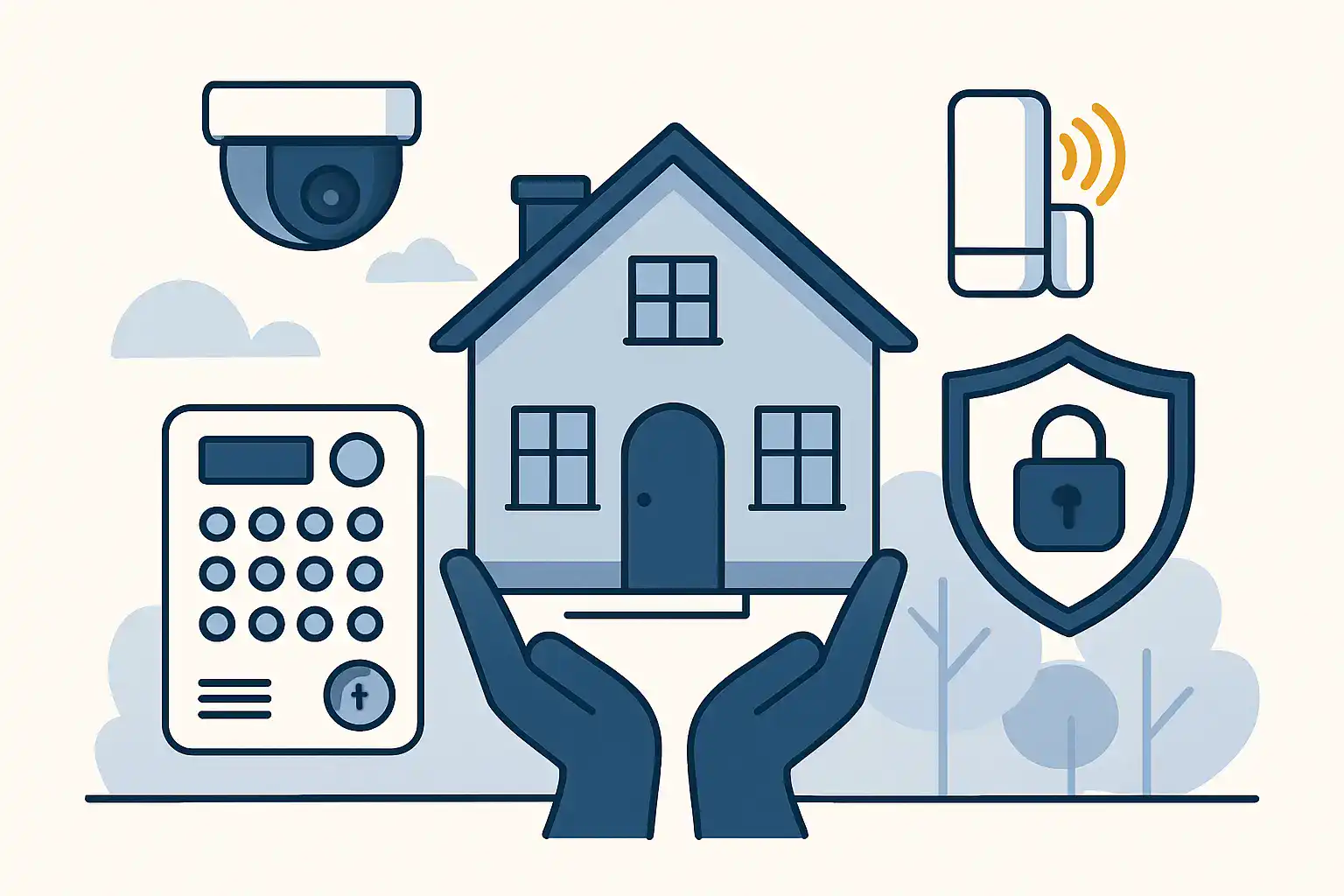
You don’t need a cinematic “command center.” You need layers that work together.
Door and window alarms are one of the simplest, most cost-effective tools you can buy. They don’t require installation skills, and they immediately punish a forced entry attempt with noise.
They’re especially effective on the back door and any window that’s hidden from the street. The trade-off is they don’t stop someone physically—they’re about detection and deterrence. That’s why placement matters: put them where someone expects privacy.
When shopping, look for alarms that are loud enough to be heard across the house and easy to test. If they’re annoying to maintain, people stop using them. Consistency beats complexity.
Most criminals don’t want attention. Motion lighting is a budget-friendly way to control the “visibility” of your home.
Use lights to eliminate hiding spots: side yards, dark corners, and pathways to back doors. Solar models can reduce wiring headaches, but they depend on sun exposure and can be less reliable in long stretches of cloudy weather. Plug-in or hardwired lights tend to be steadier. The best choice depends on your layout.
A practical approach is to light the routes someone would take, not every square foot. Too many lights can also annoy neighbors and train everyone to ignore them.
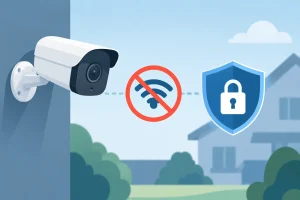
Cameras are popular because they feel like control. But for budget buyers, they can also become the most expensive part of the system if you chase high-end features.
A camera is most useful in two situations: when it’s visible enough to deter, and when it captures a clear enough view to identify faces or vehicles. Placement is everything. A camera pointed at a bright streetlight might give you useless glare. A camera mounted too high might capture the top of a hat instead of a face.
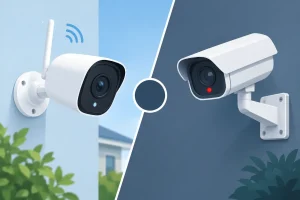
The trade-off with many affordable cameras is storage. Some rely on subscriptions for cloud recordings. Others use local storage, which avoids monthly fees but can be limited or vulnerable if the camera is stolen. If your goal is deterrence and real-time alerts, a basic camera can be enough. If your goal is evidence after the fact, think carefully about storage.
Sometimes the best value is what makes someone walk away. Yard signs, window decals, and dummy cameras can create hesitation—especially when paired with real alarms and lighting.
Dummy cameras aren’t a replacement for real coverage, but they can strengthen a perimeter on a budget. The key is to make them believable: visible placement, realistic design, and not overdoing it. One or two well-placed deterrents look intentional. Six fake cameras can look like a prop.
The biggest budget trap is paying for features you won’t use.
One example is paying extra for smart integrations, then never opening the app. Another is buying a multi-camera system when you really needed two cameras and better lighting. Or paying monthly fees for professional monitoring when you’re usually home and primarily want loud alerts and immediate awareness.
This is where a “good enough” approach is powerful. Put your money into coverage of entry points first. Then add convenience features only if they support your habits.
Security isn’t one-size-fits-all. A budget plan should match your living situation.
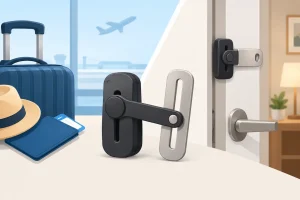
Renters need tools that don’t require drilling or permanent changes. Stick-on door/window alarms, portable door reinforcement, and motion lights for patios can make a real difference. If you add cameras, consider models that mount without damage and can point at your door from inside a window.
Your main limitation is shared spaces. You can’t control who is in the hallway, but you can control how hard it is to enter your unit and how quickly you’ll know something is wrong.
Homes have more entry points, which is exactly why “affordable” needs to be strategic. Cover the doors first (front, back, garage entry), then focus on the most accessible windows. Add lighting on the sides and rear. If you buy cameras, prioritize the front approach and the most private access point—often the back door.
If people are coming and going all day, you need a system that won’t create constant false alarms. Simpler is safer. Choose alarms with easy controls, clear indicators, and routines everyone understands. A security plan that frustrates your family will be ignored, and ignored security is the most expensive kind.
Some affordable home security systems look inexpensive because the business model is monthly revenue. That’s not automatically bad. Professional monitoring and cloud storage can be valuable, especially if you travel often or you want a documented record of events.
But be honest: if you don’t want another bill, build around local alerts, loud alarms, and deterrence. For many households, a strong no-subscription setup is enough to prevent the most common problems.
If you do choose subscriptions, read the details before you commit. Know what features disappear without the plan, how long videos are stored, and whether you can export footage if you need it.
Home security doesn’t stop at the front door. Your safety plan should also cover what happens when you’re arriving, leaving, or caught off guard.
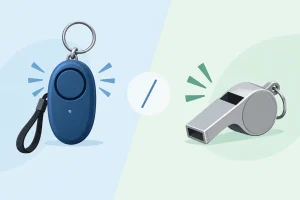
That’s where personal protection tools and hidden storage can support your overall security mindset—especially for people who live alone, work late, or want added confidence during daily routines. If you’re looking to round out a practical, budget-friendly setup with alarms, deterrence tools, and self-defense essentials from one place, Elite Warrior Defense focuses on accessible options that are built for real-life use, not just marketing.
If you’re starting from zero, don’t buy everything at once. Buy in layers.
First, secure the doors. That means alarms and basic reinforcement where it makes sense. Second, cover the most vulnerable windows, especially those hidden from view. Third, add lighting to remove hiding places and make movement obvious. Finally, add cameras if they serve a clear purpose: deterrence at the front, coverage of a private entry point, or alerts when you’re away.
This order keeps you from spending $200 on cameras while your back door is still the weak link.
Two homes can spend the same amount and get totally different results. That’s because security depends on your environment.
If your Wi‑Fi is unreliable, don’t build a plan that falls apart when the signal drops. If you’re in an extreme climate, battery-powered devices may need more maintenance. If you’re in a high-traffic area, you’ll want to reduce false alerts so you don’t start ignoring them. And if you share living space with roommates or family, the system has to be simple enough that everyone follows the same playbook.
Affordable is personal. The best system is the one you’ll actually use.
Before you spend a dollar, do three things: check that every exterior door closes tightly and latches cleanly, trim any landscaping that gives someone cover near entry points, and commit to a routine—doors locked, alarms set, lights on a schedule.
A lot of “security” is behavior. Hardware supports it, but it can’t replace it.
Your home doesn’t need to look like a fortress. It needs to look like a bad bet—well-lit, alert, and protected by someone who pays attention. That’s how affordable becomes effective, and that’s how you buy peace of mind without paying for a brand name.



YOU’RE IN!
Use this code on every order
🎉
Here’s Your Code!
Use it now an on every future order.
YOUR DISCOUNT CODE
We also sent this code to your email for safekeeping.
EXCLUSIVE OFFER
Every order – not just your first!
Unlock Your Discount Instantly
Enter your email below and your personal 15% discount code appears right here – no need to check your inbox.
🔒 We respect your privacy. Unsubscribe anytime.