The walk from a late shift, a parking garage, or a friend’s house can feel routine right up until something changes: a poorly lit block, a car that circles twice, footsteps that stay too close behind you. This guide to night walking safety is built for those moments. The goal is not to live scared. It is to move with awareness, create options, and be ready to act early when a situation does not feel right.
Start Safe Before You Step Outside
Night safety begins before your shoes hit the sidewalk. A little preparation reduces the need to make rushed decisions when visibility is low and your attention is divided.
Choose your route for visibility and activity, not simply speed. A route that is five minutes longer but has open businesses, streetlights, traffic, and other people is often the stronger choice. Avoid shortcuts through alleys, isolated lots, parks after dark, and areas where you cannot easily change direction or get help.
Tell someone where you are going if you are walking alone, especially if you are leaving work late or traveling through an unfamiliar area. A quick message stating your route and expected arrival time creates accountability. If you are meeting a rideshare, wait in a well-lit, populated location and confirm the vehicle and driver details before getting in.
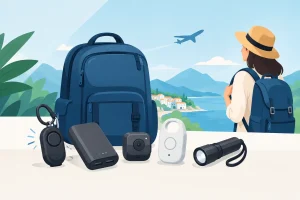
Your phone should be charged, but it should not be your only safety plan. Low battery, poor signal, a dropped phone, or fumbling with a screen can limit your options. Keep it accessible, with emergency contacts easy to reach, and consider carrying a compact power bank if night walks are part of your regular routine.
Visibility Is a Safety Advantage
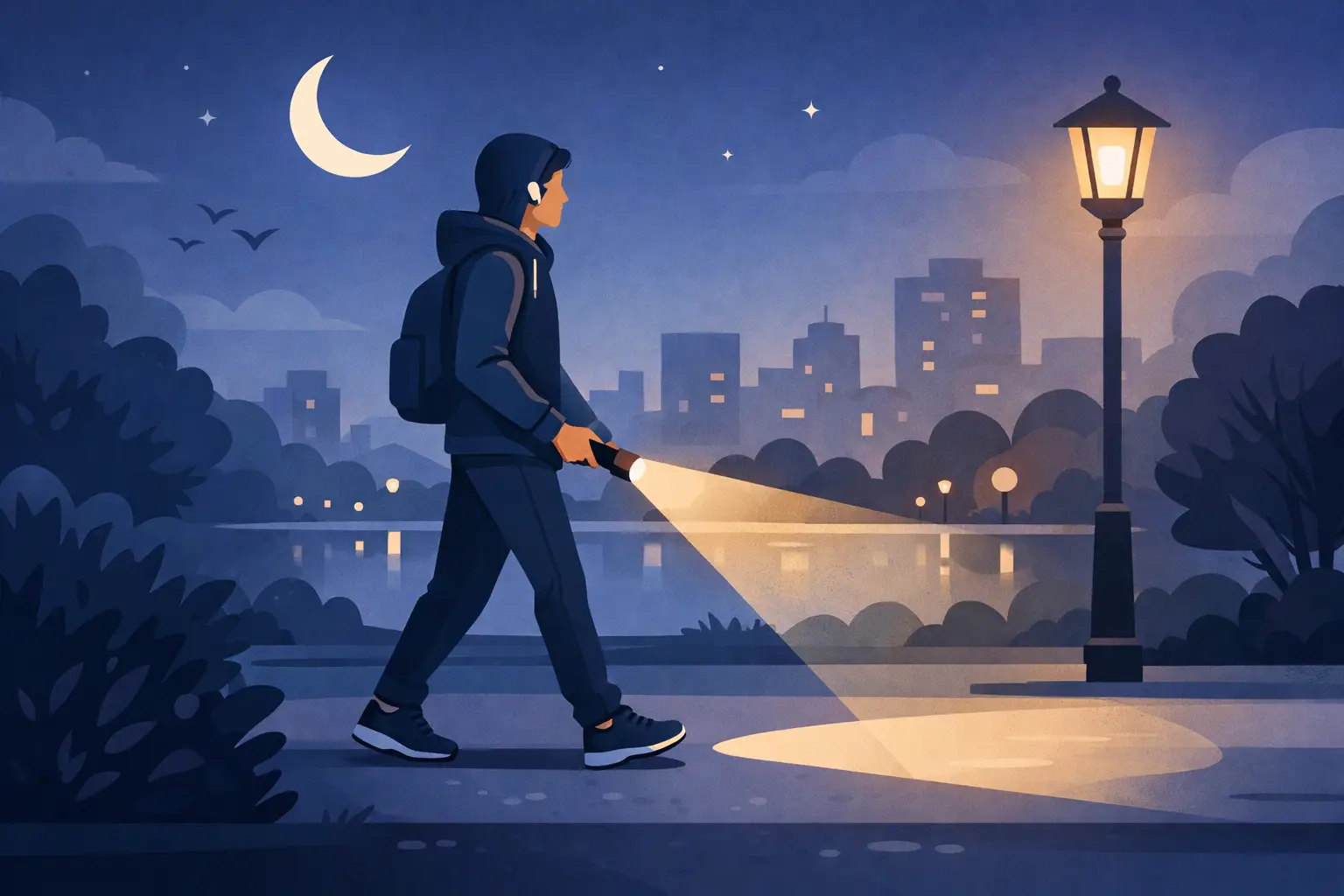
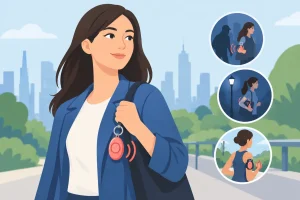
Being visible can deter certain threats and helps drivers, cyclists, and other pedestrians see you sooner. Dark clothing may feel less noticeable, but it also makes you harder to spot near roads and crosswalks. Add a reflective strip, light-colored outer layer, clip-on light, or safety light to your jacket, bag, or keyring.
A personal safety light does more than make you easier to see. A bright beam can help you inspect a dark entryway, locate keys before reaching your door, and identify obstacles on uneven pavement. If a person or vehicle causes concern, light can also draw attention to your location. Use it deliberately rather than waving it around without a purpose.
Avoid walking with both earbuds in. You do not need to walk in complete silence, but your hearing gives you valuable information at night: approaching footsteps, a vehicle slowing nearby, a bicycle coming from behind, or voices around a corner. Keep one ear free or turn audio low enough that you can hear your surroundings.
Walk With Awareness, Not Anxiety
Confident body language is not a guarantee of safety, but it can make you look more alert and less distracted. Keep your head up, scan ahead, and walk at a steady pace. Save scrolling, texting, and searching through a bag for a safer location.
Pay attention to what is normal for the space you are in. A person waiting at a bus stop may be completely harmless. A person who changes direction every time you do, closes distance after you create space, or repeatedly tries to get your attention deserves more caution. Trust the pattern, not just a single detail.
If someone makes you uncomfortable, do not worry about seeming rude. Cross the street, enter an open business, walk toward a group, or call someone and clearly state where you are. Your instinct does not need courtroom-level proof before you take a safer path.
If you believe you are being followed, do not go home. Going directly to your residence can reveal where you live and leave you isolated at your front door. Instead, move toward a staffed business, a police or fire station, a busy public place, or an area with people and cameras. Call 911 if you believe there is an immediate threat.
Carry Safety Tools You Can Use Under Stress
Safety tools are most useful when they are legal where you live, easy to access, and familiar in your hand. A tool buried at the bottom of a tote bag may not be available when seconds matter. Carry it consistently in the same reachable location, such as an outer pocket, keyring, or dedicated holster.
Pepper spray can provide distance and an opportunity to escape, but it requires responsible handling. Check local and state laws, understand the range and spray pattern of your specific product, and know how to operate its safety mechanism. Practice the motions with an inert trainer if available. Never test or deploy pepper spray casually, and remember that wind and enclosed spaces can affect you as well.
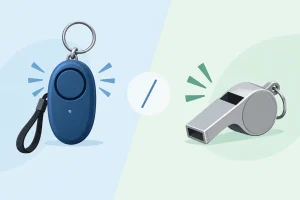
A personal alarm is another practical option. A loud alarm can interrupt an encounter, attract witnesses, and create a moment to move away. It is especially useful for people who prefer a non-impact option or who are not legally permitted to carry other defensive tools.
Stun devices and stun batons may be legal in some areas and restricted in others. They also generally require close contact, which is a serious trade-off in a fast-moving confrontation. If you choose one, learn the laws, read the instructions, keep it charged, and understand that its purpose is to create an opening to escape, not to remain and fight.
Elite Warrior Defense offers accessible personal-security options for people building a practical safety setup, but no device replaces awareness, avoidance, and a clear plan to get to safety. The best tool is the one you can legally carry, confidently operate, and reach without searching for it.
A Guide to Night Walking Safety at Your Door
Many people stay alert during the walk, then relax too soon at the car, apartment entrance, or front door. These transition points deserve extra attention because your hands may be full and your focus shifts to keys, packages, or access codes.
Have your keys ready before you reach the door. Do not stand with your back exposed while digging through a purse or backpack. Scan the area around your vehicle before approaching it, including nearby cars, spaces between vehicles, and the back seat before you get inside.
If anything feels wrong near your home or vehicle, keep moving. You can circle back toward a well-lit area, return to a business, or call a trusted person for support. Do not force yourself to proceed simply because you are almost home.
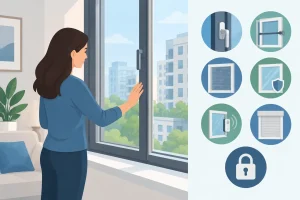
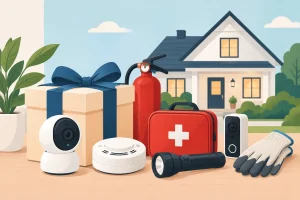
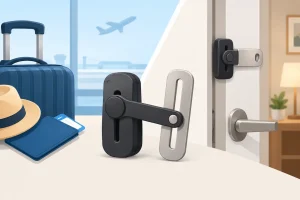
Once inside, lock the door immediately. If you live in a house, good exterior lighting, door and window alarms, and a clear view of entry points strengthen your routine. In an apartment building, do not hold secure doors open for strangers who do not have access. A polite refusal is reasonable when your safety is involved.
Know What to Do When a Situation Escalates
Your priority is escape. Not winning an argument, proving a point, recovering property, or figuring out why someone is acting aggressively. Create distance, move toward people and light, make noise if it may bring help, and call 911 when there is an immediate danger.
Use a firm, direct voice when needed: “Stop.” “Stay back.” “Do not come closer.” Clear commands can draw attention and establish a boundary. Avoid getting pulled into a conversation with someone who is blocking your path, demanding your attention, or refusing to respect distance.
If you must use a defensive tool to stop an imminent threat, leave as soon as you safely can and contact law enforcement. Your actions should be guided by the laws in your state and the immediate circumstances. Defensive tools are emergency equipment, not a substitute for conflict resolution or a reason to take risks.
After a frightening encounter, give yourself time to reset. Report suspicious behavior when appropriate, write down details while they are fresh, and adjust your route or routine if a pattern develops. Confidence is not pretending that nothing happened. It is learning from the experience and taking the next walk better prepared.
Night walking should not require fear to be taken seriously. A charged phone, a visible route, alert habits, and properly chosen safety tools give you more control over the decisions that matter. Walk with purpose, protect your space, and give yourself permission to leave the moment something feels wrong.