

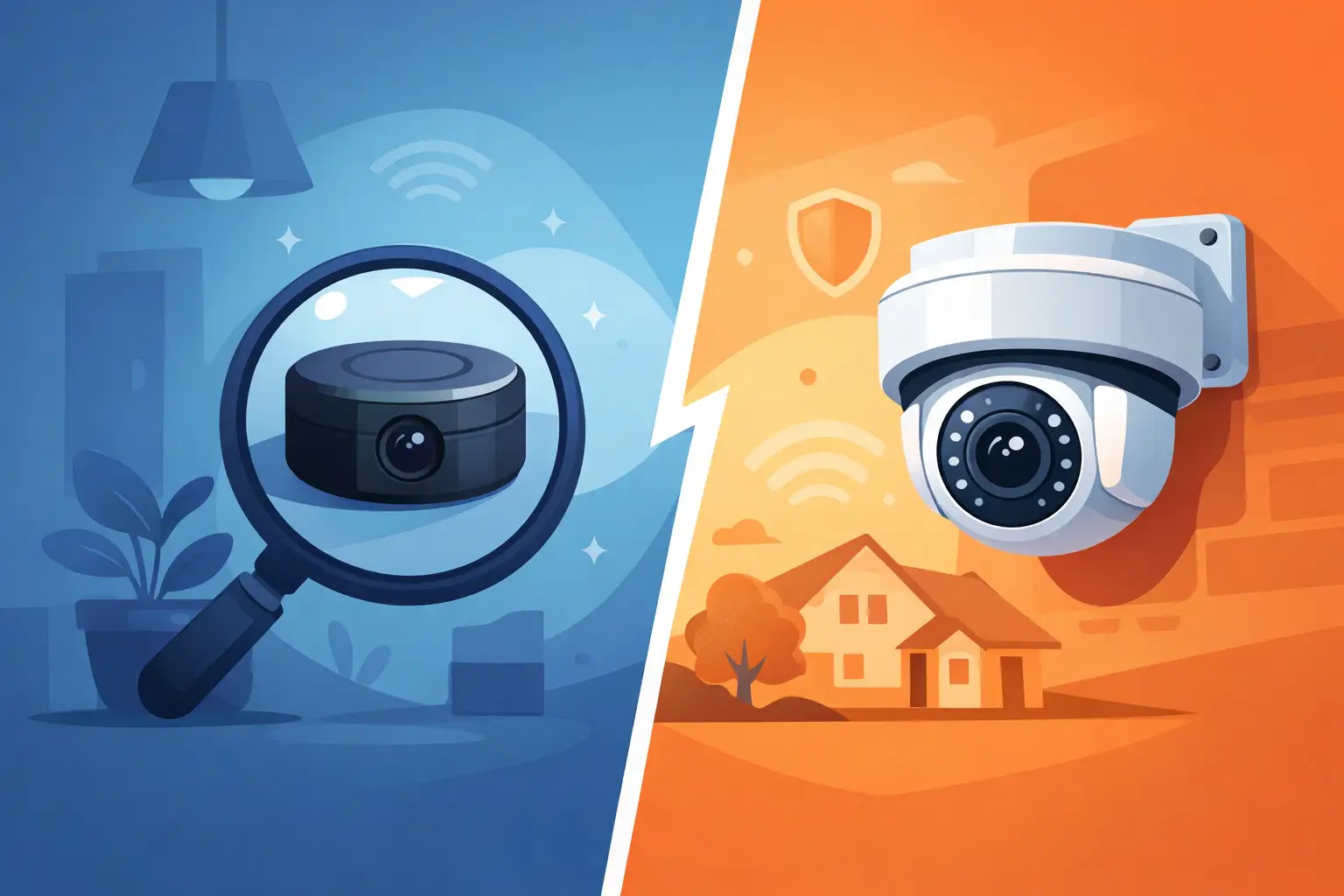
When people compare hidden camera vs security camera, they are usually trying to solve one urgent problem – how to protect a home, watch over loved ones, or catch behavior that does not feel right. The right choice depends on what you need to see, who needs to know the camera is there, and how much deterrence matters in your situation.
A lot of buyers assume one option is simply better than the other. It is not that simple. Hidden cameras and traditional security cameras serve different purposes, and choosing the wrong one can leave a blind spot where you need clarity most.
At the most basic level, a security camera is visible and meant to be seen. A hidden camera is discreet and meant to blend into the space. That design difference changes everything about how each one works in the real world.
A visible security camera sends a message before anything happens. It tells visitors, delivery drivers, contractors, and potential intruders that the property is being watched. That alone can stop bad behavior before it starts. If your goal is prevention, visible cameras have a clear advantage.
A hidden camera works differently. It does not warn anyone. It records what people do when they believe no one is watching. That makes it useful when you suspect theft, mistreatment, boundary violations, or other behavior that might disappear the moment a visible camera goes up.
This is why the hidden camera vs security camera decision should start with one question: do you want to discourage a problem, or document it?
For most front-door, driveway, garage, and backyard setups, a visible security camera is the stronger option. It protects in two ways. First, it captures footage. Second, it can make a criminal think twice and move on.
That deterrent value matters. If someone sees a mounted camera near an entry point, they know their face, vehicle, and timing may be recorded. Even a simple setup can increase confidence and reduce risk around the home.
Security cameras also make sense when you want broad coverage. They are often designed for larger viewing angles, outdoor placement, night vision, and more obvious positioning. If you want to monitor packages, visitors, parked cars, side gates, or activity around the perimeter, a traditional security camera usually fits the job better.
They can also support daily peace of mind. Parents use them to check entrances after school. Homeowners use them to verify who approached the house. Property owners use them to monitor ongoing traffic around a rental or second home. In those situations, there is no need for secrecy. Clear visibility is part of the protection.
A hidden camera becomes more useful when the visible presence of a camera could change the behavior you are trying to observe. If you think someone is snooping, stealing small items, entering a room without permission, or acting differently when you are away, a discreet setup can help reveal the truth.
This is especially relevant inside the home. Maybe you need to monitor a private office, check on a room where valuables are kept, or verify concerns involving a caregiver, cleaner, or temporary worker. A hidden camera can capture what a visible camera might prevent you from ever seeing.
That does not mean hidden cameras are always the better indoor choice. If your goal is general household awareness, a standard indoor camera may be enough. But when you need unfiltered behavior, hidden devices have a clear role.
The trade-off is that hidden cameras usually do less to stop the act itself. They are stronger for evidence than deterrence. If somebody steals from you and a hidden camera catches it, that footage may help you respond. But it did not prevent the theft in the first place.
For home protection, the smartest answer is often not one or the other. It is using each for its strength.
Visible security cameras work best at the edges of the property and at main points of entry. They help discourage trespassing, package theft, and suspicious activity around doors, windows, garages, and yards. They create presence. That matters.
Hidden cameras work best in targeted indoor situations where discretion is the entire point. They can help monitor a specific room, confirm concerns about access to personal belongings, or document behavior that might stop under obvious surveillance.
Think of it this way: security cameras protect openly, hidden cameras verify quietly. If you only use visible cameras, you may miss what happens once someone is inside and believes they are unobserved. If you only use hidden cameras, you give up a layer of deterrence that could have prevented the problem from escalating.
Before placing any camera, especially a hidden one, you need to understand privacy laws in your state and local area. This is not just a technical detail. It is a serious part of responsible home security.
In general, recording video in your own home is treated differently from recording in places where people have a strong expectation of privacy. Bathrooms, changing areas, and similar private spaces are obvious red lines. Audio recording can also carry stricter legal requirements than video, depending on where you live.
That is one reason hidden cameras require more care than visible security cameras. A standard outdoor camera over a front door is usually straightforward. A hidden camera inside the home calls for more thought about placement, consent, and lawful use.
If your goal is protection, you want your setup to strengthen your position, not create new problems. Confidence starts with using security tools the right way.
Start with the threat, not the gadget. If you are mostly concerned about break-ins, trespassing, porch theft, or suspicious activity outside, a visible security camera should probably come first. If you are concerned about a specific person’s behavior in a specific room, a hidden camera may be the more effective option.
Next, think about placement. Outdoor coverage usually demands weather resistance, wider range, and obvious mounting points. Indoor surveillance may call for a smaller footprint and a more discreet setup. A camera that is excellent for a driveway may be a poor fit for monitoring a hallway, office, or bedroom entrance.
You should also consider power and storage. Some buyers want a simple, low-maintenance camera they can place and forget. Others want regular footage review, motion activation, or memory card support. The best camera is not the one with the longest feature list. It is the one you will actually position correctly and use consistently.
Budget matters too, but cheaper is not always smarter if it creates blind spots. At the same time, protecting your home should not require an oversized investment. Reliable, practical security tools should be accessible, and that is why many customers look for products that balance performance with affordability.
One common mistake is buying a hidden camera when what they really need is deterrence. If you are worried about package theft, someone testing your doors, or strangers entering your property, a visible security camera does more work before an incident even happens.
Another mistake is installing only visible cameras and assuming that covers every concern. It does not. A person who behaves well under obvious surveillance may act differently in a room they believe is private but still lawfully monitored.
A third mistake is placing cameras without a clear purpose. Security works best when every device answers a specific need. Watch the front porch. Cover the side gate. Monitor the office. Check the nursery entrance. The more specific your goal, the better your results.
If you want to stop trouble before it starts, choose a security camera. If you need to capture behavior that only happens when people think no one is watching, choose a hidden camera. If your concerns include both prevention and proof, use both where legally appropriate.
That answer may sound less dramatic than picking a winner, but it is the honest one. Hidden camera vs security camera is not a battle between good and bad options. It is a decision about strategy.
The strongest home security setups are built around real life, not guesswork. They reflect how people move through your property, where risks actually exist, and what would give you the clearest answer if something felt off. For some households, one visible camera near the front door is enough. For others, a layered setup is the better move.
If you are serious about protecting your space, trust your instincts and match the tool to the threat. Peace of mind is not about owning the most equipment. It is about having the right coverage in the right place, ready when you need it.




YOU’RE IN!
Use this code on every order
🎉
Here’s Your Code!
Use it now an on every future order.
YOUR DISCOUNT CODE
We also sent this code to your email for safekeeping.
EXCLUSIVE OFFER
Every order – not just your first!
Unlock Your Discount Instantly
Enter your email below and your personal 15% discount code appears right here – no need to check your inbox.
🔒 We respect your privacy. Unsubscribe anytime.