A tactical pen only works for you if you can reach it fast, carry it comfortably, and keep it where it belongs under stress. That is the real answer to how to carry tactical pen – not just clipping it anywhere, but choosing a position you can access without fumbling when seconds matter.
For most people, the best carry method is simple: treat it like an everyday writing tool first and a defensive tool second. That mindset helps you carry it consistently, and consistency matters more than any flashy setup. If your tactical pen is awkward, obvious, or buried in a bag, you are less likely to have it when you need it.
How to carry tactical pen for everyday use
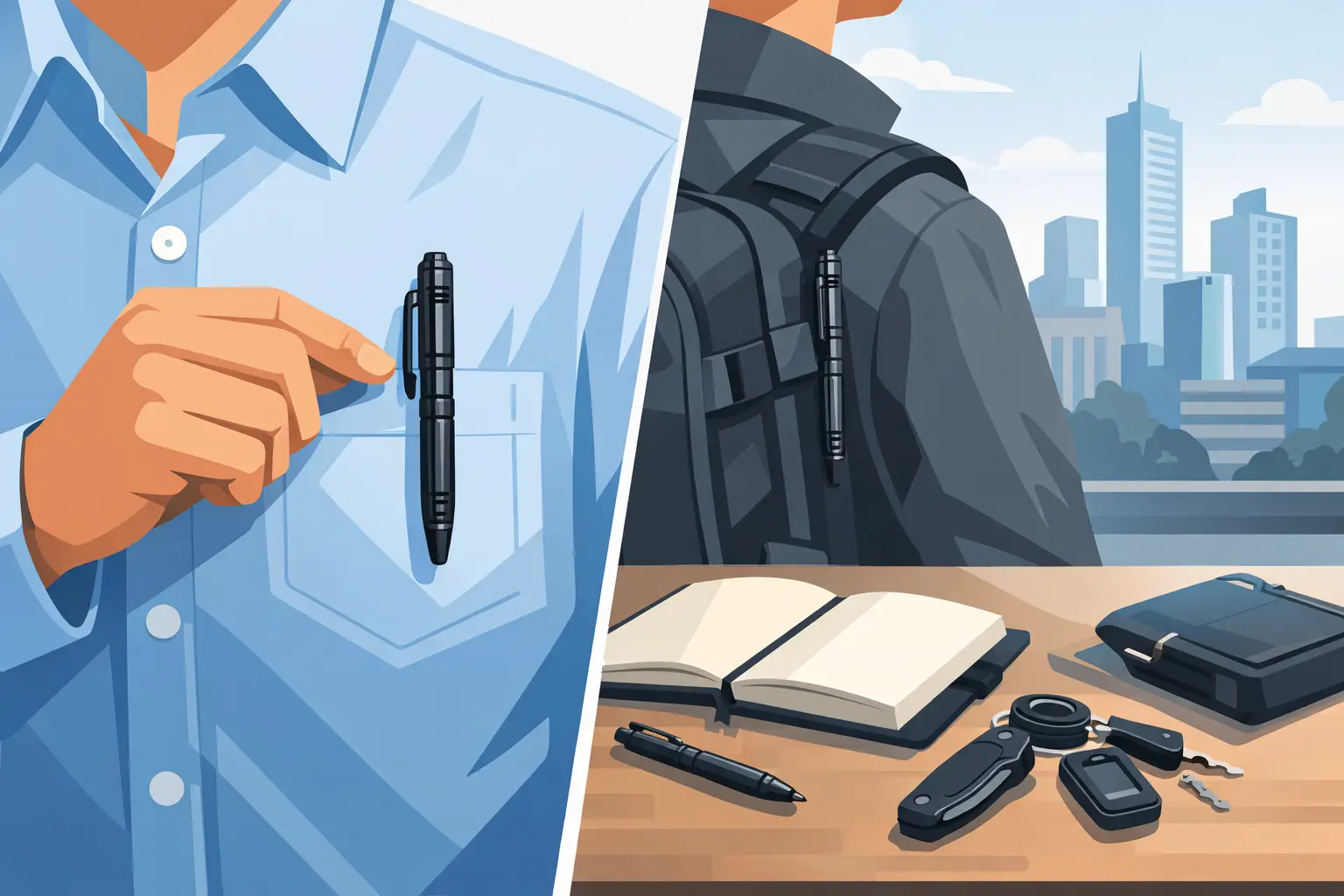
The strongest carry position is usually your front pocket, clipped high enough to grab quickly but low enough to stay discreet. Front pocket carry keeps the pen close to your dominant hand, reduces printing compared to bulkier tools, and makes it easy to check that it is still secure. For many people, that balance of speed and comfort is hard to beat.
If you wear slacks, jeans, cargo pants, or a jacket with structured pockets, test the pen while sitting, walking, and getting in and out of your car. A tactical pen that feels fine standing in your bedroom can poke, rotate, or shift during a normal day. Good carry is not just about access. It is also about whether the tool stays in the same place after hours of movement.
Shirt pocket carry can work, especially in office settings where a pen looks natural. The trade-off is retention. Some shirt pockets are too shallow, and heavier tactical pens can tilt or fall forward when you bend down. If you choose this option, make sure the clip is firm and the pocket is deep enough to keep the pen stable.
Jacket pocket carry gives you excellent concealment and a professional look, but it depends on the season and your habits. If your pen is in a jacket, and you leave that jacket on the chair at a restaurant or in the car, you no longer have immediate access to it. That is a small decision that can turn into a major weak point.
Bag carry is the least ideal for personal defense, even though it is common. A tactical pen inside a purse, backpack, messenger bag, or glove compartment may still be useful as an emergency tool, but it is no longer instantly available. If your goal is quick access under pressure, body carry beats off-body carry every time.
Best places to carry a tactical pen
Your best location depends on how you dress, how you move, and which hand you would use under stress. Most right-handed users do well with front right pocket carry or clipped inside a shirt pocket. Left-handed users should reverse that. The key is to place the pen where your natural hand movement can find it without thought.
A tactical pen should not compete with your phone, keys, folding knife, flashlight, or wallet. If you stack too many items in one pocket, you create delay. Worse, you can snag the pen when drawing it. A clean pocket with a dedicated slot or open space makes more sense than trying to cram the tool into an already overloaded setup.
There is also a difference between concealed and discreet. A tactical pen does not need the same concealment strategy as a larger self-defense item, but you still do not want it attracting unnecessary attention. Carrying it in a way that looks normal is often the smarter move. A pen clipped like a pen tends to raise fewer questions and helps you maintain daily readiness without changing your whole routine.
Pocket carry vs bag carry
Pocket carry wins on speed, control, and consistency. You know exactly where the pen is, you can check it with a quick touch, and you are less likely to leave it behind. If you need the tool in a hurry, that direct access matters.
Bag carry has one advantage: comfort. If your clothing does not support pocket carry well, a bag can make the pen easier to transport. But from a defensive standpoint, the drawbacks are real. Bags get set down, shifted, searched through, or taken. If you choose bag carry, understand that you are accepting slower access.
Carrying at work or in professional settings
This is where tactical pens shine. They blend into daily life better than many other tools. In an office, on a commute, in meetings, or while traveling locally, a tactical pen can fit naturally into your routine without drawing attention.
Still, professionalism matters. Choose a carry position that keeps the pen secure and avoids making it look like you are trying to showcase gear. A clean clip in a shirt pocket, planner loop, or front pocket usually works better than a flashy or aggressive setup. Quiet confidence beats obvious display.
What makes a good carry setup
A good setup starts with retention. The clip should hold firmly enough that the pen does not slide out when you sit or move quickly. It should also release cleanly when you grab it. If the clip is too tight, your draw slows down. If it is too loose, the pen may shift or disappear.
Comfort matters more than people expect. If a tactical pen digs into your leg, catches on your seatbelt, or feels heavy all day, you will eventually stop carrying it. The best defensive tool is the one you keep with you. That means your carry method has to work in real life, not just in theory.
Orientation matters too. You want to know which end you are grabbing and how the pen comes out of the pocket. Repetition builds confidence. If the pen rotates constantly in your pocket, your access becomes less predictable. A stable carry position helps you build better habits.
Safe and legal considerations
Before you decide how to carry tactical pen in public, know your local and state laws. Rules can vary depending on where you live and where you are going. Some locations may restrict self-defense items in government buildings, schools, courthouses, airports, or private businesses with posted policies.
The safest approach is to carry responsibly, know the environment you are entering, and avoid assumptions. A tactical pen may look like an ordinary pen, but intent and local regulations still matter. If you travel across state lines or enter secured areas, check the rules ahead of time.
Safe carry also means controlling the tool around children and storing it properly when it is not on your person. If you use a tactical pen as part of a larger everyday carry setup, make sure it has a dedicated place at home as well. Responsible ownership builds real peace of mind.
Practice matters more than position
The truth is that no carry position is perfect if you have never practiced accessing the pen. You do not need anything complicated. You just need to build familiarity. Practice reaching for it while standing, seated, and buckled into your car. Notice whether your clothing blocks the clip or whether your grip feels natural.
You should also practice using it as a pen, because that is part of carrying it well. A tactical pen that writes smoothly is easier to justify keeping on you every day. That daily usefulness is a strength, not a distraction. It gives you a practical reason to stay consistent.
If you decide to carry other personal safety tools as well, think through how they work together. Your tactical pen should complement your routine, not create confusion. The more organized your everyday carry is, the more confident and prepared you will feel.
Common mistakes to avoid
One mistake is carrying the pen too deep in the pocket. If you have to pinch and fish for it, access is already too slow. Another is changing locations constantly. If the pen is in your pocket one day, your bag the next, and your car console after that, you lose consistency.
Another common problem is choosing appearance over function. Some people want the most aggressive-looking tactical pen they can find, but a pen that is uncomfortable, bulky, or awkward to write with often gets left at home. A practical design you carry every day is far more effective than a dramatic one you rarely touch.
Finally, do not assume ownership equals readiness. Carry is a habit. Access is a skill. Confidence comes from repetition and responsible use.
A tactical pen earns its place when it fits naturally into your day, stays accessible, and supports your overall safety plan. If you choose a carry method you can stick with, you are already doing the most important part right.