
You don’t need a loud, tactical-looking tool to stay ready. You need something you’ll actually carry—at work, in the car, on a walk, or while traveling—that can shift the odds in your favor if a moment turns ugly. That’s the real appeal of a self-defense pen: it’s discreet, practical, and fast to access when your hands are full and your heart rate spikes.
This guide breaks down what separates the best self defense pens for protection from cheap “tactical” novelties, and which styles make sense for different lives. You’ll also see the trade-offs—because with defensive tools, there’s always a trade-off.
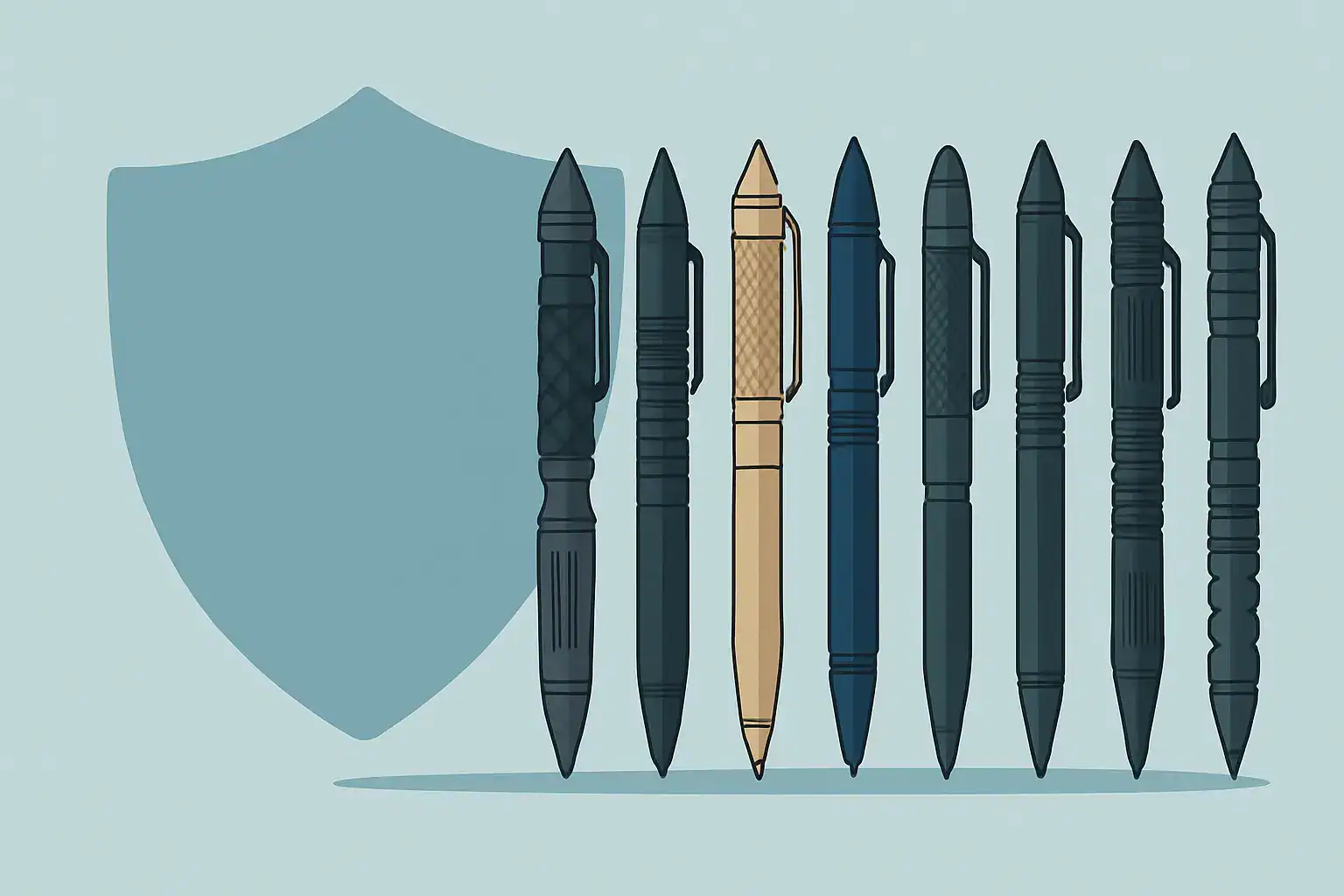
A self-defense pen is a sturdy pen built from hard materials (often aircraft-grade aluminum or steel) with a reinforced body and a grippy texture. Many include a glass breaker tip for emergencies. Some add extra features like a bright light or a hidden blade—but those extras can introduce legal and practical complications.
A tactical pen is not a magic wand. It won’t replace awareness, a confident posture, and the willingness to act. What it can do is give you a solid, legal-in-many-places object that fits in your pocket and can help you create space, break contact, or escape.
If you’re looking for “one hit and done,” that’s not realistic. The goal is to disrupt and get away.
You can spot a serious defensive pen in your hand within seconds. It feels like a tool, not a toy.
A defensive pen should be rigid under pressure. If the barrel flexes or the cap feels flimsy, skip it. Aluminum is common because it’s light and strong. Steel can be tougher but heavier, which affects how often you’ll carry it.
If you’re sweaty, scared, or wearing gloves, a smooth pen can rotate in your hand. Look for knurling or textured grooves where your fingers naturally land. Overly aggressive texture can chew up pockets, so balance matters.
If the cap pops off in your pocket, you’ve lost your advantage. A secure screw cap or firm snap cap is important. The clip should be strong enough to anchor the pen in the same spot every day—muscle memory matters when seconds count.
Some pens have extreme “spikes” that look intimidating but make daily carry awkward and raise unwanted attention. A more subtle, rounded impact tip can still be effective and often looks less like a weapon.
A carbide glass breaker can be a lifesaver if you need to escape a car after a crash or help someone else. If you spend time in a vehicle, this feature is worth prioritizing.
This sounds obvious, but it’s where many cheap pens fail. If it doesn’t write well, you’ll stop carrying it. And if you stop carrying it, it can’t protect you.
A pen that’s “most tactical” on paper isn’t always the best choice for your life.
If you work in an office, a pen that screams weapon can create HR problems or get left in a drawer. If you travel, the wrong features can complicate security checks. If you’re a runner or you hate bulky pockets, weight matters.
The best option is the one that blends into your routine while still being dependable when it counts.
Instead of pushing one “perfect” pick, here are the most common categories that consistently perform well. Think of this as a short list of “what works” so you can match the pen to your lifestyle.
This is the go-to for most people. It’s light enough for everyday carry, strong enough to hold up under pressure, and usually has a textured grip. If you’re buying your first defensive pen, this style is the safest bet.
These are designed to look like a normal, upscale pen. They’re ideal for professionals, students, and anyone who wants readiness without the tactical aesthetic. The trade-off is that some executive pens sacrifice aggressive grip texture for appearance—so choose one that still locks into your hand.
If your priority is vehicle safety, look for a purpose-built glass breaker tip and a solid body that won’t slip. Some rescue pens are a little thicker, which can actually help control. The downside is extra bulk in pockets.
A compact light can buy you time: it helps you identify what’s happening, disorient someone at close range, and navigate dark parking lots. Combination tools can be excellent—just make sure the controls are simple. Under stress, tiny buttons and multiple modes can be frustrating.
A heavier pen can hit harder, but weight is a double-edged sword. Heavy pens get left behind more often, and they can pull at lightweight clothing. If you wear jeans or carry a bag every day, steel may be a great fit.
Not everyone wants a pointed tip. Rounded impact tips can still generate pain compliance and create distance without looking extreme. This style is also easier to practice with because it’s less likely to scratch surfaces or snag fabric.
If you love tools, this can be convenient. But more features usually mean more complexity and more parts that can loosen over time. For protection, simplicity wins.
Some pens use reinforced polymers to keep weight down. They can be surprisingly tough and comfortable. The trade-off is that they may not feel as rigid as metal pens, and grip texture varies widely.
You’ll see these marketed aggressively, but they introduce major legal risk and can escalate a situation fast. If your goal is self-defense that’s practical and widely carry-friendly, stick with a straightforward defensive pen.
A defensive tool is only useful if you can access it quickly.
Pocket clip carry is the most consistent. Clip it in the same spot every day—front pocket, strong-side—so your hand goes there automatically. If you carry it in a bag, place it in an outer pocket with a dedicated slot so it doesn’t sink under keys and chargers.
Avoid burying it in a purse or backpack main compartment. You don’t want to be rummaging when you need control.
You don’t need a martial arts background to benefit from a tactical pen, but you do need a simple plan.
First, use your voice early. A firm “Back up” can stop a problem before it becomes physical and draws attention from others.
Second, your goal is not to “win.” It’s to create a window to escape. If you need to strike, think in terms of fast, direct movements that help you break contact and move.
Third, practice accessing the pen. Do it safely at home: clip it where you carry it, then rehearse drawing it and getting a stable grip. Ten reps a day builds confidence.
If you want to level up, pair the pen with other simple safety layers—like a bright flashlight, pepper spray where legal, and an alarm—so you’re not relying on a single tool.
Self-defense pens sit in a gray zone depending on how they’re marketed and designed. Many are simply “pens,” while others are clearly sold as weapons. Local laws and workplace policies vary, and security screenings can be unpredictable.
If you travel often, keep it simple: a normal-looking pen with no blade and no overly aggressive design is typically the least complicated option. If you work in a regulated environment (schools, government buildings, healthcare), confirm the policy before you carry.
You don’t need the most expensive pen to get protection. You need reliability.
A good value pen writes well, doesn’t loosen after a month of daily carry, and won’t rust or scratch into uselessness. Also pay attention to the clip and cap—those are the parts that fail first. If you can, buy from a shop that focuses on safety gear and stands behind what they sell, like Elite Warrior Defense, so you’re not guessing on quality.
The best purchase is the one you trust enough to keep on you.
Choose a self-defense pen that fits your real life, not your fantasy scenario. The moment you commit to carrying it daily—and you practice reaching it without thinking—you stop being “hopeful” about safety and start being prepared.




YOU’RE IN!
Use this code on every order
🎉
Here’s Your Code!
Use it now an on every future order.
YOUR DISCOUNT CODE
We also sent this code to your email for safekeeping.
EXCLUSIVE OFFER
Every order – not just your first!
Unlock Your Discount Instantly
Enter your email below and your personal 15% discount code appears right here – no need to check your inbox.
🔒 We respect your privacy. Unsubscribe anytime.