A dummy camera can either make a criminal think twice or make your setup look fake in seconds. The difference usually comes down to placement. If you want to know how to place dummy cameras so they actually add deterrent value, you need to think like someone sizing up your home, garage, storefront, or entryway for an easy target.
A visible security device changes behavior when it looks believable, covers the right areas, and fits the property naturally. Put it in the wrong spot, and it can do more harm than good by signaling that your security plan is mostly for show. Done right, dummy cameras can support a broader home security strategy without stretching your budget.
How to Place Dummy Cameras for Real Deterrence
The goal is not to hide a dummy camera. The goal is to make it look exactly where a real camera would be. That means mounting it where someone approaching your property expects surveillance, not where it simply fits.
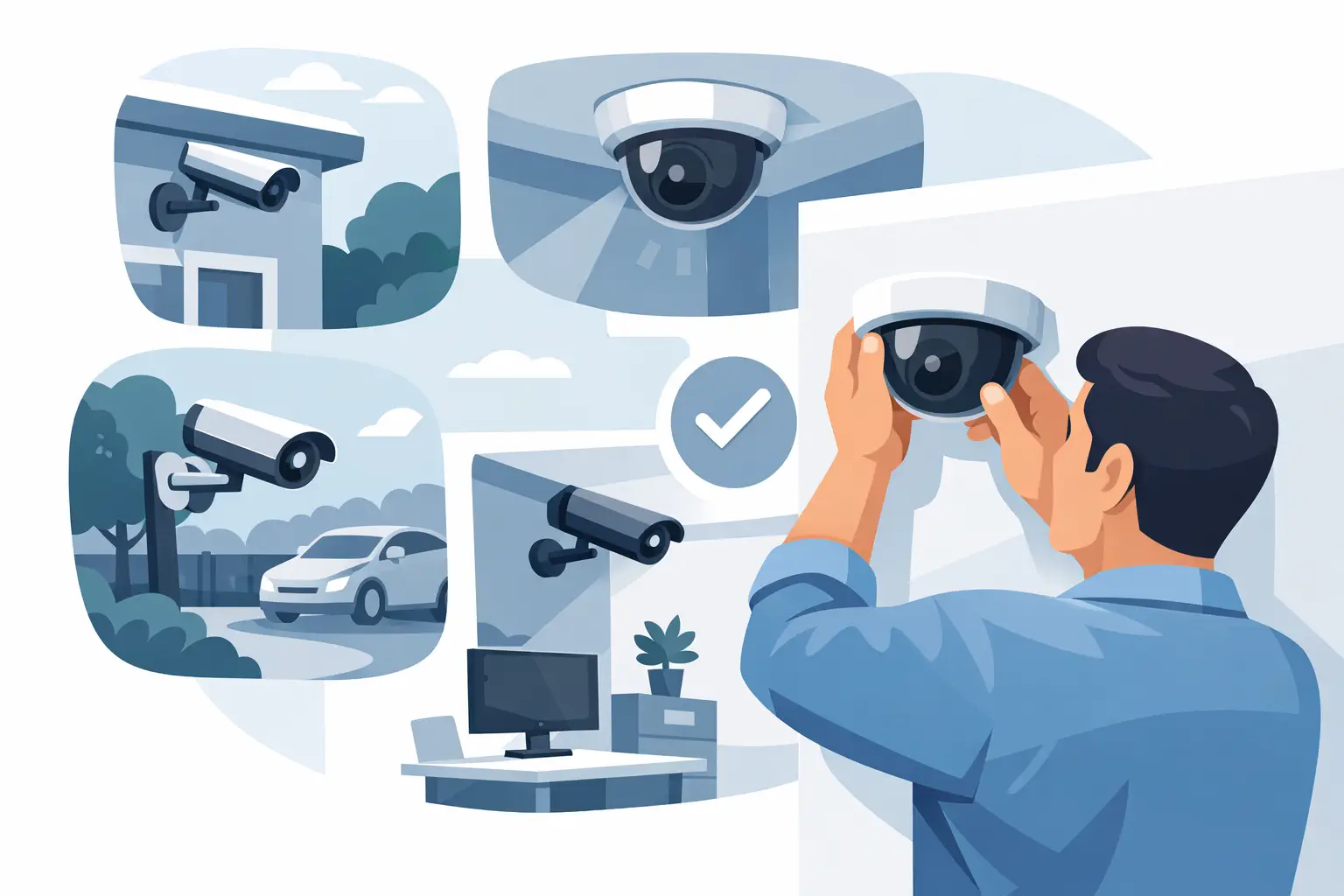
Start with the obvious approach paths. Front doors, back doors, garage doors, first-floor windows near side yards, and driveway entry points are all strong candidates. These are the places where a real camera would monitor movement, package theft, forced entry, and vehicles. When a dummy camera is placed in one of these zones, it sends a clear message that the property is being watched.
Height matters just as much as location. Most dummy cameras look more convincing when mounted around 8 to 10 feet high. That is high enough to make tampering harder, but low enough to look useful. If it is mounted too high under a roof peak, it can seem decorative instead of functional. If it is too low, it becomes easy to inspect up close and identify as fake.
Angle is another detail people often miss. A camera should appear to be watching a real target area. If it points into the sky, into a wall, or out into empty space, it loses credibility immediately. Aim it toward a walkway, porch, driveway, gate, or entrance path. Anyone looking at it should be able to tell what it is supposed to be monitoring.
The Best Places Around a Home
At most homes, the front entry is the first place to consider. A dummy camera above the porch or near the garage can make sense because those are common surveillance positions. If you have a doorbell camera elsewhere, make sure the dummy unit does not compete in a way that looks odd. Consistency helps. A camera near the front should appear to protect visitors, deliveries, and the main entrance.
The back of the house is often even more important. Many break-ins happen away from street view, where a person feels less exposed. A dummy camera watching a patio door, fenced backyard entrance, or rear garage access point can create hesitation where criminals expect privacy.
Side yards are useful too, especially if they provide concealed access to windows or gates. A compact camera mounted under the eave near the side path can look realistic because that is exactly where homeowners often place surveillance.
Driveways and detached garages also deserve attention. People often focus only on doors, but vehicles, tools, and garage contents are common targets. A camera aimed toward the driveway or garage corner can make the whole area feel monitored.
Indoor Placement Can Help, But It Depends
Most people think of dummy cameras as outdoor deterrents, and that is usually where they do the most work. Still, indoor placement can make sense in some situations. If you have a visible camera in a front-facing window, for example, someone outside may assume the interior is monitored too.
The trade-off is realism. Indoor dummy cameras should not look randomly placed on a shelf or pointed at nothing. They need to make sense within the room. Near an entry hall, main living area, or interior garage door is more believable than a corner that no real camera would watch.
For small businesses, reception areas, stock rooms, and customer entrances can be reasonable indoor spots. The same rule applies: place the camera where monitoring would be expected, not where it is convenient.
Common Placement Mistakes That Ruin the Effect
One of the fastest ways to weaken a dummy camera is clustering too many in one area. If every corner of a small porch has a camera, it can look excessive and staged. Real security setups are usually strategic, not theatrical.
Another mistake is mixing styles that do not match. If one camera looks modern and another looks like an outdated plastic shell from a discount bin, the whole setup starts to feel less credible. Keep the design consistent with the property and with any real security devices you already have.
Visible wiring can go either way. On some models, a short visible wire can make a dummy camera appear more realistic. But sloppy, disconnected, or obviously fake wiring can have the opposite effect. Use that detail carefully.
Blinking red lights are another situation where less is often more. Many people assume a flashing light makes a dummy camera look more real. In practice, that depends on the design. Some real cameras do not have visible blinking lights at all. If the light looks cheap or too attention-grabbing, it may reduce credibility instead of increasing it.
And then there is the biggest mistake of all: relying on dummy cameras alone in places that truly need active monitoring. A dummy unit may discourage casual criminals, but it cannot record evidence, send alerts, or verify what happened. That is why placement should support your overall security plan, not replace it.
How to Make Dummy Cameras Look More Convincing
Believability comes from context. A dummy camera looks stronger when the rest of the property also signals attention to security. Motion lights, alarm stickers, visible locks, clean sightlines, and maintained entry points all reinforce the impression that the home is protected.
This is where affordable security tools can work together. A dummy camera near the front door looks more credible when the area is well lit and clearly maintained. A camera near a back gate feels more real if the gate is secured and the path is not hidden by overgrowth. Criminals notice when a homeowner looks prepared.
You should also think about line of sight. If a camera is blocked by a gutter, tree branch, hanging decoration, or porch beam, it does not look useful. Step back from the street, the sidewalk, or the approach path and view it from the perspective of someone coming onto the property. That quick visual check can tell you a lot.
Weather exposure matters too. Outdoor dummy cameras should be installed where a real outdoor model would survive. If the unit is hanging at a strange angle, collecting water, or fading badly in direct sun, it can lose its effect over time. Even a budget deterrent should still look cared for.
When Dummy Cameras Make the Most Sense
Dummy cameras are often a practical choice for budget-conscious homeowners who want visible deterrence in lower-risk areas. They can also be useful as supplemental devices around sheds, garages, workshops, alley-facing fences, or secondary entrances where you want an extra visual warning.
They make less sense in high-priority areas where you need evidence or immediate awareness. If package theft is a regular issue at your front door, a real camera is the better answer. If you want to monitor children arriving home, check on deliveries, or review suspicious activity, dummy cameras are not enough.
For many people, the best approach is layered security. Use real devices where monitoring matters most, then use visible deterrents to extend the appearance of coverage. That gives you both function and presence without overspending. For a brand like Elite Warrior Defense, that practical balance fits exactly what many customers want – stronger protection without unnecessary complexity.
A Simple Placement Strategy That Works
If you are not sure where to start, walk your property in daylight and again after dark. Look at the places where a person could approach without being seen, where they would pause before entry, and where valuables are visible or easy to reach. Those are the areas where a dummy camera can create the most hesitation.
Then ask one question at each spot: would a real camera logically be mounted here to watch something important? If the answer is yes, you are probably close to a good location. If the answer is no, keep moving.
The strongest dummy camera placement is never random. It is deliberate, realistic, and tied to the way people actually move around your property. When your setup looks intentional, it does what it is supposed to do – make your home feel like a harder target.