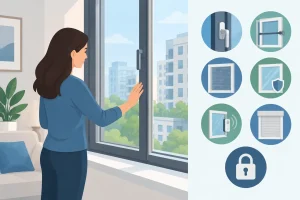

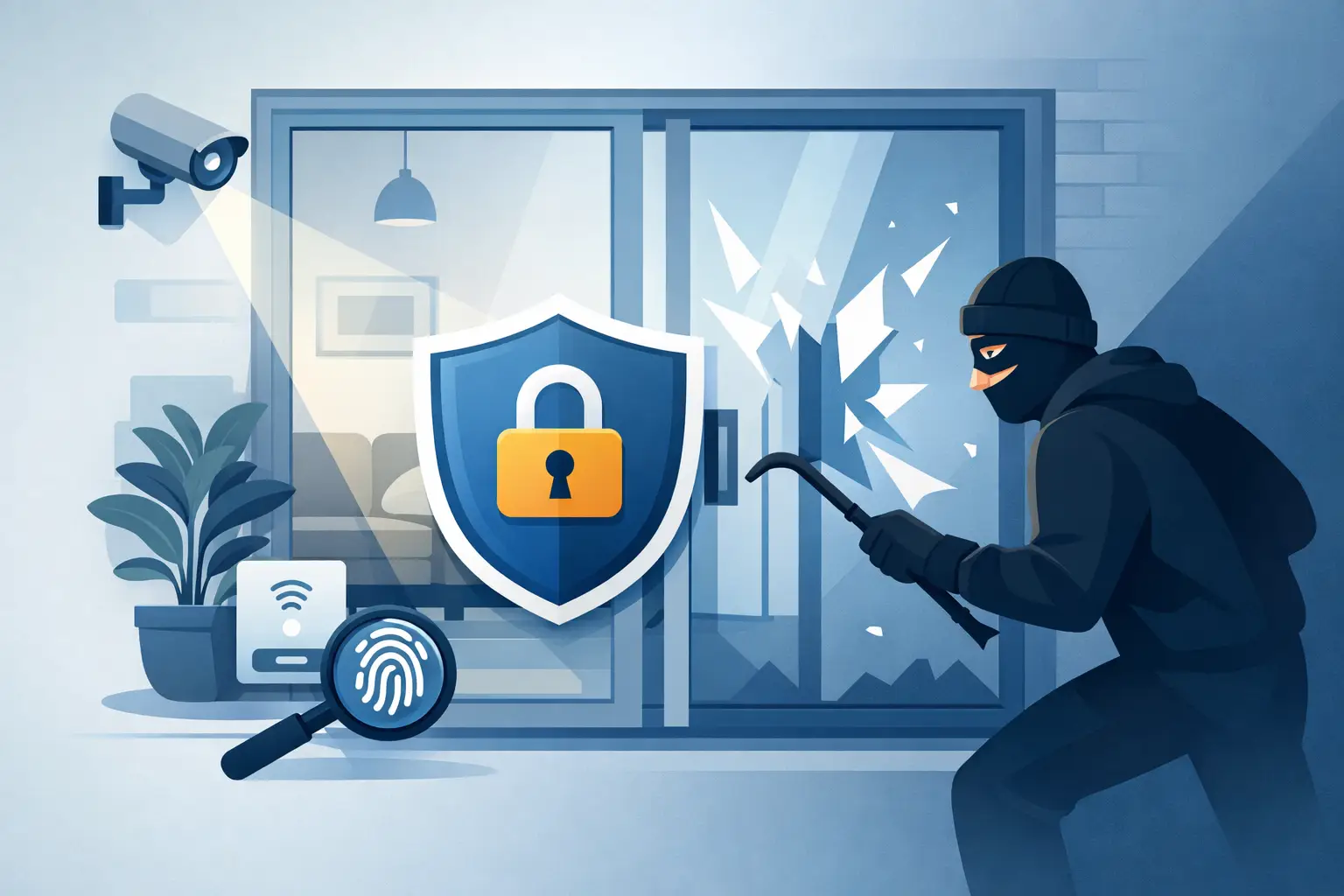
A sliding glass door can bring in light, provide a clear view of the yard, and make daily life more convenient. It can also be one of the most vulnerable entry points in a home if it relies on a basic latch alone. Learning how to protect sliding doors means thinking beyond one lock and building layers that make forced entry louder, slower, and far less appealing.
Most criminals are looking for an easy opportunity, not a long fight with a secured door. A few practical upgrades can change the calculation. Your goal is to prevent the door from being opened, lifted, forced, or quietly manipulated while giving your household time to react if someone tries.
Before buying security equipment, inspect the door closely. Slide it open and closed, then check whether it sits firmly in its track. A worn roller, loose frame, or door that can be lifted noticeably may compromise any security device you add later.
Look at the factory latch as well. Many sliding doors come with a small hook-style latch intended for everyday privacy, not serious forced-entry resistance. If the latch does not fully engage, the handle feels loose, or the lock can be bypassed with pressure, treat it as a weak point.
Also inspect the glass and the area around the frame. Cracked glass, deteriorating weather stripping, loose screws, and rotted wood or damaged trim all deserve attention. Security upgrades work best when they are attached to a solid, well-maintained door and frame.
A security bar, sometimes called a dowel, rod, or Charlie bar, is one of the simplest defenses for a sliding door. It sits in the lower track behind the moving panel, physically preventing the door from sliding open even if the latch is defeated.
A properly sized metal security bar is generally a stronger choice than a lightweight wooden dowel. It should fit snugly without forcing the frame or damaging the track. Measure the inside track carefully, and test the bar with the door locked and unlocked. The door should not move more than a fraction of an inch when the bar is in place.
A dowel can still be a useful budget option, especially for a door that is rarely used. Choose a thick, solid piece of wood, cut it to the correct length, and replace it if it becomes warped or splintered. Do not rely on a loose stick that can be knocked aside or easily removed from outside.
The trade-off is convenience. Everyone in the home needs to know the bar is there, and it must be removed before using that door as an exit. For homes where the sliding door is part of an emergency escape route, keep the bar easy to release from inside and make sure household members understand the process.
A track bar is a powerful backup, but the main lock still matters. Consider replacing a weak factory latch with an aftermarket sliding door lock designed to secure the door more firmly to the frame. Options include keyed locks, foot-operated locks, and devices that clamp or pin the door in place.
Keyed locks offer additional control, particularly for rental properties, vacation homes, or doors that are out of sight from the main living area. However, every keyed security measure should allow a quick exit from inside without searching for a key. Safety and security must work together.
Foot locks and pin locks can be effective because they prevent the panel from moving in its track. A pin lock usually requires drilling into the door frame or track, so installation needs to be precise. If you rent, ask for approval before making permanent changes. A removable security bar and door alarm may be the more practical choice.
Avoid assuming that one expensive lock solves every problem. A determined intruder may attack the glass, lift the door off its track, or exploit an unlocked secondary panel. The best protection combines a stronger lock with physical blocking and detection.
Some sliding doors can be lifted upward and removed from the bottom track. This can happen when there is too much clearance between the top of the door and its upper frame. Even a locked door can be vulnerable if it can be lifted free of the track.
Anti-lift devices address this issue. Depending on the door design, these may be installed as screws in the upper track, anti-lift blocks, or a dedicated bracket system. The purpose is to reduce vertical movement so the panel cannot be raised high enough to come out of place.
This is not a one-size-fits-all project. Door designs vary, and screws that are too long or poorly placed can interfere with the door’s operation. If you are not confident identifying the right placement, a qualified door or window professional can set up the anti-lift protection correctly. After installation, test the door from inside to confirm it still slides, locks, and exits as intended.
Physical barriers delay an intruder. Alarms add urgency by drawing attention to the attempt. A door or window alarm can sound when the sliding door is opened or when the two sensor pieces are separated. Many battery-powered models are simple to install and provide an immediate warning without requiring a full home security system.
For a sliding glass door, place the sensor where normal movement of the panel will separate it from the frame. Test it regularly. An alarm that has dead batteries, weak adhesive, or a sensor placed too far apart may fail when you need it most.
Glass-break alarms are another consideration, especially if the door has a large glass panel near a secluded patio or backyard. These devices can detect the sound or vibration associated with breaking glass. They are useful as a second layer, but placement matters. Follow the device’s stated range and test it according to the instructions.
A visible alarm decal or security sign can also reinforce the message that the home is prepared. Deterrence is not a guarantee, but criminals generally prefer quiet, low-risk access. A loud alarm turns a private opportunity into a public problem.
The glass itself is often the most obvious concern. Standard glass can be broken, allowing someone to reach in and release a latch. Security window film can help hold shattered glass together, making entry messier and slower. It is not the same as replacing the panel with impact-resistant glass, but it can be a practical upgrade for many homes.
Film must be applied carefully to a clean surface, with attention to edge adhesion and the manufacturer’s instructions. Its effectiveness depends on the glass type, film quality, installation, and whether the frame can help retain the glass. Do not expect film to make ordinary glass indestructible. Think of it as added delay, which works best alongside a track bar and alarm.
Curtains, blinds, or privacy film can help in a different way: they limit the view into your home. If a criminal can see electronics, car keys, purses, or an empty room, the door may become a more tempting target. Close coverings at night and whenever you leave for extended periods.
A protected sliding door should not be hidden in darkness or behind overgrown landscaping. Trim shrubs and trees that provide cover near the patio, deck, or rear entrance. Keep ladders, tools, and heavy outdoor objects stored away. Anything left nearby can become a tool for forced entry or give someone easier access to an upper-level door or window.
Motion-activated exterior lighting is especially valuable around side yards and backyards. It does not physically stop entry, but sudden light can expose suspicious movement and alert people inside. Position lights to cover the approach to the door without shining directly into bedroom windows or irritating neighbors.
If the door opens onto a fenced yard, check the gate hardware too. A strong door lock is less effective if an intruder can enter the yard unnoticed through an unsecured gate. Think of the property as a system, not a collection of separate weak points.
Many sliding-door break-ins begin with a simple oversight: the door was left unlocked, the security bar was not replaced, or a spare key was hidden in an obvious spot. Build a quick routine before bed and before leaving home. Confirm the door is shut, the primary lock is engaged, the track bar is in place, and the alarm is armed.
If children, guests, or roommates use the door, explain the setup clearly. Security only works when everyone understands it. Keep emergency exits in mind, especially if the sliding door is part of your family’s evacuation plan. Practice how to remove any bar or secondary lock quickly from inside.
For affordable, practical layers such as door alarms, safety lights, and other home security essentials, Elite Warrior Defense focuses on tools that help households take control of their safety without unnecessary complexity.
A sliding door does not have to be the easy target in your home. Give it a solid lock, a physical barrier in the track, protection against lifting, and a way to sound the alarm. Those layers send a clear message: this door will not open quietly, quickly, or without a fight.





YOU’RE IN!
Use this code on every order
🎉
Here’s Your Code!
Use it now an on every future order.
YOUR DISCOUNT CODE
We also sent this code to your email for safekeeping.
EXCLUSIVE OFFER
Every order – not just your first!
Unlock Your Discount Instantly
Enter your email below and your personal 15% discount code appears right here – no need to check your inbox.
🔒 We respect your privacy. Unsubscribe anytime.