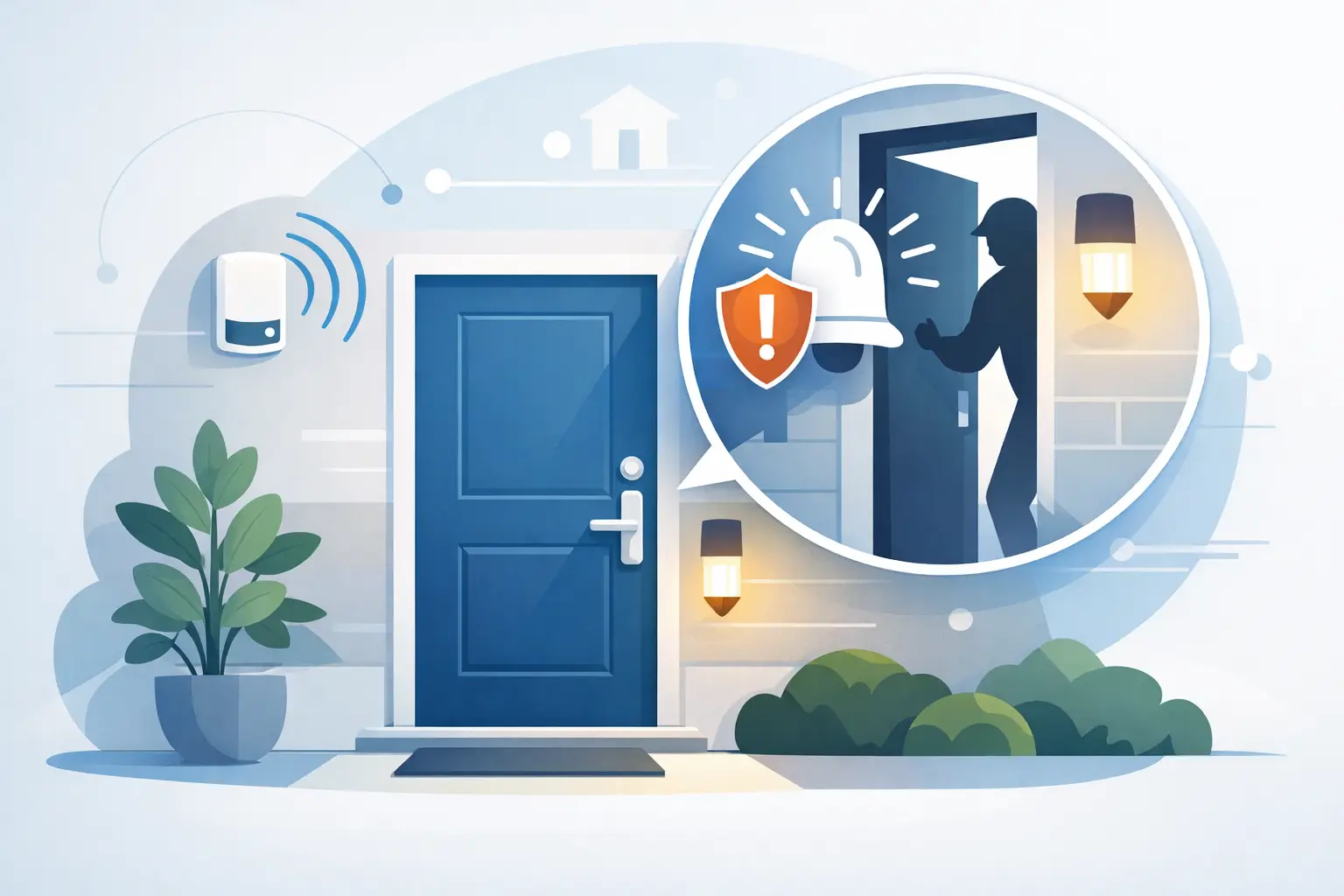
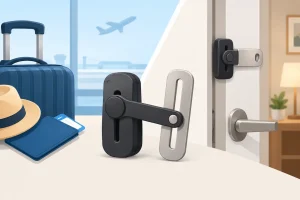
A front door alarm example is most useful when it reflects what actually happens at home: you are upstairs, in the shower, asleep, or focused on dinner when someone opens the door. The alarm’s job is not to turn your entryway into a fortress. It is to immediately tell you that the door has moved, giving you time to assess the situation, protect your household, and call for help if needed.
A simple door alarm is an affordable first layer of home security, especially for renters, apartment residents, first-time homeowners, and anyone who wants more awareness without installing a complex system. Used correctly, it can make an entry point far less inviting to an intruder and far more noticeable to everyone inside.
Front Door Alarm Example: A Realistic Setup
Picture a typical home with a front door that opens inward. A compact contact alarm is mounted on the inside of the door frame, near the upper corner on the latch side. One piece sits on the fixed frame; the matching magnetic piece sits on the door. When the door is closed, the two pieces align. When the door opens and the magnet separates, the alarm sounds.
That is the basic setup. But the security value comes from the routine built around it.
Before leaving for work, the homeowner checks that the front door is locked and turns on the alarm. When they return, they unlock the door, disarm the unit, enter, and rearm it once the door is closed. At night, the alarm stays armed while the household is asleep. If someone attempts to force the door or quietly opens it after hours, the high-pitched sound alerts the people inside and may encourage the intruder to leave immediately.
This front door alarm example works because it covers a clear vulnerability: unauthorized door movement. It does not replace a deadbolt, exterior lighting, a peephole or camera, or good habits. It strengthens those measures by adding an audible warning at the moment the entry is opened.
What a Door Alarm Can and Cannot Do
A door alarm gives you notice. That matters because early notice creates options. You can move your family to a safer room, verify what is happening without opening the door, activate other security measures, or contact 911 when there is an immediate threat.
It can also create a deterrent effect. Someone trying to enter unnoticed may abandon the attempt when an alarm draws attention from people in the home and nearby neighbors. The sound changes the situation quickly.
Still, a basic standalone alarm has limits. It may not notify your phone, contact emergency services, or record video. Its effectiveness also depends on battery condition, correct placement, and whether you remember to arm it. If you need remote alerts and professional monitoring, a connected security system may be a better fit. If your goal is a direct, low-cost warning at a vulnerable door, a standalone alarm can be a strong choice.
Choose Placement Before You Peel the Adhesive
Placement determines whether your alarm works reliably. On most doors, install the sensor and magnet near the top of the latch side, where they are less likely to be bumped by bags, children, or normal traffic. Follow the product’s instructions for the maximum gap between the two pieces. Even a small misalignment can cause false alarms or prevent the alarm from sounding when the door opens.
Clean and dry the mounting surface before applying adhesive. Dust, oil, moisture, and textured trim can weaken the bond. Press each piece firmly into place, then give the adhesive time to set if the manufacturer recommends it.
Avoid placing the alarm where the door hardware, weather stripping, or decorative molding keeps the two pieces from lining up. If your frame is uneven, you may need a small spacer or a different mounting position. Test the fit with the door fully closed and locked, not merely pulled shut.
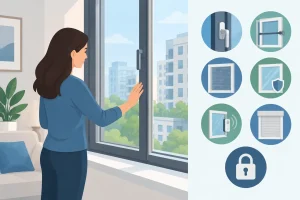
For a door with a glass panel, keep the alarm on the secure interior side and pair it with good locking hardware. A contact alarm detects opening. It does not prevent someone from breaking glass. This is where layered security makes a real difference.
Build a Front Door Security Routine
Security equipment is only as dependable as the habit behind it. A door alarm should be part of a short, repeatable routine that everyone in the household understands.
Start with the physical door. Close it fully, engage the deadbolt, and confirm the strike plate and frame feel solid. Then arm the alarm. Before bed, make the front door part of the same check as turning off lights, setting the thermostat, and securing windows.
If children, roommates, or frequent guests use the entrance, explain how the alarm operates and what the sound means. The goal is not to create fear. The goal is to prevent confusion when seconds matter. Everyone should know which adults are responsible for checking the door and when to call 911.
It also helps to plan for expected use. If a delivery, pet sitter, or family member is arriving, disarm the alarm before opening the door rather than rushing to silence it afterward. A predictable routine reduces false alarms and keeps the device ready when you truly need it.
Test It Like You Expect to Rely on It
An alarm that has never been tested is an assumption, not a security measure. Test your front door alarm after installation and on a regular schedule, such as the first weekend of each month.
Check four things during each test:
- The sensor and magnet are still firmly attached and properly aligned.
- The alarm activates when the door opens.
- The sound is loud enough to be heard from bedrooms, the garage, or other areas where people spend time.
- The battery is fresh and the controls work as expected.
Have one person open the door while another stands in the farthest practical room. If the alarm is difficult to hear through closed doors, consider adding alarms to other entry points, using a louder model, or supplementing it with another alert method. A device that works at the front door but cannot be heard where you sleep leaves a gap.
Replace batteries according to the manufacturer’s guidance, and replace them sooner if the unit chirps, sounds weak, or behaves inconsistently. Do not wait for a low-battery warning to become an emergency at 2 a.m.
Pair the Alarm With Stronger Entry Defenses
The strongest home security plans use layers because every layer covers a different problem. A deadbolt resists forced entry. A reinforced strike plate helps protect the frame. Exterior lighting removes shadows around the doorway. A peephole, door viewer, or camera helps you identify visitors before opening the door. A door alarm alerts you if the door moves.
For many households, the best starting point is simple: secure the lock, add a door alarm, and make checking the door a nightly habit. You can add more protection over time based on your property, budget, and comfort level.
Apartment residents may need non-damaging adhesive-mounted options and must follow lease rules. Homeowners may choose more permanent hardware upgrades. Families with young children may value an alarm that alerts them when a child heads toward the door. People who live alone may prioritize a loud alarm that creates immediate attention. The right setup depends on the risk you are addressing.
Elite Warrior Defense focuses on practical tools that help people take that first step without making home protection feel out of reach. The goal is not complicated gear for its own sake. It is knowing your entry points are better protected than they were yesterday.
Avoid These Common Door Alarm Mistakes
One common mistake is relying on the alarm while leaving the door unlocked. An alarm can alert you to movement, but a locked, reinforced door buys critical time. Another is installing the device and forgetting about it until the battery fails. Put testing on your calendar.
Do not mount an alarm where it can be easily silenced from outside through a broken glass panel or mail slot. Think through the physical layout of your door, not just the instructions on the package. Finally, resist the urge to disable the alarm permanently because it went off during normal use. Solve the cause, whether that means better alignment, a clearer household routine, or a different alarm location.
Your front door is the most familiar entrance to your home, which is exactly why it deserves deliberate protection. Set the alarm, test it, lock the door, and give yourself the advantage of knowing the moment that entry point is disturbed.