
The knock comes at 11:40 p.m. You did not order food, you are not expecting housekeeping, and you are halfway through convincing yourself it is probably nothing. That moment is exactly why knowing how to secure hotel room space matters before you ever hang the Do Not Disturb sign.
Hotels are built for convenience, not personal control. Staff, maintenance, neighboring guests, and sometimes bad actors all move through the same halls. Most stays are uneventful, but smart travelers do not rely on luck. They build layers of security that make their room harder to access, their valuables harder to steal, and their presence harder to exploit.
A safer hotel stay often begins with choices made days earlier. If you can, book a property with interior corridors, staffed front desks, working elevators, and recent guest reviews that mention security, lighting, and cleanliness. A cheap nightly rate can lose its appeal fast if the parking lot is dark and anyone can wander straight to guest room doors.
Room location matters more than many travelers realize. Ground-floor rooms can be convenient, but they are also easier to access from outside and easier to target for quick entry. Rooms near side exits and stairwells can bring extra foot traffic and less visibility. Many security-minded travelers prefer a room between the third and sixth floors. That range is typically high enough to reduce outside access and low enough to remain reachable for emergency response.
At check-in, stay alert. If the front desk says your room number out loud, that is not ideal. If possible, glance at the key sleeve instead of repeating the number yourself. Small habits like this reduce the chance that someone nearby learns exactly where you are staying.
Once you enter, do not drop your bags and relax just yet. Make a quick inspection part of your routine. Check that the main door closes fully and latches on its own. Test the deadbolt, privacy latch, and peephole. If the door seems loose, warped, or easy to push open, ask for another room.
Next, look at any connecting door. Many travelers forget this weak point. If your room has one, make sure it is locked and, if possible, brace or alarm it with your own portable device. Then check windows, balcony doors, and sliding glass doors. Locks should engage cleanly, and curtains should fully close.
This is also the right time to map your exits. Know where the main hallway exit is, but also note the nearest stairwell and fire exit. Security is not only about keeping threats out. It is also about being able to get out fast if conditions change.
The simplest answer to how to secure hotel room doors is also the one people skip most often: use every locking feature every single time you are inside. That includes the deadbolt and the swing bar or privacy latch, not just the basic latch built into the handle.
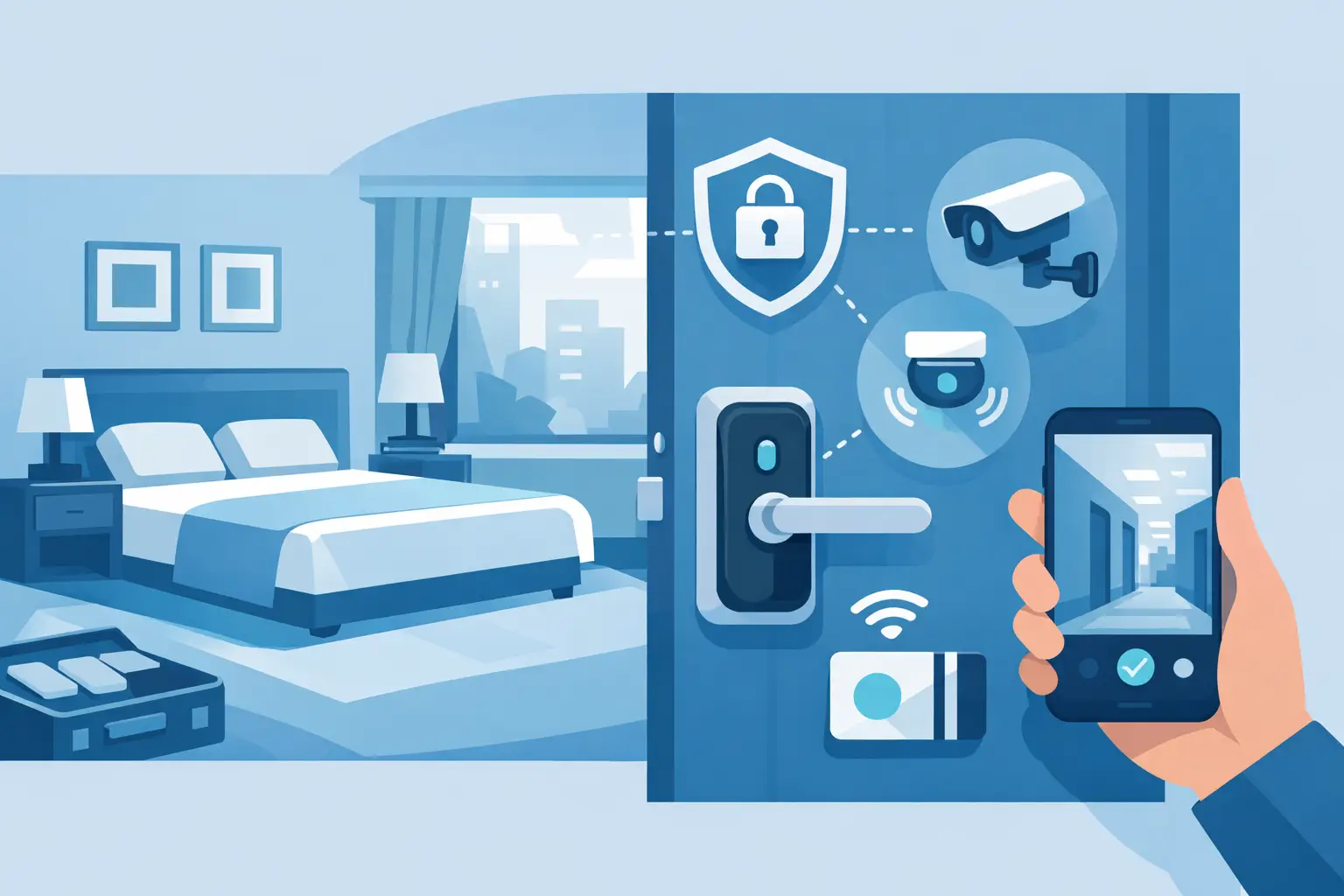
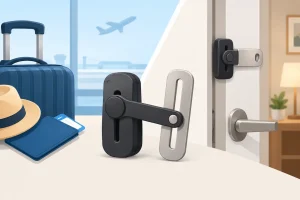
Hotel locks vary in quality. Some are excellent. Some are worn out from thousands of uses. That is why portable security tools are worth considering, especially for solo travelers, families, and anyone staying in an unfamiliar area. A portable door lock or door jammer can add resistance if someone has a copied key, an improperly issued key card, or bad intent. A compact door alarm can also alert you if the door opens while you are asleep.
There is a trade-off here. Extra devices are useful, but they should never block your ability to exit quickly in an emergency. If you use them, choose options you can remove in seconds and practice with them before your trip.
A secure room is not only about hardware. It is also about what other people can observe. Keep your curtains closed at night, especially if your room faces a parking lot, walkway, or neighboring building. If someone outside can see your laptop on the desk, your suitcase by the door, or that you are traveling alone, they have information they do not need.
Be careful with social habits too. Posting your hotel name and room view in real time can reveal your location to more people than intended. The same goes for wearing your room key sleeve around the property if it shows the room number. Convenience has a way of creating small security leaks.
If someone calls your room claiming to be from the front desk or maintenance, verify before opening the door. Call the front desk directly and ask whether anyone was sent. If there is any hesitation or mismatch, keep the door closed.
Most hotel rooms have safes, and they can be useful for keeping honest people honest. They are not always the best place for truly critical items. Some hotel safes use master override codes or keys, and some are not bolted down as securely as guests assume.
A better approach depends on what you are carrying. Keep passports, extra cash, sensitive documents, and legal self-defense items organized so they are not left in plain sight. If something is essential to your trip or difficult to replace, think carefully before leaving it behind in the room at all.
For electronics, lock screens and enable tracking features before you travel. For bags, a simple cable lock can add friction and discourage opportunistic theft. None of this makes theft impossible, but it makes your room a less attractive target than the next one.
The door is where most bad decisions happen. Someone knocks, identifies themselves vaguely, and your brain fills in the missing details. That is the moment to slow down.
Use the peephole first. If your room has a poor view or no peephole cover, stand off to the side before speaking. Ask who it is through the closed door. If the answer is housekeeping, maintenance, or hotel staff and you did not request anything, call the front desk to verify. If you need to open the door, use the privacy latch so the door cracks open instead of swinging wide.
If someone makes you uncomfortable, do not worry about seeming rude. Your job is not to be agreeable. Your job is to stay safe. Report suspicious behavior early, whether it is repeated knocks, hallway loitering, or someone trying multiple doors.
A lot of hotel security comes down to transitions. Walking from the parking lot, entering side doors, returning late at night, and carrying luggage all create distraction. Stay aware when using entrances that bypass the front desk. If a side entrance has a broken lock or does not require a room key, treat that as a warning sign.
When returning to your room, notice who is in the hallway. If someone seems to be lingering near your door or following too closely, keep walking and head to a public area instead of unlocking your room. It is a simple move, but it prevents you from leading a potential threat exactly where you sleep.
Inside the room, keep key items in the same place. Put your phone, flashlight, room key, and defensive tool where you can reach them in the dark. Under stress, people do not rise to the occasion. They fall back on preparation.
Many travelers like the added peace of mind that comes from carrying personal security products. That can be a smart choice, but hotel and travel rules matter. If you are flying, TSA restrictions and state laws affect what you can bring and how you must pack it. If you are driving, local laws still apply once you arrive.
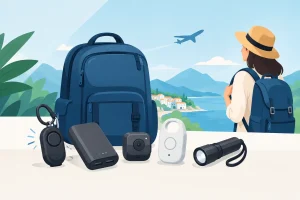
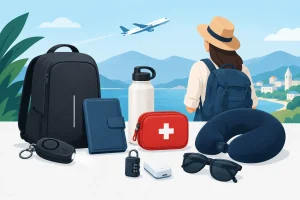
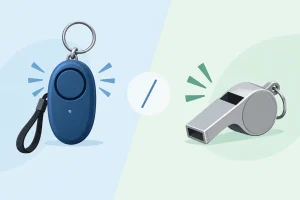
For hotel stays, compact tools like personal alarms, high-output safety lights, and legal self-defense items can fit naturally into a travel plan. The key is choosing tools you understand and can access quickly without fumbling. A device buried at the bottom of a suitcase is not much help at midnight.
This is where practical, affordable preparation makes a difference. Brands like Elite Warrior Defense focus on everyday security tools that are easy to carry and easy to use, which is exactly what most travelers need. Fancy gear is less important than gear you will actually keep within reach and know how to use calmly.
People often talk themselves out of their own instincts because they do not want to overreact. That hesitation creates openings. If the lock looks tampered with, if your room appears disturbed after housekeeping, if a stranger seems too interested in your comings and goings, say something immediately.
Ask for a room change if needed. Request one near the front desk if that feels safer. If a staff response seems dismissive and the issue is serious, leave the property. A nonrefundable rate is not worth staying in a place that does not take guest safety seriously.
Good travel security is not paranoia. It is controlled awareness. The strongest approach is simple: choose carefully, check everything, add layers, and trust your read on the situation. Peace of mind is easier to keep when you make your room a hard target from the moment you walk in.

YOU’RE IN!
Use this code on every order
🎉
Here’s Your Code!
Use it now an on every future order.
YOUR DISCOUNT CODE
We also sent this code to your email for safekeeping.
EXCLUSIVE OFFER
Every order – not just your first!
Unlock Your Discount Instantly
Enter your email below and your personal 15% discount code appears right here – no need to check your inbox.
🔒 We respect your privacy. Unsubscribe anytime.