
Personal defense alarms are one of the most underrated safety tools available today. Most people don’t realize that a 130-decibel alarm can stop an attacker in their tracks, yet many still leave home without one.
At Elite Warrior Defense LLC, we’ve seen firsthand how the right alarm-combined with proper technique-transforms how people feel about their personal safety. This guide walks you through everything you need to know to use your alarm effectively.
A personal defense alarm produces a loud siren that stops attackers by drawing immediate attention to your situation. Most alarms on the market operate between 115 and 130 decibels, with 130 dB representing the upper threshold for maximum effectiveness. To put this in perspective, a chainsaw runs at 120 dB and a rock concert at 115 dB. The higher the decibel level, the more startling the effect on an attacker’s nervous system. Sabre produces models at both 120 dB and 130 dB, with the 130 dB version delivering noticeably more stopping power in real situations.
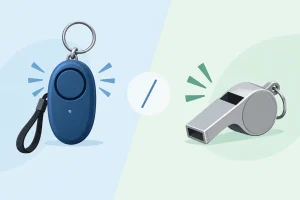
The activation mechanism matters just as much as the sound itself. Most effective alarms use a simple pull-pin or button-press design with an activation mechanism that requires less than one second to deploy. This speed matters because hesitation during a threat costs you critical escape time. Sabre’s key ring models activate by pulling the metal chain, while their clip-on versions use a straightforward button press. The siren continues until you manually silence it, which means you don’t need to hold anything down during your escape.
Some models add an LED strobe light that flashes at 20 lumens or include three LED modes (always on, slow flash, fast flash) to increase visibility in dark environments. These visual elements work alongside the sound to create a dual sensory assault that confuses attackers and attracts bystander attention simultaneously. The combination forces an attacker to process multiple threats at once rather than focusing solely on you.

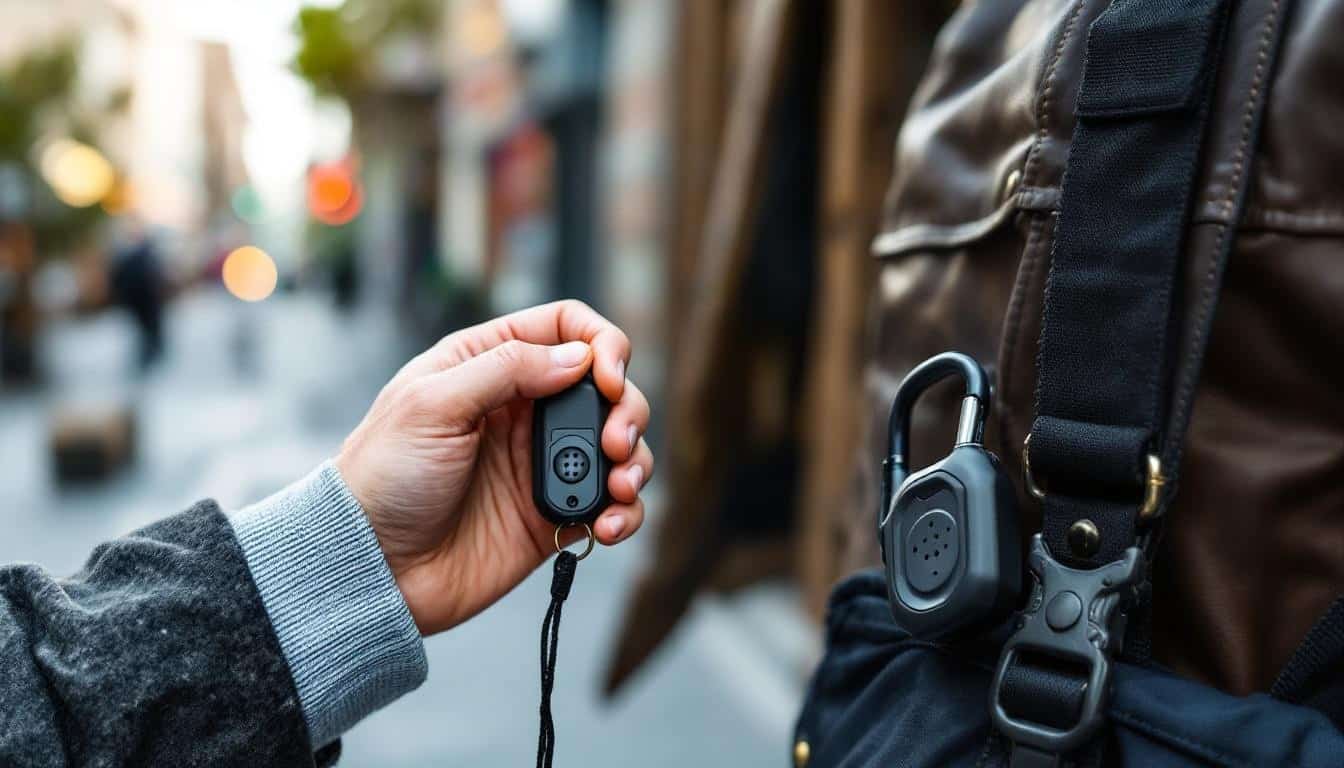
The physical attachment method determines whether you’ll actually use your alarm when threatened. An alarm sitting in a desk drawer offers zero protection, which is why clip-on designs for purses, belt loops, and backpacks matter more than the specifications. The moment you need it, your alarm must sit within arm’s reach without requiring fumbling through bags or pockets. Treat your alarm like your keys-something that stays with you during every outing.
Motion-sensor alarms add a different dimension by protecting stationary locations like a bedroom or office. These devices detect movement and alert you without requiring manual activation, which proves valuable for people who sleep lightly or work alone in vulnerable spaces. The technology transforms your alarm from a reactive tool into a proactive one that works even when you can’t manually trigger it.
Now that you understand how alarms function and what makes them effective, the real power emerges when you know exactly when and how to activate yours in threatening situations.
The most expensive alarm gathering dust in your nightstand drawer provides zero protection. People purchase quality devices and then abandon them because they fail to think through placement. Your alarm only works if you have it on you when a threat emerges, which means treating it like your phone or wallet. Attach the alarm to your bag, backpack, or belt loop so it stays within reach during commutes, parking lot walks, and errands. Key ring versions belong on the same ring as your car keys so they move with you automatically. For runners and walkers, wearable options eliminate the need to search through bags when your hands stay full. The moment you step outside, your alarm should already sit positioned for one-handed access without fumbling. Test this right now-time how long it takes to reach your alarm from your current carrying position.

If it takes more than three seconds, you need a different placement strategy. Anything longer than that creates dangerous hesitation during an actual threat.
Knowing when to activate your alarm matters more than owning an expensive model. Most people freeze during threatening moments because they lack clear decision criteria for deployment. Activate your alarm the moment someone approaches you with aggressive intent or you sense genuine danger-not after an attack has already begun. This includes situations like being followed to your car, feeling cornered in a parking garage, or encountering someone who ignores verbal warnings to back away. The alarm’s purpose is creating immediate chaos that disrupts an attacker’s focus and gives you escape time. Pull the pin or press the button without hesitation; the loud disruption forces bystanders to pay attention, which significantly increases your chances of receiving help or causing the attacker to reconsider.
One critical detail many people miss: practice activating your alarm in a safe environment before you ever need it. This single action builds muscle memory so your response becomes automatic rather than thoughtful during high-stress moments. Spend five minutes this week pulling your key ring alarm or pressing your clip-on device’s button repeatedly in your home. That minimal investment transforms activation from an uncertain action into an instinctive one when pressure arrives. Your nervous system will thank you when your hands move without conscious thought during an actual emergency.
The physical mechanics of deployment matter, but understanding the specific situations where your alarm delivers maximum impact separates effective users from those who carry devices without confidence.
Personal alarms work because they exploit a fundamental human response: startle reflex combined with social pressure. When a 130-decibel siren activates near someone, their nervous system reacts involuntarily. Most attackers operate on the assumption that they control the situation, and a sudden loud alarm shatters that illusion. The noise forces bystanders to pay attention, transforming an isolated threat into a public incident. This shift matters tremendously because attackers prioritize invisibility over confrontation. Research on assault prevention consistently shows that increased attention and witnesses dramatically reduce attack completion rates. Parking garage attacks, street muggings, and carjackings all follow the same pattern: the perpetrator depends on isolation and speed. An alarm eliminates both. The 130-decibel models deliver substantially more stopping power than 120-decibel versions because the higher frequency penetrates environments with ambient noise. A 120-decibel alarm might get lost in a busy parking garage or near traffic, while 130 decibels cuts through regardless of surroundings.
Certain environments amplify alarm effectiveness dramatically. Parking garages, stairwells, and elevators represent ideal deployment scenarios because the enclosed space amplifies sound and traps potential helpers nearby. A woman walking to her car at night faces genuine risk, and an alarm in this context creates immediate chaos that disrupts any attack sequence. Stalking situations benefit equally because the alarm signals awareness and readiness without requiring physical confrontation. According to the U.S. Department of Justice, one in three women and one in six men face stalking in their lifetimes. An alarm transforms a stalker’s calculus because it indicates you will not remain silent or cooperative. Public spaces like transit stations, shopping areas, and college campuses see consistent alarm success because density means help arrives faster. Late-night runners and walkers benefit from alarms paired with reflective clothing because the combination addresses both detection and deterrence simultaneously. Elderly individuals living alone gain specific protection through motion-sensor alarms placed strategically in bedrooms or entry points. These devices activate without requiring manual response, which proves critical for people with limited mobility or cognitive decline.
Alarms alone cannot stop active, committed violence. A determined attacker willing to absorb noise and social attention requires additional defensive layers. Home invasions by multiple perpetrators demand backup security measures like door reinforcement, window locks, and communication systems.

Active shooters represent a scenario where an alarm provides zero protection because the threat operates with deliberate lethality. Sexual assault by someone you know requires different tools entirely, primarily clear verbal boundaries and pre-planned escape routes. Alarms work best against opportunistic threats, not determined predators. This distinction separates effective safety planning from false confidence.
A complete personal safety strategy combines multiple tools rather than relying on any single device. Pepper spray addresses close-range threats where an attacker reaches you physically. Stun guns provide non-lethal stopping power against sustained aggression. Personal alarms excel at deterring opportunistic violence and creating escape opportunities. Combining an alarm with pepper spray on your keychain covers far more threat scenarios than either tool alone (and both fit easily in a pocket or bag). Training matters equally because owning tools without understanding deployment creates dangerous hesitation. The most effective personal safety approach pairs quality equipment with clear decision-making about when and how to use each tool based on the specific threat presented.
A personal defense alarm represents one of the most practical investments you can make for your safety. The combination of loud sound, visual deterrence, and immediate attention-drawing capability addresses the core vulnerability most people face: isolation during threatening moments. Unlike tools requiring physical contact or specialized training, an alarm works through pure sensory disruption that forces attackers to reconsider their actions and compels bystanders to intervene.
The real power emerges when you stop viewing your alarm as a standalone device and start treating it as part of a comprehensive safety strategy. Pairing your personal defense alarm with pepper spray creates redundancy across different threat distances, while adding a stun gun covers scenarios where an attacker closes the gap despite your initial deterrence. Each tool addresses specific threat patterns, and together they eliminate the gaps that leave you vulnerable.
We at Elite Warrior Defense LLC understand that personal safety requires both the right tools and the knowledge to use them effectively. Our diverse selection of self-defense products gives you the flexibility to build a safety strategy that matches your lifestyle and threat environment. Visit Elite Warrior Defense to explore products that strengthen your overall protection plan.