

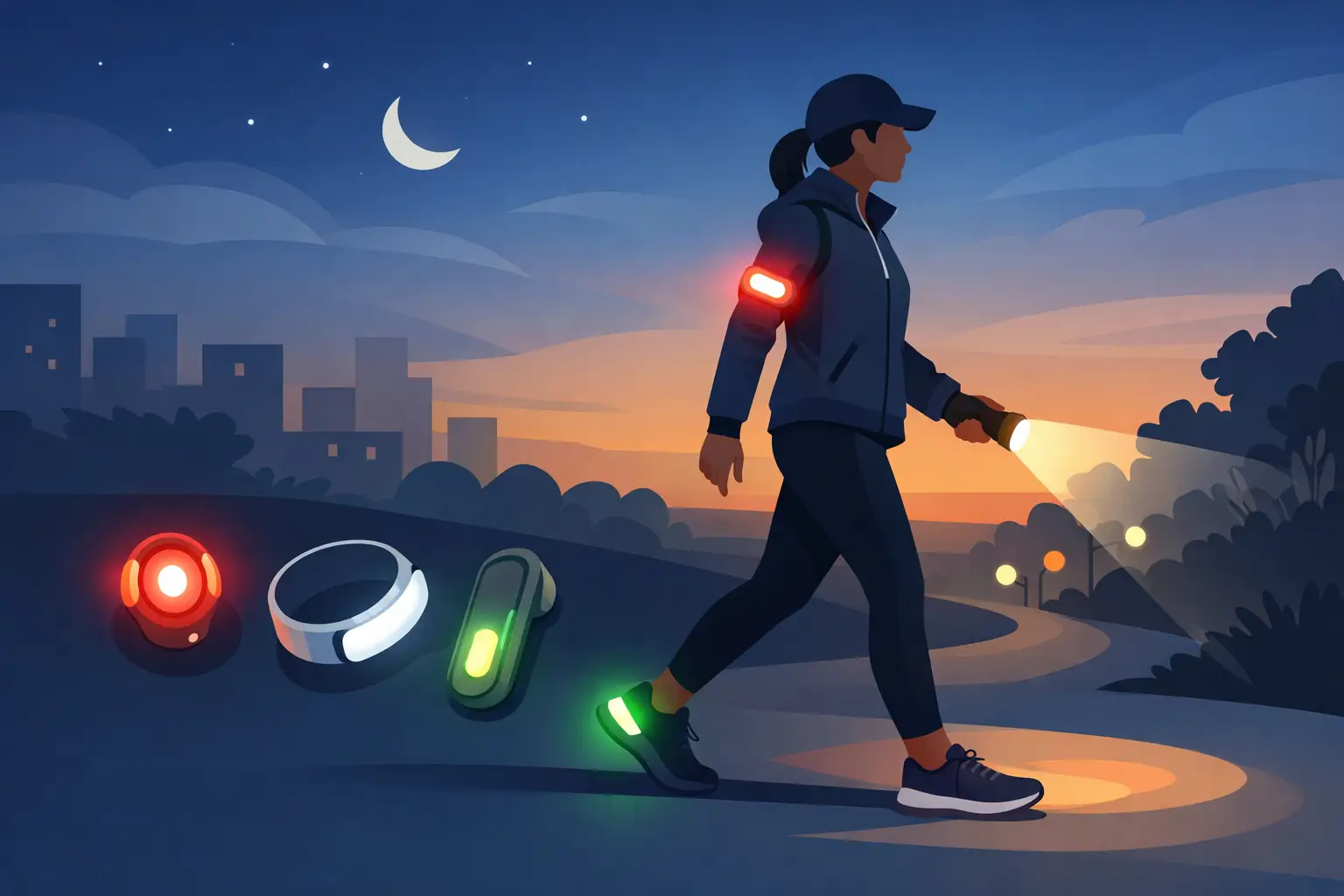
A dark sidewalk can change fast. One distracted driver, one poorly lit crosswalk, or one stretch of road without a shoulder is all it takes to turn a routine walk into a real risk. That is exactly why safety lights for walking matter. They are not about looking high-tech or overprepared. They are about being visible sooner, from farther away, and in the moments when that visibility can buy you time and space.
Most people assume reflective clothing is enough. Reflective gear helps, but it depends on someone else’s headlights hitting it first. A walking light does more than reflect. It creates its own visibility, which means drivers, cyclists, and even other pedestrians can notice you earlier.
That extra notice matters in neighborhoods with limited street lighting, during early morning walks, or in winter when it gets dark before the workday ends. It also matters in parking lots, near apartment complexes, on trails, and around intersections where people are often watching traffic signals instead of watching for walkers.
Visibility is not the same as personal protection, but it is part of personal security. The more quickly people can see you, the less likely you are to be surprised by a vehicle, a cyclist, or someone approaching too closely.
The best light is not always the brightest one on the shelf. Brightness helps, but real-world performance comes down to how and where you use it.
A good walking light should be easy to activate without fumbling. If you need both hands and perfect lighting to find the power button, it is already working against you. It should also stay secure while you move. A light that bounces, twists, or slides off your clothing becomes a distraction when you should be focused on your surroundings.
Battery life is another big factor. Some compact lights are powerful but burn through a charge quickly on high mode. That may be fine for a 20-minute dog walk, but not for someone who walks to work before sunrise and returns after dark. In that case, a rechargeable light with dependable runtime or a replaceable-battery model may make more sense.
Weather resistance also matters more than people expect. If you walk regularly, sooner or later you will deal with drizzle, sweat, cold, or humidity. A light does not need to be built for deep water, but it should handle everyday outdoor use without failing when conditions are less than perfect.
There is no single perfect option for everyone. The right setup depends on where you walk, how long you are out, and whether your goal is being seen, seeing your path, or both.
Clip-on lights are one of the easiest choices for everyday use. You can attach them to a jacket, waistband, pocket, backpack strap, or dog leash. They are lightweight, simple to carry, and good for people who want a low-profile option.
Their biggest advantage is convenience. If a light is easy to grab and clip on, you are more likely to use it consistently. The trade-off is that very small clip lights may not throw much light onto the ground in front of you. They are excellent for visibility, but not always enough for lighting your path.
LED bands wrap around your arm, wrist, or ankle and create movement-based visibility. That motion catches attention, which can help drivers notice that a person is walking rather than mistake the light for a fixed object.
These are especially useful near roads or in areas with light traffic. On the other hand, they are usually a visibility tool more than a path-lighting tool. They work best as part of a setup, not necessarily as the only light you carry.
A headlamp is a strong choice when you need to see where you are going. It keeps your hands free and puts light directly in your line of sight. That can be useful on uneven sidewalks, trails, or poorly lit streets.
But headlamps come with a trade-off. A very bright beam at eye level can be harsh to others if not angled properly. For neighborhood walking, lower settings or downward adjustment usually make more sense than blasting full brightness straight ahead.
A handheld flashlight gives you control. You can point it at the ground, scan a dark corner, or briefly direct attention toward yourself when crossing a street. Some people prefer this because it feels more intentional and gives them another layer of awareness.
The downside is obvious. One hand stays occupied. If you are walking a dog, carrying groceries, or holding a phone, that may not be ideal. Still, for people who want visibility plus the ability to inspect surroundings quickly, handheld lights remain a practical option.
Placement matters. A powerful light in the wrong spot can be less effective than a moderate light placed well.
Chest level is one of the most practical positions because it puts the light where drivers naturally notice the shape of a person. Backpack straps and jacket fronts work well for this. Ankle and wrist lights are also effective because movement draws attention. If you can combine upper-body visibility with lower-body movement lights, you create a more recognizable human outline.
Rear visibility is often overlooked. If you walk along roads, especially without sidewalks, a rear-facing red light can help traffic approaching from behind identify you sooner. That is a smart layer many walkers miss.
Some features are worth the money because they improve real use. Others just make packaging sound impressive.
Multiple lighting modes are useful if they are simple. A steady mode and a flash mode are usually enough for most walkers. Flashing can attract attention well, but some people find it annoying or too aggressive in quiet neighborhoods. Steady light often works better for regular residential walking, while flash mode can help near traffic or in emergency situations.
USB charging is convenient for many people, especially if you already charge phones and earbuds daily. But if you tend to forget charging devices, replaceable batteries may actually be the better choice. The best option is the one you will keep ready.
Extremely high lumen counts are not always necessary. For walking, reliability, beam pattern, and visibility angles often matter more than raw brightness. A moderate light used consistently beats a super-bright one left at home because it is bulky or inconvenient.
A suburban neighborhood walk is different from a rural roadside walk. A downtown evening commute is different from a dog walk around the block.
If you walk in neighborhoods with some street lighting, a small clip-on light or LED band may be enough to increase visibility. If you walk on dark roads with limited shoulders, you may need a stronger combination such as a front light, a rear light, and reflective gear. If you walk trails, your priority may shift more toward seeing roots, dips, and uneven terrain, which makes a headlamp or handheld beam more useful.
This is where a lot of people make the wrong call. They shop by brightness alone instead of by environment. Your setup should fit your route, not just the product description.
Even the best light is not a substitute for awareness. Visibility tools work best when they support good habits.
Stay predictable when you cross streets. Make eye contact with drivers when possible. Avoid assuming a car sees you just because your light is on. If you wear headphones, keep the volume low enough to hear traffic and movement around you. If your route feels isolated, vary your timing or walk with a partner when possible.
There is also value in keeping your gear simple. If your safety routine is too complicated, it is easier to skip. A dependable light that clips on fast and works every time is often better than a more advanced setup you only use occasionally.
For shoppers building a broader personal safety plan, visibility gear fits naturally alongside other practical tools. That is one reason companies like Elite Warrior Defense carry walking lights as part of a larger security lineup. The goal is not fear. The goal is readiness.
Start with one honest question: what problem are you trying to solve? If you need to be seen on neighborhood walks, choose something lightweight and wearable. If you need to see dark ground ahead, prioritize beam quality and hands-free use. If you walk near traffic in low-light areas, think in layers rather than one device.
You also want a light you will actually carry. Comfort, simplicity, and reliability matter. So does cost. A practical, affordable light that fits your routine is a smarter buy than a premium model that feels like overkill.
Personal security often comes down to small decisions made ahead of time. A walking light is one of those decisions. It is simple, affordable, and easy to underestimate until the night you really need it. Choose one that fits your route, wear it where it will be noticed, and give yourself the advantage of being seen before a situation gets too close.




YOU’RE IN!
Use this code on every order
🎉
Here’s Your Code!
Use it now an on every future order.
YOUR DISCOUNT CODE
We also sent this code to your email for safekeeping.
EXCLUSIVE OFFER
Every order – not just your first!
Unlock Your Discount Instantly
Enter your email below and your personal 15% discount code appears right here – no need to check your inbox.
🔒 We respect your privacy. Unsubscribe anytime.