

A self-defense keychain can feel like a smart, simple way to stay prepared – right up until you realize the legal side is not simple at all. Self defense keychain laws vary widely across the United States, and the same tool that is legal in one state can raise serious issues in another. If you carry one for personal protection, the goal is not just confidence. It is confidence backed by good judgment.
That matters because “self-defense keychain” is not a legal category in most states. Lawmakers usually regulate the item itself, not the marketing label on the package. A cat-ear impact tool, kubotan-style stick, pepper spray keychain, mini stun device, or pointed tactical keychain may all fall under different rules depending on design, intended use, where you carry it, and even how an officer or court interprets it.
The first thing to understand is that states do not treat these tools the same way. Some focus on whether the item is concealed. Some focus on whether it is designed primarily as a weapon. Others care more about where it is carried, such as schools, government buildings, airports, or private property with posted restrictions.
That creates a gray area for many products sold as keychains. A harmless-looking accessory may still be classified as a striking weapon, prohibited knife, or disguised weapon under local law. On the other hand, a pepper spray keychain might be legal for most adults in a state that bans certain impact tools. The difference can come down to details that are easy to miss when shopping online.
This is why smart buyers do not stop at “legal in most states” marketing language. That phrase may be broadly true, but it does not guarantee legality where you live, work, study, or travel.
When people talk about self-defense keychains, they are usually referring to one of a few categories. Each one can trigger a different legal analysis.
These include hard plastic or metal tools shaped for gripping and striking. Kubotan-style keychains and cat-ear style tools often fall into this group. In some states, they may be treated like blunt-force weapons or brass knuckle alternatives, especially if the design clearly increases striking power.
This is where buyers get into trouble. A product marketed as cute, discreet, or everyday carry can still be seen by law enforcement as a weapon first and an accessory second.
Pepper spray keychains are often one of the more legally accessible options, but they are not unrestricted. Some states limit strength, container size, shipping methods, or who can possess them. Age restrictions are also common. A few jurisdictions impose rules that go beyond state law, so city and county regulations can matter too.
Even where pepper spray is legal, carrying it into restricted locations can still be a problem.
Small stun devices designed for keychain carry can be legal in many places, but some states and localities regulate them more heavily than pepper spray. Possession may be restricted by age, criminal history, or location. Transportation rules can also apply.
These are the kinds of tools that demand extra caution before purchase, especially if you cross state lines often.
Some keychains are designed with a pointed end for pressure-point use or emergency striking. Depending on the design, they may be treated as a legal tool, a disguised knife, or a prohibited weapon. The line is not always obvious.
If it looks designed to stab, puncture, or conceal offensive capability, legal risk tends to go up.
People often ask whether a self-defense keychain is legal or illegal. The better question is: legal where, for whom, and under what circumstances?
Your home state is the starting point. Some states are permissive and allow broad self-defense tool ownership. Others are much stricter about concealed weapons, impact weapons, or electronic defense devices.
State law does not always tell the whole story. Certain cities and counties impose additional restrictions. If you live in or travel through a major metro area, local rules deserve a second look.
Pepper spray and stun devices may be limited to adults, and some laws restrict possession by people with certain criminal convictions. That matters for buyers, but it also matters for gifting. A product that is lawful for one person may not be lawful for another.
A legal item can become illegal in the wrong place. Schools, courthouses, airports, federal buildings, and many private businesses restrict weapons or defense tools. Some states also prohibit carry in bars, public events, or government facilities.
How you use the tool matters just as much as whether you own it legally. A lawful self-defense item used aggressively, recklessly, or during a confrontation that does not justify force can create criminal exposure. Self-defense law is generally about necessity and reasonableness, not simply possession.
Travel is where mistakes happen fast. You may buy a tool legally in your home state and then carry it into a state where the rules are different. Even worse, you may pass through an airport, school zone, or public venue without thinking about what is attached to your keys.
For frequent travelers, the safest approach is practical, not casual. Check the laws of the destination state, any city with stricter local rules, and the places you plan to enter. If you are flying, assume that many self-defense keychains belong in checked baggage, if they are allowed at all. Never guess at airport security.
Road trips create their own issues. A tool that stays clipped inside a purse or pocket may count as concealed carry in one jurisdiction and not in another. That distinction can matter more than most people realize.
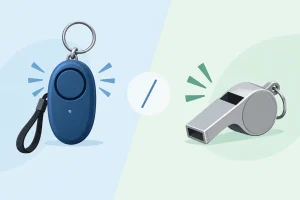
If your priority is personal protection without legal uncertainty, simpler is often better. Pepper spray keychains are commonly seen as one of the more practical options for many adults because they are widely legal, straightforward to use, and effective at creating distance. That does not mean they are legal everywhere, but they tend to raise fewer classification questions than impact-style novelty keychains.
By contrast, hard impact tools or pointed designs often attract more scrutiny. If a product looks made to injure through forceful contact, some jurisdictions may treat it more harshly than a chemical deterrent. The trade-off is clear: a compact striking tool may feel convenient, but the legal gray area can be wider.
That is why responsible buyers think beyond size and style. You want a tool you can carry lawfully, access quickly, and explain clearly if ever questioned.
Before adding any self-defense keychain to your daily carry, take a few minutes to do the work that protects you on both fronts – physical safety and legal safety.
Read your state law directly, then check whether your city or county has stricter rules. Look closely at how the product is described and how it is designed to be used. If it resembles brass knuckles, a dagger, or a disguised weapon, treat that as a warning sign. If it is a pepper spray or stun device, confirm age limits, size restrictions, and prohibited locations.
Then think about your routine. If you regularly go into schools, office buildings, stadiums, or government property, a tool that is technically legal to own may still be a poor everyday choice. Practical protection only works if you can carry it legally where you actually spend time.
For buyers who want dependable personal safety products without guesswork, this is where a trusted retailer matters. Elite Warrior Defense serves people who want real protection, not gimmicks, and that same mindset should apply to legality. The right tool is the one that fits your life, your training, and your local laws.
One final point matters more than product packaging: calling something a “self-defense keychain” does not give it legal protection. Courts and law enforcement look at construction, capability, carry method, and context. Marketing language is not a shield.
That is why the strongest position is always the same: know your state, know your local rules, and choose tools that match both your safety needs and your legal environment. Personal security should make your life stronger, not more complicated. A little caution before you carry can save you a major problem later.





YOU’RE IN!
Use this code on every order
🎉
Here’s Your Code!
Use it now an on every future order.
YOUR DISCOUNT CODE
We also sent this code to your email for safekeeping.
EXCLUSIVE OFFER
Every order – not just your first!
Unlock Your Discount Instantly
Enter your email below and your personal 15% discount code appears right here – no need to check your inbox.
🔒 We respect your privacy. Unsubscribe anytime.