
You do not need to be paranoid to be prepared. You just need a plan for the moments that happen fast – the walk from the parking lot, the door that will not unlock right away, the stranger who ignores your “no,” the delivery you did not order. The best safety tools are the ones you can access under stress, understand without thinking, and carry without it becoming a burden.
This guide breaks down top rated personal safety products by what they actually do in real life, where they fit, and what trade-offs come with each one. The goal is simple: help you choose gear you will carry and use confidently.
A high rating is nice, but safety products get “rated” for the wrong reasons all the time. A device can look tough and still be awkward in your hand. Another can be powerful but so complicated you hesitate.
When you evaluate top rated personal safety products, look for four things that matter more than hype. First is access – can you reach it quickly with one hand? Second is reliability – does it work every time without fiddling? Third is legality – can you carry it where you live, work, or travel? Fourth is fit – does it match your strength, comfort level, and daily routine.
If a product checks all four, it earns the “top rated” label in the way that counts.
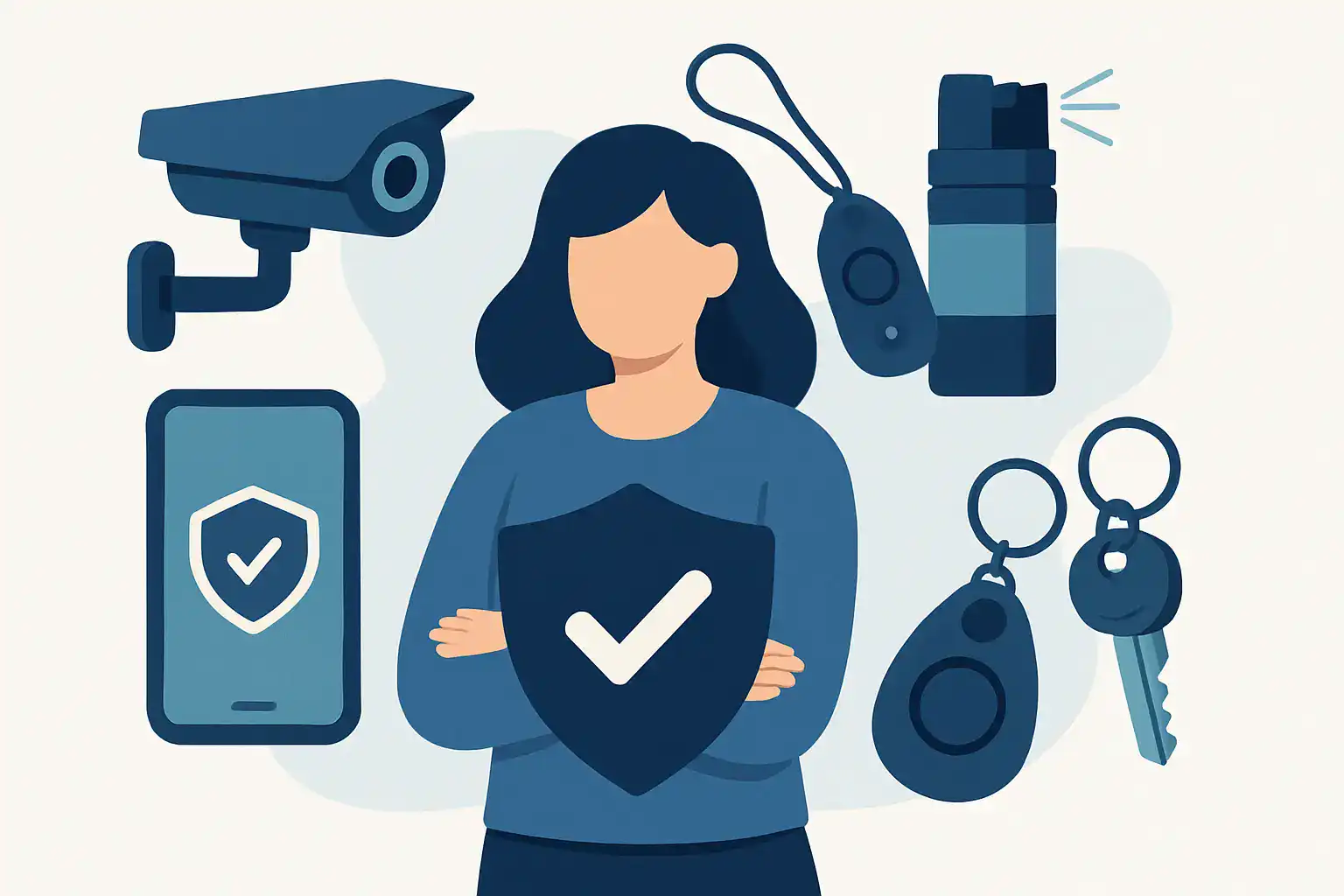
Pepper spray stays popular because it is effective, affordable, and lightweight. For many adults, it is the easiest first step into personal protection.
A quality pepper spray gives you distance. That matters because distance buys time to escape, call for help, and create space between you and a threat. It is also intuitive: aim, press, move away.
The trade-off is that pepper spray is not magic. Wind can push spray off target, and indoor use can affect you too. It also requires you to be calm enough to aim for the face and commit. Practice the motion with an inert trainer if you can, and store it where your hand naturally goes – not buried in a bag.
If you carry one, pay attention to the safety mechanism. You want something that will not discharge accidentally, but also will not slow you down.
Stun guns can be highly effective at close range, especially when you need a tool that does not rely on pinpoint accuracy. The sound and visible spark can also create a psychological deterrent, which sometimes ends a situation before it escalates.
The trade-off is distance – you must be close enough to make contact. That is not always where you want to be. Stun devices also vary widely in build quality, ergonomics, and ease of activation. If the switch is awkward or the grip feels slippery, it is not the right tool.
Consider how you would carry it. Pocket carry can work, but a dedicated spot in a purse, console, or bedside setup is often more realistic. If it is rechargeable, build a simple habit: check the charge on the same day you test smoke detectors or change air filters. Consistency keeps you ready.
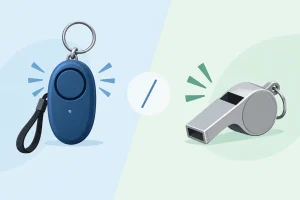
A personal alarm is one of the most underrated safety tools because it helps you win the moment without fighting. Pull-pin alarms and push-button sirens can hit ear-piercing volume fast, which can startle an aggressor and pull eyes toward you.
This is a strong choice if you cannot carry defensive sprays at work, if you are buying for a teen or older adult, or if you want a tool that supports situational awareness rather than physical confrontation.
The trade-off is obvious: an alarm does not physically stop someone. But it can create a window to run, get to a better-lit area, or reach a staffed location. It also pairs well with other tools. Many people carry an alarm on their key ring and pepper spray on the same set so they can choose the best response in the moment.
Self-defense keychains are popular because they are easy to carry and easy to keep in hand. If you already grab your keys when you leave the house, it is natural to grab protection too.
Some keychain tools are designed for grip and striking, while others combine multiple functions like light, alarm, or bottle opener-style utility. The best versions are the ones that do not snag, do not break, and do not look so aggressive that they get you questioned in restricted environments.
The trade-off is that many “trendy” keychain tools are more about appearance than performance. Also, certain designs may be restricted in some areas or treated as weapons. If you want a keychain tool, choose one that is built solid, feels stable in your hand, and complements your primary option rather than replacing it.
A tactical pen is one of the most practical self-defense options for people who want something discreet and everyday-appropriate. It looks like a pen because it is a pen. That means it can live in your pocket, bag, car, or desk without drawing attention.
In a worst-case scenario, a strong metal pen can help you create space using targeted pressure or strikes. In a best-case scenario, it is a pen you use daily, which means it is always with you.
The trade-off is training and mindset. A tactical pen is close-range and requires you to commit to physical movement. If you choose this route, practice your grip and how you would draw it under stress. You are not trying to “win a fight.” You are trying to break contact and get away.
A compact, bright flashlight belongs on any list of top rated personal safety products because it is useful in normal life and in emergencies. Light helps you scan your surroundings, check your back seat, find your keys, and identify what is actually happening.
A high-output light can also temporarily disorient someone at night, especially if you hit the eyes and move. It is not a guarantee, but it is a strong advantage – and one of the few tools that is broadly legal in almost every setting.
The trade-off is that brightness alone is not defense. A flashlight works best as prevention and awareness, and as a support tool paired with an alarm or spray.
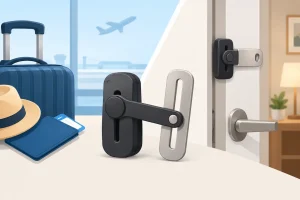
For home and apartment security, small door and window alarms deliver serious value. They are easy to install, loud, and they reinforce a simple truth: most criminals want an easy target.
If you are living alone, traveling, or setting up a dorm, basic alarms give you early warning and a moment to respond. That moment can be the difference between catching a problem early or getting startled awake too late.
The trade-off is that alarms do not physically stop entry. They buy time and attention. Pair them with good lighting, consistent locking habits, and a plan for what you do when the alarm sounds.
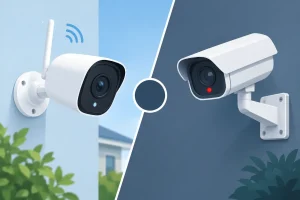
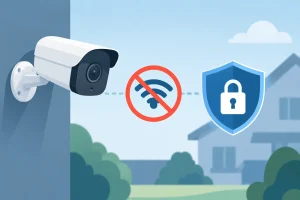
A visible security measure can change behavior. Dummy cameras, signage, and obvious deterrents can push someone to move on to an easier option. That is a win because the best threat is the one that never reaches you.
The trade-off is that a dummy camera is not evidence and not intervention. If you use deterrents, treat them as one layer, not the whole system.
Diversion safes are designed to look like ordinary household items while hiding cash, spare keys, or small valuables. They are a practical option for reducing opportunity theft, especially in shared living situations, hotel stays, or homes with frequent visitors.
The trade-off is that they are not the same as a bolted-down safe. They work best for low-profile storage, not for protecting high-value items against a determined search.
Most people do better with a small “stack” of tools instead of searching for one perfect product. Think in terms of distance, attention, and last-resort contact.
If you walk alone often, distance tools like pepper spray are a strong foundation. If you work in an environment with restrictions, a loud alarm and a bright flashlight may be your best daily carry. If you want a discreet option that lives on your person, a tactical pen is worth considering. For home, alarms and visible deterrents create early warning and reduce the chance you get surprised.
Your lifestyle matters. A runner needs something that will not bounce and can be used with sweaty hands. A rideshare driver needs fast access from the seat and a plan that does not escalate unnecessarily. A college student needs tools that fit campus rules and still provide real protection.
For a one-stop place to compare options like pepper spray, stun guns, tactical pens, alarms, and home security add-ons without getting pushed into pricey gimmicks, you can browse Elite Warrior Defense.
A safety product is only as good as your habits. Keep your tool in the same place every day. Practice grabbing it and disengaging the safety until your hands know what to do. Replace expired sprays and check batteries on alarms.
Also, be honest about your comfort level. The best tool is the one you will actually carry, and the best plan is the one you will actually follow. Confidence comes from clarity, not bravado.
Close with this mindset: you are not collecting gadgets – you are building options. Give yourself distance, give yourself noise, give yourself light, and give yourself a simple plan to leave fast when something feels wrong.


YOU’RE IN!
Use this code on every order
🎉
Here’s Your Code!
Use it now an on every future order.
YOUR DISCOUNT CODE
We also sent this code to your email for safekeeping.
EXCLUSIVE OFFER
Every order – not just your first!
Unlock Your Discount Instantly
Enter your email below and your personal 15% discount code appears right here – no need to check your inbox.
🔒 We respect your privacy. Unsubscribe anytime.