
Most people don’t get to “choose the time” they need protection.
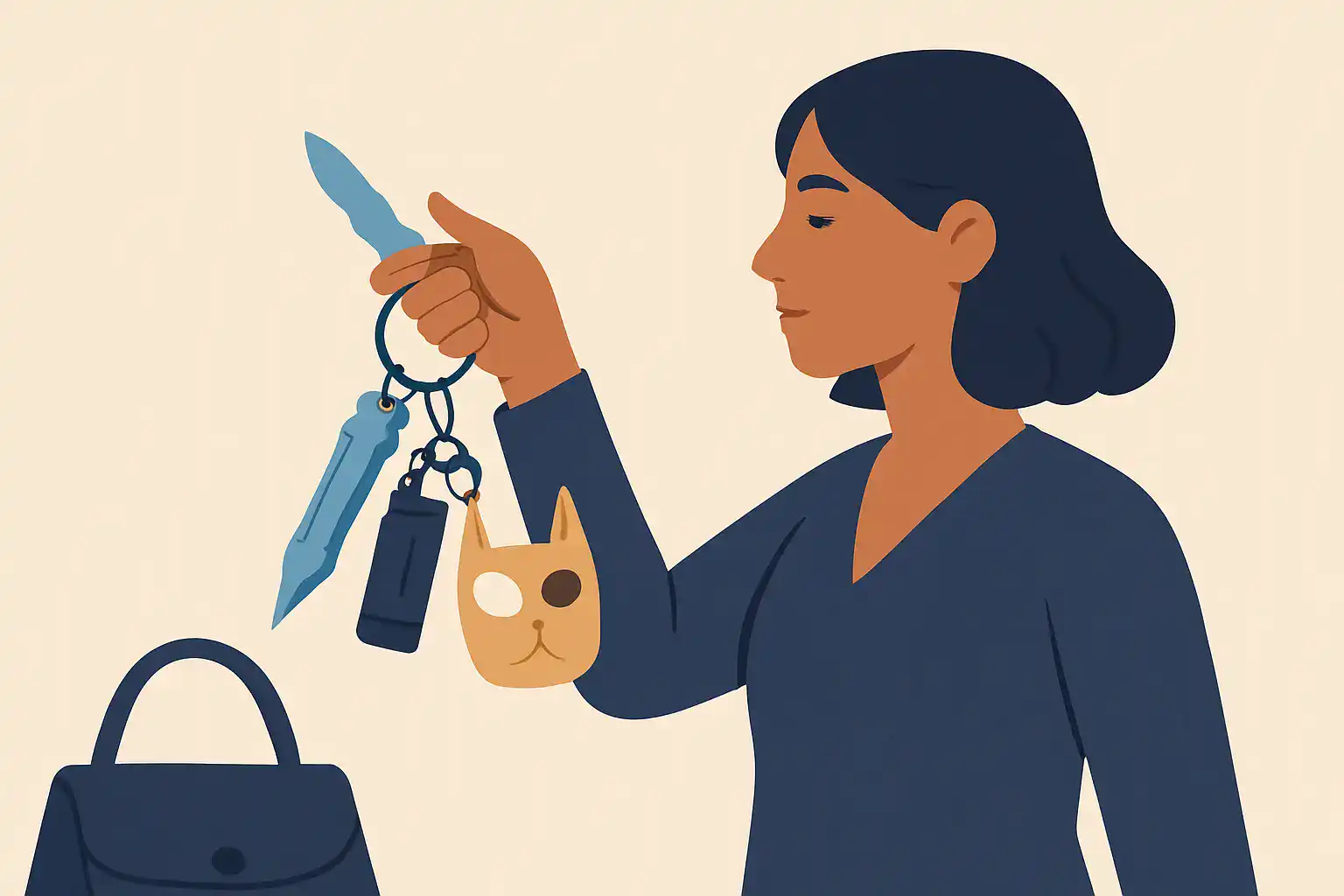
It’s the walk from a parking lot with your hands full. The dog walk after dark. The quick run into a gas station when your phone battery is low. That’s why self-defense keychains have become a go-to option for women: they’re already in your hand, they’re easy to keep close, and they don’t require a wardrobe change or a special bag.
But not all keychain tools are equal—and some are more likely to give a false sense of security than real help. Here’s how to think clearly about self defense key chains for women, what to look for, and how to carry them in a way that actually improves your odds.
A keychain tool’s job is simple: buy you time and space. It’s not about “winning a fight.” It’s about breaking contact, creating an opening, and getting to safety.
That reality matters because the best self-defense tool is the one you can deploy under stress. Fine-motor skills drop when adrenaline spikes. You won’t have time to fumble with a tricky latch, assemble pieces, or hunt through a crowded purse.
So a solid self-defense keychain setup should be:
If a product is complicated, fragile, or makes big promises without practical design, treat it like what it is: a novelty.
There’s no single “best” option for everyone. Your routine, comfort level, state laws, and even your typical clothing all change what makes sense. Here’s how the most popular categories stack up in real life.
Pepper spray is popular for a reason: it gives you range. When used correctly, it can disrupt an attacker’s vision and breathing long enough for you to run or draw attention.
The trade-off is that it requires smart handling. Wind, cramped spaces, and panic-spraying can reduce effectiveness. It also demands that you practice the draw and aim so you don’t hesitate.
If you choose pepper spray, prioritize a design with a secure safety switch and a shape you can orient by feel. The “cute” can wait—function first.
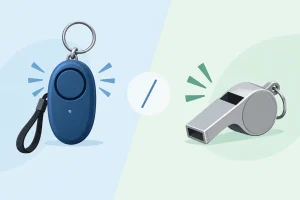
A loud alarm isn’t about physically stopping someone. It’s about social pressure and immediate attention. Many criminals don’t want witnesses. A high-decibel alarm can flip the script fast—especially in neighborhoods where people are within earshot.
Alarms are also low-risk to use. There’s no blowback like spray, and you’re not trying to strike anyone. The downside is obvious: if nobody’s around or if the situation is already physical, sound alone may not create the opening you need.
For many women, alarms make an excellent “always-on” layer because they’re easy to activate and easy to keep accessible.
Some self-defense keychains are designed as impact tools—meant to help you strike and break contact at close range.
Here’s the hard truth: close range is higher risk. If someone is already grabbing you, the situation is moving fast and unpredictably. That doesn’t mean impact tools are useless. It means you should choose designs that are secure in your hand, hard to drop, and not likely to injure you if you miss.
Also understand the legal side: certain “weapon-style” keychain items can be restricted depending on your location. When in doubt, verify your state and local laws.
A stun gun’s main advantage is deterrence plus pain compliance. The sound alone can make someone rethink their choice. In a contact scenario, it can give you a moment to disengage.
The trade-off is that stun devices need power (charged batteries), close proximity, and the confidence to use them decisively. They’re not long-range tools. And like any device, quality matters—cheap units can fail when you can’t afford failure.
If you’re considering a stun option, build a routine: check the charge, test it safely per instructions, and carry it where you can actually reach it.
Some products prioritize appearance over usability. If it looks like a toy, it may be treated like one—by you and by anyone threatening you.
There’s nothing wrong with wanting discreet or attractive gear. But if the design makes it harder to grip, slower to deploy, or more likely to break, it’s not worth the trade.
You can buy the best tool in the world and still fail to use it if your carry setup is wrong.
Start with the most common mistake: throwing the keychain into a purse. A purse is a black hole when you’re stressed. If you carry a bag, attach your self-defense tool to an internal clip near the opening, or keep it on a dedicated wrist lanyard so you can grab it instantly.
If you’re walking to your car or your front door, don’t wait until you feel nervous to pull your keys out. Have them in hand before you step into a vulnerable space. That one habit—keys out early—eliminates the “search and hope” moment.
Also consider the weight and bulk. If your keychain is heavy and loud, you’ll eventually stop carrying it. The best setup is the one you won’t leave on the kitchen counter.
When you’re deciding between options, evaluate like someone who plans to actually use it.
Under adrenaline, complicated steps fall apart. Favor tools with a single obvious action: pull a pin, press a button, flip a safety you can feel.
If you can’t hold it with sweaty hands, it’s a liability. Look for textured surfaces, finger grooves, or lanyard options that reduce drop risk.
Weak plastic clips, flimsy rings, and poor battery contacts fail at the worst time. If a tool feels like it would break in a normal week of use, believe that.
Pepper spray expires. Batteries drain. Alarm pins get lost. Choose products you’ll actually maintain, and set reminders to check them.
Laws vary widely by state and city, and they can change. If you travel for work, school, or family, check the rules for your destinations too.
A keychain doesn’t have to do everything. In fact, you’re safer when you don’t expect one item to solve every problem.
Many women prefer a layered setup:
An attention tool (alarm) covers situations where you want distance and witnesses. A distance tool (pepper spray) gives you a chance to stop contact before it happens. A close-contact tool (impact or stun) is the last layer—used only if you’re already within arm’s reach and need an exit.
You don’t need all three. But thinking in layers keeps you from buying a single gadget and hoping it’s enough.
You don’t need to become a martial artist to benefit from a self-defense keychain. You do need two things: repetition and a plan.
Repetition can be basic. Practice the draw at home with an inert trainer or a safe, non-deploying method (follow the product’s instructions). Stand by your door and rehearse: keys in hand, tool oriented correctly, thumb on the activation point.
Your plan should answer: “What will I do after I use this?” Because using a tool is not the end. The goal is to move. Decide ahead of time that after activation, you’re running toward light, people, and open businesses—or back into a building where you can lock a door and call for help.
Self-defense keychains are strongest in transitional spaces: parking lots, sidewalks, elevators, stairwells, and entryways—places where you’re moving and may be distracted.
They’re weaker in situations where you’re already physically controlled, trapped in a vehicle, or dealing with multiple people. That’s not fear talking—it’s realism. Your best defense in those scenarios is awareness, early action, and avoiding isolation when you can.
A keychain tool is a strong layer, not a substitute for smart boundaries: staying alert, limiting distractions, and trusting your instincts early.
If you want a straightforward starting point, pick one tool you will carry every day, then build from there after you’ve proven you’ll stick with it. For many women, that’s either a personal alarm (lowest barrier) or pepper spray (distance and effectiveness). If you’re considering adding a stun option or another close-range tool, commit to charging, checking, and practicing so it’s ready.
If you want a one-stop shop to compare practical options like pepper spray, alarms, stun devices, and keychain-friendly self-defense tools, you can find a wide range at Elite Warrior Defense.
You don’t need to feel fearless. You need to feel prepared—and preparation is a decision you can make today, before you ever have to make it in a moment that counts.


YOU’RE IN!
Use this code on every order
🎉
Here’s Your Code!
Use it now an on every future order.
YOUR DISCOUNT CODE
We also sent this code to your email for safekeeping.
EXCLUSIVE OFFER
Every order – not just your first!
Unlock Your Discount Instantly
Enter your email below and your personal 15% discount code appears right here – no need to check your inbox.
🔒 We respect your privacy. Unsubscribe anytime.