

You do not buy pepper spray to feel braver in theory. You buy it for the moment your instincts spike in a parking lot, a stairwell, a trail, or a gas station at night – and you need an option that is fast, simple, and decisive.
But here is the part most people miss: pepper spray is only useful if you can access it immediately and control it confidently. If it is buried in a bag, clipped where it can accidentally fire, or carried in a way that makes you hesitate, it becomes dead weight at best and a liability at worst.
Carrying safely means balancing three things that can fight each other: quick access, secure retention, and a trigger that stays protected until you need it.
The safest carry method is usually the one that lets your hand get to the spray without digging, while also keeping the actuator covered or guarded so it cannot discharge in your pocket or purse. The most common “unsafe” pattern is tossing a canister into a bag with keys and lipstick and assuming you will sort it out later. Later is not when you want to be problem-solving.
A good rule is simple: if you cannot touch your pepper spray with your dominant hand in under two seconds, you are not really carrying it. And if the trigger can be pressed accidentally, you are gambling with your own eyes and lungs.
Pepper spray is not one-size-fits-all. “Safest” depends on what you wear, what you carry, and where you spend time.
A keychain pepper spray can be excellent for quick access, especially if you already keep your keys in hand when walking to your car. It also reduces the chance you leave it behind because it is attached to something you already grab.
Pocket-sized units can work well if you wear real pockets and can dedicate one pocket to the canister only. The second you mix it with loose change, a pen, or anything that can snag the actuator, you increase the chance of a misfire.
Purse or bag carry can be safe if you use a dedicated, consistent spot – ideally an internal pocket near the top where your hand naturally goes. “Somewhere in my bag” is not a plan.
If you spend time outdoors, consider how movement and sweat change your grip. A belt clip or a small holster-style carry can keep it stable and predictable, especially on a trail.
Pepper spray designs vary. Some use a flip-top cap, some use a twist-lock, and others use a sliding safety. Whatever you carry, you should be able to do three things in the dark without looking: confirm it is on safe, switch it to fire, and keep your finger off the actuator until you have a clear reason to use it.
Practice the motion with an inert trainer if you have one, or with your unit while it is pointed in a safe direction and your finger stays indexed along the side – not hovering over the button. Your goal is confident handling, not speed at all costs.
If you ever find yourself constantly clicking the safety on and off “just to check,” that is a signal your carry method is not secure enough. You should be able to trust your setup.
Body carry wins because it keeps your tool with you if you drop your bag or someone grabs it. The key is choosing a location that supports a clean draw and protects the trigger.
Front pocket carry can be safe when the pocket is dedicated and the canister sits upright with the actuator protected. If the unit rides sideways, the safety may rub against fabric or objects and you may draw it in a rotated position that costs you time.
Jacket pocket carry can be a strong option in colder months, but be honest about what happens when you take the jacket off. If you set your jacket on a chair at a restaurant, you just set your self-defense tool down too.
Belt clip carry can be very stable if the clip actually holds under movement. The trade-off is concealment and the possibility of bumping into objects. If you clip it where it repeatedly hits door frames or seatbelt hardware, rethink it.
Hand carry is underrated. If you are walking in a higher-risk situation, holding your pepper spray discreetly in your hand can be safer than waiting to draw it. It also keeps it out of your pocket where it could be trapped if you are grabbed.
Some people rely on a purse because their clothing does not have usable pockets. If that is you, you can still carry safely – but you have to be disciplined.
Pick one dedicated location inside your bag and never change it. Ideally, it is a pocket you can access with your dominant hand without opening multiple zippers. A top interior pocket is often better than a deep main compartment.
Keep the area around the canister clear. If your pepper spray shares space with other objects, those objects become the reason you cannot draw quickly or the reason the actuator gets pressed.
Also consider what happens if someone snatches your bag. If bag snatching is realistic where you live or work, body carry may be the safer default, with the bag spot used only when absolutely necessary.
Accidental discharge is more common than most people think. The good news is that nearly all accidents come from the same few behaviors.
Keep your finger indexed along the side of the canister, not resting on the actuator. Under stress, people clench. If your finger is already on the button, your body can fire it before your brain finishes deciding.
Do not “test spray” pepper spray indoors or in your car. Pepper spray can contaminate upholstery, HVAC vents, and confined spaces fast. If you want to confirm function, use an inert trainer or follow the manufacturer’s guidance for controlled outdoor practice.
Avoid leaving it loose in a cup holder, a glove box, or a center console where it can roll and press against other items. Heat in a vehicle can also be intense, and you do not want a pressurized canister living in extreme conditions.
Carrying safely is not just storage. It is also what your hand does when the moment spikes.
Your draw should bring the canister into your grip the same way every time, with your thumb naturally finding the safety and your index finger staying off the actuator until you are oriented.
From there, think in terms of space. Pepper spray is not magic. It works best when you can create enough distance to deploy it effectively while keeping your feet under you. If you are already in a clinch, accessing any tool becomes harder and more dangerous.
This is why carrying in a place you can reach while moving matters. If you have to stop, look down, unzip, and rummage, you are giving up time you may not have.
Pepper spray laws vary by state and sometimes by city. Some places limit canister size, concentration, or where you can carry it. If you travel, treat pepper spray like you treat a pocketknife: what is fine at home may not be fine elsewhere.
It also depends on your environment. If you work in a setting with controlled access or security policies, you may need to store it off-body during work hours and carry it during your commute. If you spend time around children, you need a carry method that keeps the actuator protected and the tool inaccessible to curious hands.
And it depends on your own comfort. The best carry is the one you will actually keep on you. If a certain setup feels awkward, you will stop using it. Confidence comes from consistency.
Pepper spray is simple, but it is still a tool. Tools need basic care.
Check the expiration date and set a reminder to replace it. The propellant and reliability can degrade over time. You do not want a “click” when you needed a spray.
Inspect the canister occasionally for cracks, leakage, or a safety that feels loose. If something seems off, replace it. This is a low-cost item compared to the stakes.
Store it at normal room temperature when you are not carrying it. Avoid long-term exposure to extreme heat or cold. Real life happens – a hot car for an afternoon is different from living in a glove box for months.
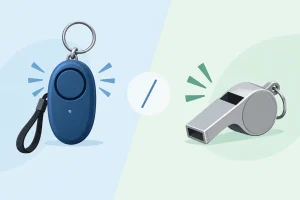
Pepper spray is strong, but it is even better as part of a simple personal safety setup. A bright safety light helps you scan your surroundings and reduces the chance you get surprised. A loud personal alarm can draw attention and may interrupt an approach. If you want a one-stop place to build a practical kit without the inflated price tags, you can find pepper sprays and other self-defense essentials at Elite Warrior Defense.
The trade-off with adding tools is complexity. Do not carry five items you never practice with. Carry one or two tools you can access instantly and use decisively.
Your pepper spray should feel like part of your routine, not a last-minute accessory. Set it up so you can reach it under stress, keep the trigger protected, and practice the draw until it is boring. When safety becomes automatic, confidence follows – and that is exactly the point.


YOU’RE IN!
Use this code on every order
🎉
Here’s Your Code!
Use it now an on every future order.
YOUR DISCOUNT CODE
We also sent this code to your email for safekeeping.
EXCLUSIVE OFFER
Every order – not just your first!
Unlock Your Discount Instantly
Enter your email below and your personal 15% discount code appears right here – no need to check your inbox.
🔒 We respect your privacy. Unsubscribe anytime.