
You can do everything “right”—park in a well-lit spot, keep your head up, skip the earbuds—and still find yourself in a bad moment. That’s why many people don’t just want awareness. They want options they can actually carry, actually use, and actually own without accidentally stepping into a legal mess.
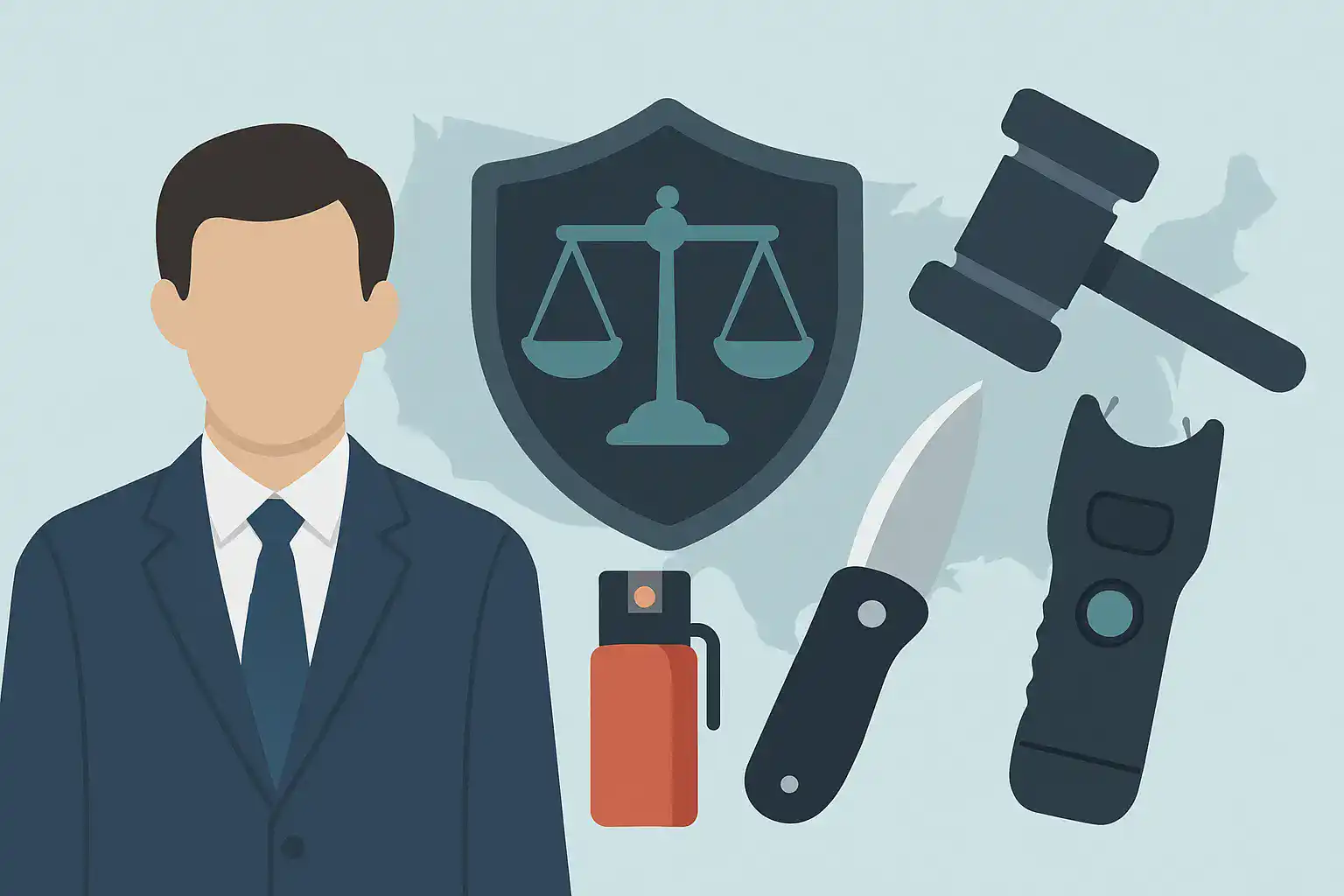
Here’s the truth: “legal in the US” is rarely a simple yes/no for self-defense tools. Most personal defense items are legal somewhere in the United States, but the details change fast depending on your state, your city, where you’re standing (airport, school zone, federal building), and even how the item is carried. The goal isn’t to scare you off—it’s to help you choose smart, stay compliant, and stay confident.
When people search “personal defense items legal in US,” what they usually mean is: What can I carry without becoming the one in trouble? The most accurate answer is that many common defensive tools are widely legal, but you must check (1) your state laws, (2) local ordinances, and (3) location-based restrictions.
State law is the big framework. Local ordinances can tighten the rules inside certain cities or counties. And then there are “restricted places” where otherwise-legal items can become prohibited the moment you walk through the door.
If you keep that hierarchy in mind, the rest becomes easier: pick a tool that’s broadly permitted, understand typical restrictions, and carry it like a responsible adult.
Pepper spray (often labeled OC spray) is one of the most commonly legal and socially accepted self-defense tools in the country. It’s popular for a reason: it’s compact, easy to carry, and gives you distance—something your hands alone can’t do.
That said, pepper spray legality can hinge on details people overlook. Some states limit the size of the canister or regulate the concentration. Certain places restrict sales to adults or require specific labeling. And carrying it into restricted locations (some government buildings, many schools, secured event venues) can cause problems even if it’s legal on the street.
Practical tip: if you carry pepper spray, carry it where you can reach it under stress—buried in a bag you never open doesn’t help. Also, read the label and keep the safety mechanism functional; a negligent discharge can turn a “protective” choice into a liability.
Stun guns and Tasers are widely available across the US, and in many states they’re legal for civilian self-defense. These tools are attractive because they can stop an attacker’s forward motion and create a moment to escape.
But this category has more legal variation than pepper spray. Some states have outright restrictions, permitting requirements, or rules tied to criminal history. Certain jurisdictions treat them similarly to firearms, while others treat them more like general defensive tools. Even when they’re legal, there may be rules around concealed carry, age, or where they can be possessed.
Also, be clear about terminology. “Stun gun” often refers to contact devices. “Taser” often refers to a projectile system. Laws may address them together—or separately.
Practical tip: don’t buy based on hype alone. If your tool needs charging, practice a routine so it’s ready. If it has a safety switch, build muscle memory so you can deploy it without fumbling.
A knife is one of the most misunderstood self-defense items legally. Many knives are legal to own. Many are legal to carry. But which knife, how you carry it, and where you carry it can change the outcome.
Some states focus on blade length. Others focus on the knife type (for example, switchblades, gravity knives, or certain concealed blades). Some focus on whether the knife is concealed versus openly carried. And even when a knife is legal, how it’s used matters—using a knife in self-defense can be scrutinized aggressively.
If you carry a knife primarily as a tool (opening boxes, cutting rope), keep it in that lane. If your goal is purely self-defense, many people choose options with clearer legal acceptance and less risk of escalation.
Practical tip: never assume “small equals legal.” A small prohibited knife can still be prohibited.
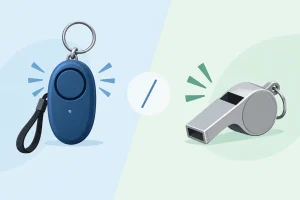
If you want a defensive item with minimal legal friction, personal alarms are near the top of the list. They don’t rely on pain compliance or impact. They rely on attention—loud, sudden, and hard to ignore.
Alarms are especially useful for people who can’t or don’t want to carry force-based tools, and for environments where other items may be restricted. They’re also simple: pull the pin or press the button, and move.
Practical tip: test it at home so you’re not learning how it works in the parking lot at midnight.
A tactical pen sits in a useful middle ground. It’s a functional writing instrument, but it’s designed to be durable and provide a strong grip if you need to strike or create space. Many people like them because they don’t scream “weapon,” and they’re easy to keep on you daily.
Legality is typically straightforward because it’s a pen. But there’s still nuance: certain high-security locations may restrict any “kubotan-style” impact tools or interpret a tactical pen as a weapon depending on design and context. Travel adds another layer—what’s fine in your pocket at the grocery store may get attention at a courthouse or secured venue.
Practical tip: choose a design that’s clearly usable as a pen and carry it like one. How you present an item can influence how it’s interpreted.
Keychain tools are popular because they’re convenient and close at hand. Some are harmless (alarms, flashlights). Others are built for striking or pressure.
This is where people accidentally buy something that’s restricted. Certain “knuckle” style devices, spiked keychains, or items marketed aggressively as weapons may fall under prohibited weapon categories in some states or cities. Even if possession is legal, carrying it concealed can be treated differently than carrying it openly (and a keychain is almost always “concealed” in practical terms).
If you like the idea of a keychain defense tool, the safest approach is to favor items that are clearly defensive and widely accepted—like an alarm—or multipurpose tools that don’t rely on being classified as a weapon.
Practical tip: avoid novelty designs that look like contraband. If it looks questionable, it often becomes questionable.
Firearms are legal in the US under federal and state frameworks, but they come with the most responsibility and the most legal complexity. Purchasing, transporting, storing, and carrying a firearm can involve background checks, permits, training requirements, and strict location restrictions.
Even in states with permitless carry, you still need to know where carry is prohibited and how use-of-force laws work. And if you travel across state lines, reciprocity and transport rules can change your legal footing fast.
If you’re considering a firearm for protection, treat it like a serious commitment: training, safe storage, and a clear understanding of your state’s self-defense statutes are not optional.
A lot of law-abiding people get tripped up not by the item itself, but by the place they carry it. Common restricted areas include schools and school zones, courthouses, secured government buildings, airports and airplanes, and certain private venues with posted policies.
Private property rules matter too. A business may ban certain items even if your state allows them. Ignoring posted rules can lead to removal or trespassing issues.
Your best move is simple: before you walk into a building where security is likely, assume the rules tighten and plan accordingly.
Start with your real life, not an internet fantasy. If you’re a runner, you need something that won’t bounce, won’t leak, and can be accessed one-handed. If you’re commuting at night, you may want distance tools like pepper spray plus an alarm for attention. If you travel for work, you need something that won’t create headaches at checkpoints.
Then match that to the legal landscape where you live and where you go. Many shoppers choose a “layered” approach: a non-force tool (alarm/light), a distance tool (pepper spray), and a last-ditch option (stun device or impact tool) where legal. The right combination is the one you can carry consistently and deploy under stress.
If you want a single place to compare common options like pepper spray, stun guns, tactical pens, and personal alarms, you can browse Elite Warrior Defense—but always confirm your local rules before you carry.
Owning a tool doesn’t protect you. Knowing how and when you can use it does. Take a few minutes to learn your state’s basic self-defense standards, especially concepts like reasonable fear and proportional response. Then practice accessing your tool and disengaging—because the win is getting home safe, not “winning” a confrontation.
Your closing move is the one most people skip: pick one item you can realistically carry every day, learn your local restrictions, and commit to keeping it accessible. Confidence comes from preparation, and preparation is a choice you can make before anything ever goes wrong.




YOU’RE IN!
Use this code on every order
🎉
Here’s Your Code!
Use it now an on every future order.
YOUR DISCOUNT CODE
We also sent this code to your email for safekeeping.
EXCLUSIVE OFFER
Every order – not just your first!
Unlock Your Discount Instantly
Enter your email below and your personal 15% discount code appears right here – no need to check your inbox.
🔒 We respect your privacy. Unsubscribe anytime.