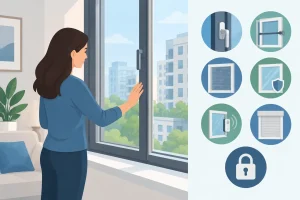


A break-in does not always start with a kicked-in front door. In many cases, it starts with the quietest entry point in the house – a side window, a sliding glass door, or a back entrance that does not get much attention. That is exactly why window and door sensors matter. They help you know the moment a vulnerable access point is opened, disturbed, or breached.
This guide is built for people who want practical home security, not complicated jargon. If you are comparing options for your house, apartment, rental, or small office, the right sensor setup can give you faster awareness and stronger peace of mind without stretching your budget.
At the most basic level, window and door sensors are small devices designed to detect when an entry point opens. Most use two pieces: one part mounts on the frame, and the other mounts on the moving door or window. When those two parts separate, the system registers that the entry point has been opened.
That sounds simple because it is. Simplicity is one of the biggest strengths of these devices. They do one job well, and they do it in a way that is easy for most homeowners and renters to understand.
Some sensors work as standalone alarms. When the circuit breaks, they emit a loud sound right at the door or window. Others connect to a larger alarm system and trigger alerts through a control panel or mobile app. Which route makes sense depends on your property, your budget, and how much control you want.
Most standard contact sensors rely on a magnetic connection. When the window or door is closed, the magnet and sensor align. When the door or window opens, that alignment breaks, and the device sends a signal or sounds an alarm.
There are also vibration and glass-break style devices that serve a related purpose, but they are not the same thing. A contact sensor tells you an opening has been opened. A vibration sensor may detect shaking, force, or impact before entry happens. In many homes, using both can make sense, especially on ground-floor windows or sliding doors.
This is where trade-offs come in. A basic magnetic sensor is affordable, dependable, and easy to install. But if a burglar breaks glass without fully opening the window, a simple contact sensor might not catch the event right away. On the other hand, vibration-based devices can add coverage, but they may need more careful placement to avoid false alarms.
If you are working with a limited budget, placement matters as much as product choice. You do not need to put a sensor on every possible opening on day one, but you should cover the most likely entry points first.
Front doors and back doors are obvious priorities. After that, focus on first-floor windows, basement windows, side doors, and sliding glass doors. Garage side-entry doors often get overlooked, and that can be a mistake. The same goes for windows hidden by fences, shrubs, or poor lighting.
In apartments, your setup may be smaller, but the logic is the same. Protect the main door first, then any accessible windows or balcony doors. Renters often benefit from standalone alarm sensors because they are affordable and usually easier to install without permanent changes.
In larger homes, think in terms of layers. The main entrances come first. Then add secondary windows and doors. That layered approach gives you better awareness and makes it harder for someone to find an unprotected access point.
For most homeowners today, wireless sensors are the practical choice. They are easier to install, easier to expand, and ideal if you want a straightforward setup without running wires through walls. They are especially useful for renters or anyone upgrading security in stages.
Wired sensors still have a place. They can be a strong option in new construction, major renovations, or professionally installed systems where long-term stability is the priority. They do not depend on batteries the same way wireless units do, but installation is more involved and usually less flexible.
If you want quick protection with less hassle, wireless often wins. If you are building a more permanent integrated system, wired can be worth considering. Neither is automatically better in every situation.
A good sensor should be easy to mount, simple to test, and reliable day after day. Loud standalone alarm models can be useful if your goal is to scare off an intruder immediately and alert anyone nearby. Connected sensors are better if you want broader system awareness.
Battery life matters more than people think. A sensor is only helpful if it is powered and working. Low-battery indicators are worth having because they remove guesswork.
Mounting style also matters. Some sensors use adhesive backing, while others can be screwed into place. Adhesive options are convenient, but they may not hold as well over time in high-humidity or high-temperature areas. Screw-mounted devices usually offer a more secure hold, though they require a little more effort to install.
Size can be a factor too. Smaller sensors may blend in better, which some homeowners prefer. Larger ones can be easier to handle during installation and battery replacement. This is mostly a preference issue, but it still affects day-to-day satisfaction.
The best sensor is not always the most advanced one. It is the one that fits your routine and gets used properly. If you want basic protection for a rental unit, a loud standalone window or door alarm may be enough to improve security fast. If you want to monitor multiple entry points and build out a fuller setup, connected sensors make more sense.
Think about your habits. Do you regularly open certain windows for airflow? Do your kids use the back door constantly? Do you have a sliding patio door that sees heavy traffic? A sensor should support real life, not create frustration. If the system feels annoying, people start bypassing it, and that weakens your security.
Pets, kids, and daily traffic patterns should all be part of your decision. So should travel habits. If you are away often, remote notifications may matter more. If your goal is immediate deterrence at home, loud local alarms may be the priority.
Poor placement can make a good product act like a bad one. The sensor and magnet need proper alignment, and the mounting surface needs to be clean and stable. Even slight misalignment can cause inconsistent performance.
Before final installation, test the sensor while holding it in place. Open and close the door or window several times. Make sure it triggers exactly when it should. This step takes a few extra minutes and can save a lot of frustration later.
Pay close attention to sliding windows and sliding glass doors. These can be a little trickier because of frame design and movement patterns. Sometimes the easiest-looking mounting spot is not the most dependable one.
It is also smart to test your entire setup regularly. Monthly checks are a good habit. Batteries weaken. Adhesive can loosen. Doors settle. A security product should never be installed and forgotten.
One of the biggest mistakes is assuming the front door is enough. Many intruders look for the less visible route, not the most obvious one. Another common problem is protecting windows that face the street while ignoring side or rear windows hidden from view.
People also underestimate how much a loud alarm can matter. Even a simple alarm can force an intruder to make a fast decision under pressure. That does not guarantee prevention, but it absolutely changes the situation.
Another mistake is buying too many devices before making a plan. Start with your highest-risk openings. Use that setup for a while. Then expand based on the way your home actually functions.
Window and door sensors are not a complete security strategy by themselves, but they are one of the smartest starting points. They work best as part of a broader plan that may also include motion-sensitive lighting, cameras, door reinforcement, personal safety tools, and strong daily habits.
That layered mindset is where real confidence comes from. You are not relying on one product to do everything. You are creating obstacles, alerts, and deterrents that work together.
If you are looking for practical security gear that does not overcomplicate the job, Elite Warrior Defense offers options designed for real households and real budgets. The right setup does not need to be flashy. It needs to be reliable when it counts.
Home security usually comes down to one question: will you know quickly when something is wrong? Window and door sensors help answer that question with speed, simplicity, and a stronger sense of control.





YOU’RE IN!
Use this code on every order
🎉
Here’s Your Code!
Use it now an on every future order.
YOUR DISCOUNT CODE
We also sent this code to your email for safekeeping.
EXCLUSIVE OFFER
Every order – not just your first!
Unlock Your Discount Instantly
Enter your email below and your personal 15% discount code appears right here – no need to check your inbox.
🔒 We respect your privacy. Unsubscribe anytime.