A blinking red light over the garage can make someone think twice. It can also give you a false sense of security if that light is all you have.
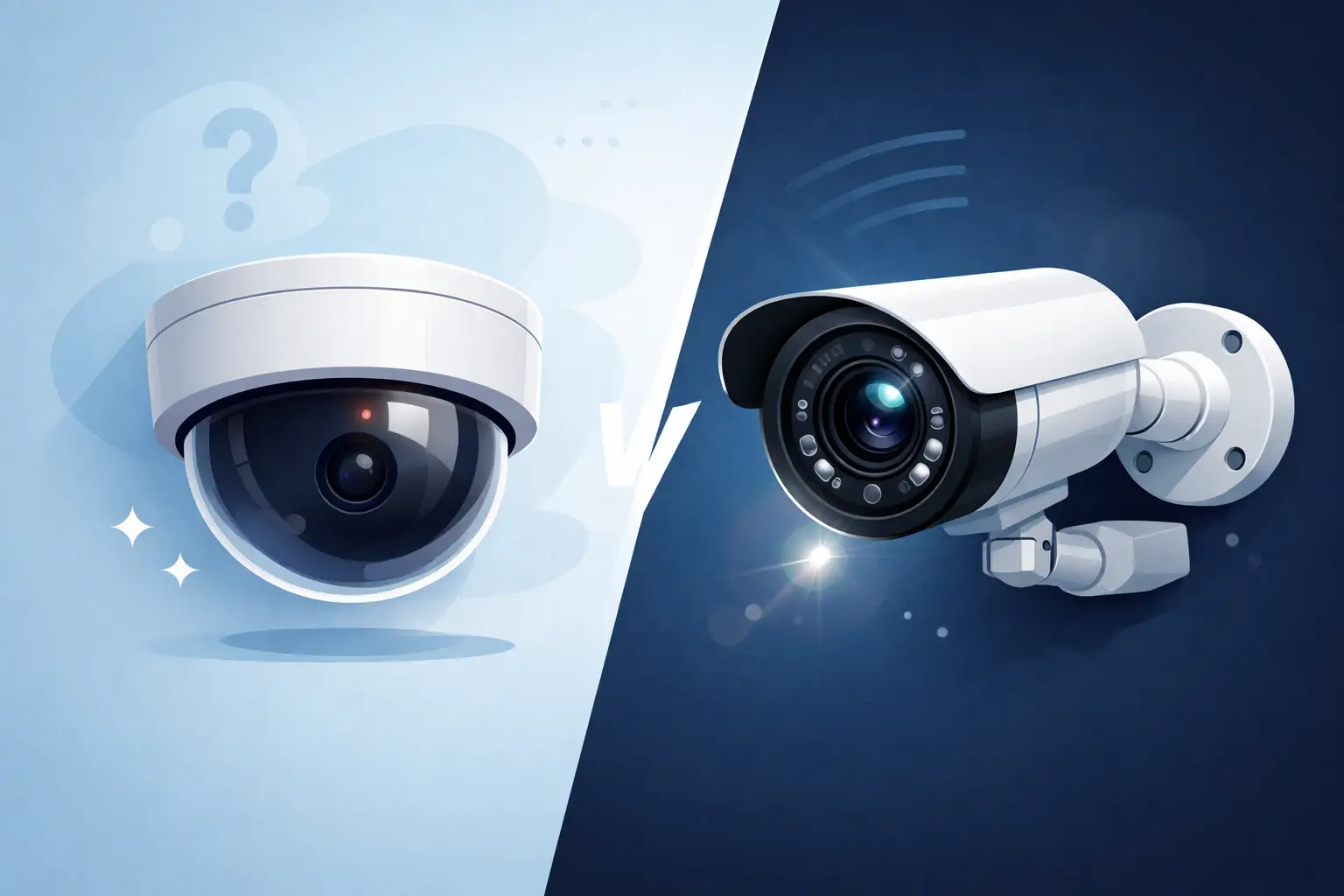
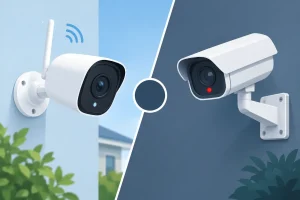
That is the real issue in the dummy camera vs real camera debate. Both can play a role in home security, but they do very different jobs. If your goal is simply to make a property look watched, a dummy camera may help. If your goal is to document activity, alert you in real time, and give you evidence after an incident, only a real camera can do that.
For most people, this is not about buying the most expensive setup. It is about understanding your risk, your budget, and where appearance alone stops being enough.
Dummy camera vs real camera: what is the difference?
A dummy camera is a decoy. It is built to look like a working security camera, often with a realistic housing, mounting bracket, and sometimes a flashing LED. Its only job is deterrence through appearance.
A real camera actively records video, and in some cases audio, depending on the model and local laws. It may store footage on a memory card, a recorder, or cloud storage. Many real cameras also send motion alerts, support night vision, and let you check live video from your phone.
That difference matters more than most buyers expect. A dummy camera can influence behavior before something happens. A real camera can help before, during, and after an incident.
When a dummy camera makes sense
There are situations where a dummy camera is a reasonable choice. If you want to strengthen visible deterrence on a tight budget, a decoy can help make a home, shed, garage, or storefront look less attractive to an opportunistic thief.
This works best in low-risk environments where the main threat is casual trespassing, package snatching, or someone testing whether a property is watched. A dummy camera can also fill out the appearance of a broader security setup. For example, some homeowners place visible decoys in obvious locations while keeping real cameras in more strategic positions.
The strongest argument for a dummy camera is cost. It is affordable, simple to install, and does not require wiring, apps, subscriptions, or ongoing maintenance beyond occasional cleaning and battery replacement if it has a flashing light.
But the trade-off is serious. A dummy camera records nothing. If someone breaks in, vandalizes your property, or steals a package, there is no footage to review and nothing to hand over to law enforcement.
When a real camera is the better choice
If you want actual security coverage, a real camera is the stronger option. It does more than look protective. It creates a record.
That matters if you have repeat issues in your neighborhood, blind spots around your home, frequent deliveries, vehicles parked outside, or concerns about who approaches your doors and windows. A real camera can show what happened, when it happened, and in many cases who was involved.
It also improves response time. Motion alerts can let you know that someone is at your front door, near your driveway, or moving around your backyard. That can give you a chance to call a neighbor, trigger another layer of security, or contact authorities if the situation calls for it.
For many homeowners, the biggest value is not dramatic crime footage. It is everyday awareness. You know when a package arrives, when a visitor comes by, or when something feels off around your property.
The biggest mistake in the dummy camera vs real camera decision
The mistake is treating deterrence and evidence as if they are equal. They are not.
Deterrence is preventive. Evidence is protective after the fact. Ideally, you want both. But if you have to choose only one, the better answer depends on what you are trying to prevent and what the consequences are if deterrence fails.
If someone ignores a dummy camera, your security plan ends there. If someone ignores a real camera, you still have footage, timestamps, and a stronger chance of identifying what happened.
That is why dummy cameras are best viewed as a supplement or a budget stopgap, not as a complete security system.
Dummy camera vs real camera for different risk levels
If you live in a quiet area and mostly want to discourage casual snooping, a dummy camera may be enough to improve visible security. It is not a guarantee, but it can make your home look less easy to approach.
If you have had previous theft, suspicious activity, vandalism, or property disputes, a real camera is worth the investment. Once a property has already been targeted, appearance alone becomes less reliable.
If you manage a side entrance, detached garage, workshop, or storage space, the answer may be a mix of both. Put a real camera where evidence matters most, then use dummy units to increase the appearance of coverage. That approach can stretch a budget without leaving your most important areas unprotected.
What criminals notice more than you think
Some dummy cameras are convincing. Some are not.
A poorly placed decoy with an obvious fake blinking light, no wires where wires should be, or a cheap plastic body can be easy to spot. Anyone with experience around surveillance systems may recognize it quickly. That does not mean every criminal will notice, but it does mean the deterrent value can drop fast if the product looks unrealistic.
Real cameras also need smart placement. A high-quality unit mounted too far away, pointed at the wrong angle, or blocked by glare will not give you useful footage. In other words, buying a real camera is not enough. It has to be installed with purpose.
This is where practical planning matters. Cover entry points first. Front doors, back doors, driveways, first-floor windows, and side gates usually matter more than decorative coverage over less critical areas.
Cost matters, but so does the cost of having no footage
Price is often what drives this decision. Dummy cameras are appealing because they are inexpensive and easy to put up in minutes. Real cameras cost more upfront and may come with added expenses like storage, batteries, or accessories.
Still, the cheaper option is not always the better value. If you lose a package, deal with property damage, or need proof in a dispute, the lack of footage can become far more expensive than the cost difference between a dummy and a real camera.
That is why the smartest question is not Which one is cheaper? It is What am I risking if this fails?
For some people, that answer leads to a decoy. For many others, it leads to at least one real camera covering the most important zone.
A smarter approach: layered security
Home security works best in layers. Cameras are one layer, not the whole plan.
A visible camera, whether dummy or real, can discourage unwanted behavior. But it becomes more effective when paired with other measures like door and window alarms, motion lighting, reinforced locks, and personal safety tools. If one layer fails, another is still in place.
That is especially important for families, people who travel often, and anyone who cannot monitor their property every minute. Confidence comes from overlap, not from relying on a single device to do everything.
For that reason, many homeowners choose a hybrid setup. They place a real camera at the front door or driveway, where activity is most likely and evidence is most valuable. Then they use a dummy camera in a secondary location to increase the impression of full coverage. That balance can make sense when budget is a concern.
How to choose with confidence
If you are still weighing dummy camera vs real camera, start with one simple question: do you want to look protected, or do you want proof?
If your priority is low-cost visual deterrence, a dummy camera can serve a purpose. If your priority is monitoring, alerts, and recorded evidence, choose a real camera.
If your budget allows only one purchase, protect your highest-risk area first. A single well-placed real camera usually delivers more security value than several decoys. If your budget is tighter, combine one real camera with other visible deterrents and build from there.
At Elite Warrior Defense, the focus is practical protection that people can actually afford and use. That is the right mindset here too. Security is not about buying the flashiest gear. It is about making smart choices that match your real-world risks.
The best camera setup is the one that does not leave you guessing after something happens.