The moment a threat feels real, you do not rise to the occasion – you fall back on what you already know and what you already have. That is why a solid guide to nonlethal self defense starts with two things: practical tools and a clear plan. Confidence matters, but confidence backed by preparation is what helps you act fast under stress.
Nonlethal self-defense is about creating an opportunity to escape, call for help, and get to safety. It is not about standing your ground to win a fight if you can avoid one. The best option depends on your environment, your physical ability, local laws, and how much training you are willing to put in. That means there is no single perfect product for everyone, but there is a smart way to build a setup that fits your life.
What nonlethal self-defense really means
A lot of people hear “nonlethal” and assume harmless. That is not the right mindset. Tools like pepper spray, stun devices, and personal alarms are designed to stop, distract, or disorient a threat long enough for you to break contact. They can be extremely effective, but only when used responsibly and within the law.
The goal is simple: buy time and create distance. If a product gives you a few critical seconds to run, get behind a locked door, draw attention, or call 911, it has done its job. That is why the best self-defense choice is often the one you can carry comfortably, access quickly, and use correctly under pressure.
A guide to nonlethal self defense tools
There is no shortage of products on the market, but the differences matter. Choosing based on appearance alone is a mistake. You want reliability, ease of use, and a design that makes sense for your daily routine.
Pepper spray
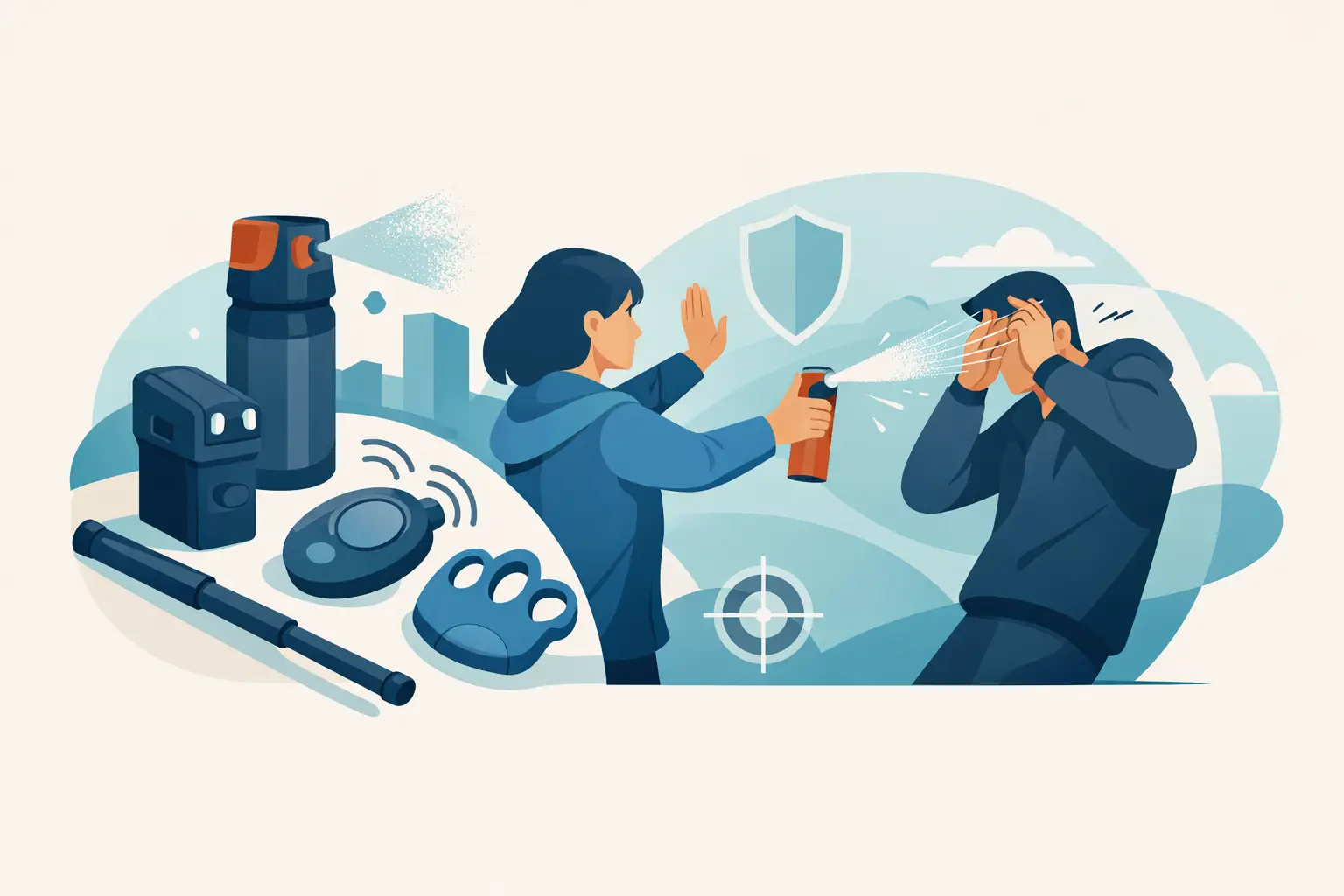
Pepper spray remains one of the most practical nonlethal options for many adults. It allows you to defend yourself from a short distance, which is a major advantage when you want to avoid close contact. It can cause intense eye closure, coughing, and disorientation, giving you a chance to escape.
That said, it has limits. Wind can affect spray direction, and accuracy matters. If you keep pepper spray in a bag you rarely organize, or clipped somewhere awkward, the benefit drops fast. It works best when you practice drawing it, know the safety mechanism, and understand its range.
Stun guns and stun batons
Stun guns and stun batons are strong choices for people who want a direct-contact defensive option. The main trade-off is obvious: they generally require you to be very close to the threat. That makes access and decisiveness even more important.
A stun baton can offer extra reach compared to a compact stun gun, which may be appealing for home use or for those who want a stronger physical presence in a defensive tool. Compact stun guns are easier to carry, but carry comfort means nothing if the device is buried or not charged. Any electronic self-defense tool should be checked regularly so it is ready when needed.
Personal safety alarms and safety lights
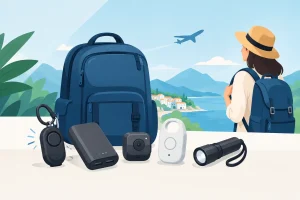
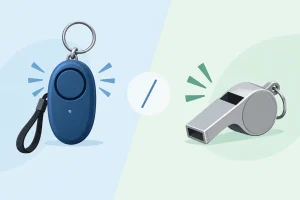
A personal alarm does not physically stop an attacker, but it can be surprisingly valuable. Loud sound draws attention, startles a threat, and can disrupt the moment enough to help you move. For runners, students, older adults, or anyone who wants a simple layer of protection with no special handling, alarms are easy to carry and easy to activate.
Safety lights add another layer. They can help you stay visible, identify what is around you in low light, and make it easier to move with awareness. In parking lots, on sidewalks, and around entry points at home, visibility is not a small issue. It is part of prevention.
Tactical pens and self-defense keychains
These tools appeal to people who want something discreet and easy to keep on hand. That convenience is real, but so is the need for training and legal awareness. A tactical pen is only useful if you understand how and when it may be used. The same goes for self-defense keychains. They are not magic fixes, and they should never create a false sense of security.
For some users, these tools make sense as part of a wider setup rather than as a primary line of defense. If you choose one, do it because it fits your habits and you are willing to learn its proper use.
How to choose the right option for your life
The best guide to nonlethal self defense is not just about products. It is about matching the tool to the person. A college student walking to a car at night may prioritize compact pepper spray and a personal alarm. A homeowner may also want window alarms, motion awareness, or a stun baton near a bedside safe area. A dog walker may want both personal protection and animal-specific deterrent spray where legally allowed.
Start with your routine. Ask where you feel most vulnerable, how quickly you can reach a tool, and whether you would actually carry it every day. A product that stays in a drawer is not protecting you during a late walk to your car or a surprise encounter at a gas station.
Ease of use matters just as much as power. Under stress, fine motor skills can drop fast. If a tool has a complicated safety, awkward grip, or confusing operation, that is a real problem. Simplicity wins in emergencies.
Training matters more than most people think
Owning a defensive tool without practicing with it is like keeping a fire extinguisher you have never touched. You may still be glad to have it, but your odds improve when you know exactly how it works. That does not mean you need extreme training. It means learning the basics until they are familiar.
Practice how you carry the tool, how you draw it, how you activate it, and what your next move is after deployment. That last part gets overlooked. Your plan should never stop at “use the tool.” Your plan is use the tool, move, get safe, call for help, and report what happened.
Verbal skills also matter. A strong command like “Back up” or “Stay away” can establish boundaries, draw attention, and prepare you mentally to act. Sometimes that verbal moment is enough to stop an approach. Sometimes it is not. Either way, hesitation shrinks when you have thought through your response in advance.
Legal and practical realities
Laws on pepper spray, stun devices, carry methods, and use of force vary by state and sometimes by city. Before carrying anything, check the rules where you live and where you travel. Legal protection starts before an incident happens.
You should also be realistic about aftermath. Even a justified self-defense incident can be chaotic and stressful. If you use a nonlethal tool, call law enforcement as soon as you safely can, explain that you were threatened, describe yourself, and report your location. Details matter.
There is also a practical issue many people miss: maintenance. Pepper spray expires. Batteries die. Contacts corrode. Safety devices get tossed into purses, glove boxes, and drawers and forgotten. Build a habit of checking your gear. Reliable tools support peace of mind. Neglected tools create dangerous assumptions.
Building a layered safety strategy
The strongest self-defense approach is layered. Carrying one good tool is smart. Pairing that tool with awareness, planning, and home security habits is stronger.
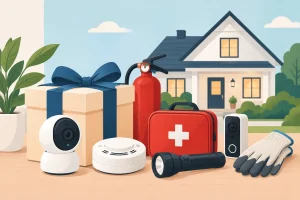
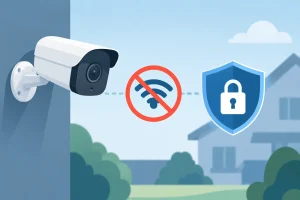
That may mean using outdoor lighting, window and door alarms, or visible deterrents at home while also carrying a compact personal defense item away from home. It may mean choosing a personal alarm for one family member and pepper spray for another because their comfort levels and abilities are different. Good security is not one-size-fits-all.
If you are building that kind of setup, it helps to buy from a source that understands both personal and home protection. Elite Warrior Defense offers a wide range of accessible self-defense and security products, which makes it easier to choose gear that works together instead of piecing together random items without a plan.
The right mindset going forward
Prepared people are not paranoid. They are realistic. They understand that danger does not schedule itself around convenience, and they take reasonable steps to protect themselves and the people they care about.
A good nonlethal self-defense plan should make you feel more capable, not more fearful. Choose tools you can use, learn them well, keep them ready, and stay focused on the real objective: creating the chance to get home safe. That is where confidence starts, and that is what makes preparation worth it.