A hidden camera can give you the proof you need after a break-in, package theft, or suspicious activity around your home. But one question stops a lot of smart buyers right away: can hidden cameras record audio? The short answer is yes, some models can. The more important answer is that whether you should use that feature depends on the device, the setting, and the laws in your state.
If you are buying security gear to protect your home, family, or property, you need more than a product description. You need to know what these cameras can actually do, what limits matter, and where people get into legal trouble without realizing it.
Can hidden cameras record audio?
Yes, many hidden cameras can record audio along with video. Some have built-in microphones that capture nearby conversations, while others record video only. That difference matters more than many people expect.
A product may look nearly identical to another model but have completely different recording capabilities. One hidden camera might store clear video with no sound at all. Another might capture room audio, motion-triggered clips, or even live audio through an app. If audio recording matters to you, it is not safe to assume every hidden camera includes it.
This is where buyers need to slow down and read the specs carefully. Terms like “built-in mic,” “audio monitoring,” or “sound recording” usually point to audio capability. If those terms are missing, the camera may be video-only.
Why audio recording changes the stakes
Video shows movement, timing, and actions. Audio can add context. It may help you understand whether someone was arguing, making threats, tampering with property, or trying to gain entry. In some situations, sound fills in critical gaps that video alone cannot.
That said, audio recording also carries more legal risk than video. A homeowner who installs a hidden camera near a front porch may be on much safer ground with video than with secretly recorded conversations. The moment a microphone is involved, consent laws and privacy expectations become a much bigger issue.
That is why the question is not just can hidden cameras record audio legally, but where, when, and under what conditions.
Can hidden cameras record audio legally in the US?
This depends on federal law, state law, and the place where the recording happens. There is no one-size-fits-all answer.
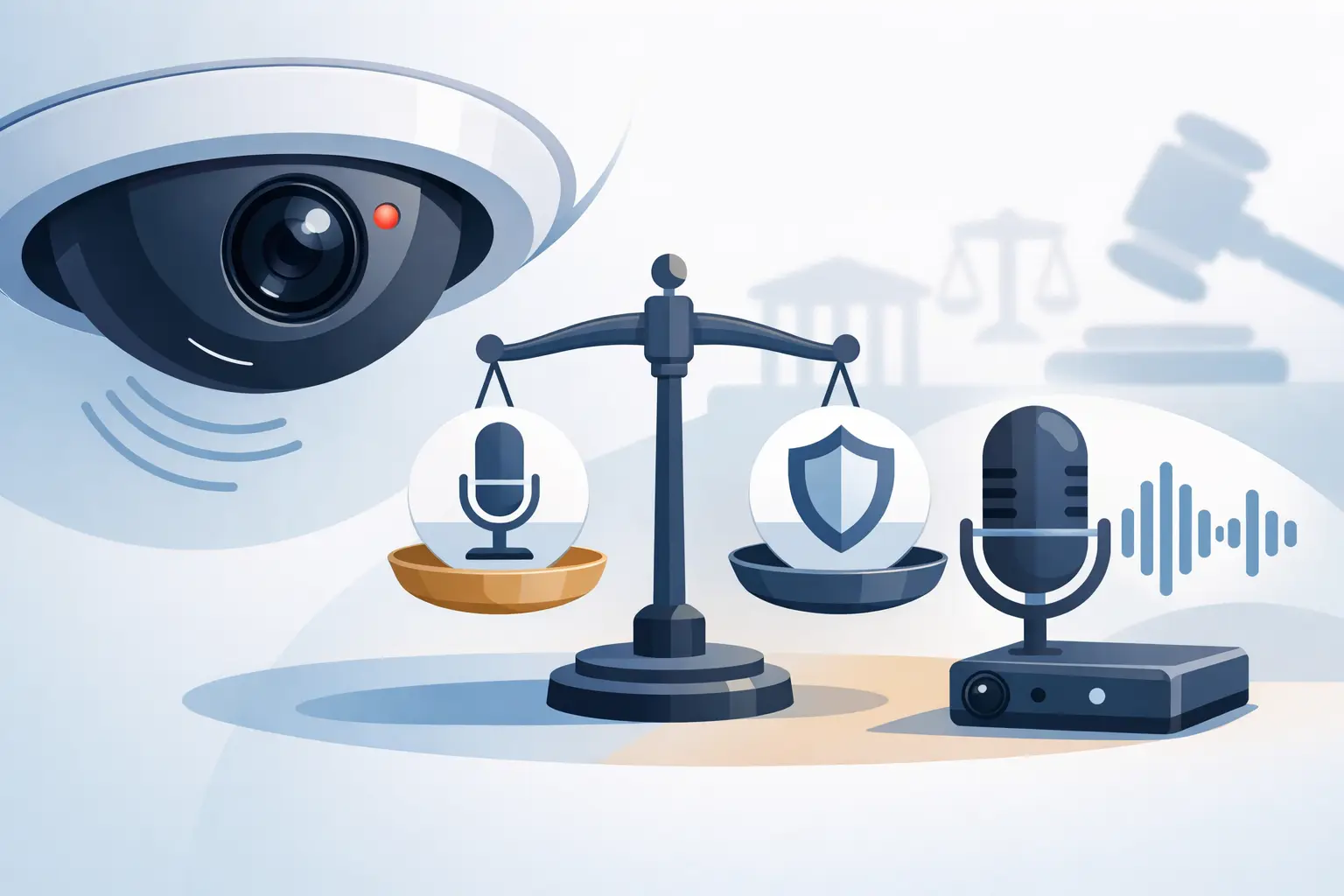
In the US, audio recording laws often center on consent. Some states follow one-party consent rules, which generally means one person involved in the conversation can consent to the recording. Other states require all-party consent, meaning everyone involved may need to agree before audio is legally recorded.
That distinction is serious. A camera with a microphone used in the wrong setting can create legal problems even if your reason for installing it was home security.
Location matters too. Recording audio in a common area of your own home may be treated differently than recording in a space where someone has a strong expectation of privacy, such as a bathroom, bedroom used by others, or changing area. The law may also treat your own residence differently from a rental property, workplace, or business setting.
If you are using hidden surveillance equipment, especially one with audio, the safest move is to check your state laws before turning that feature on. Security should protect you, not create a preventable legal mess.
Places where audio recording is more likely to be a problem
The biggest mistakes usually happen when people focus on what the camera can do and ignore where it is placed. A hidden camera with audio is much more sensitive from a legal standpoint in private spaces.
Bathrooms and changing areas are obvious no-go zones. Bedrooms can also be highly risky, especially if the room is used by guests, tenants, or other household members who have a reasonable expectation of privacy. Recording employees, caregivers, contractors, or housekeepers without understanding your state law can also create issues, particularly if their conversations are captured.
Even inside your own home, ownership does not automatically mean unlimited recording rights. Privacy law is not always intuitive, which is why careful placement matters as much as the device itself.
When audio can be useful for home security
There are legitimate reasons someone may want a hidden camera with sound. If you are concerned about verbal threats, harassment, aggressive conduct, or suspicious interactions at an entry point, audio can provide valuable context. It can also help you understand whether a noise alert was caused by a real disturbance or just everyday activity.
For some households, the best use case is not constant hidden recording but targeted coverage in lower-risk areas. An entryway, front office, storage space, garage, or package drop zone may offer a more practical and legally safer use than placing a microphone-equipped camera deep inside a private living area.
In other words, audio is not automatically wrong. It just requires more judgment.
How to tell if a hidden camera records audio
If you are shopping for one, the product details should clearly state whether audio is included. Look for phrases like built-in microphone, audio capture, or video and sound recording. If the listing only mentions video resolution, night vision, motion detection, and storage, that does not necessarily mean audio is present.
You should also look for signs of app-based controls. Some newer models let users enable or disable audio in settings. That can be useful if you want the option but need to keep the microphone off depending on where the camera is used.
Battery life and storage are also worth checking. Cameras that record both audio and video may use more storage space and, in some cases, more power. If you need long standby times or limited data use, that trade-off matters.
Hidden camera audio vs. video-only models
For many homeowners, a video-only hidden camera is the simpler and safer choice. It still gives you visual evidence of trespassing, theft, unauthorized entry, or suspicious behavior without raising as many legal concerns as audio can.
Audio-capable models offer more detail, but they also demand more caution. If your main goal is to monitor a front door, hallway, garage, or storage area, video-only may be enough. If your concern involves verbal threats, intimidation, or interactions where words matter, then an audio-capable device may feel worth the extra responsibility.
Neither option is automatically better. The right choice depends on your security goal, your placement plan, and the law where you live.
Smart buying questions before you choose
Before you buy, ask yourself what problem you are trying to solve. Are you documenting theft? Monitoring an entry point? Watching over deliveries? Checking for unauthorized access to a room or office? A clear goal helps you avoid overbuying features you do not need.
Then ask whether audio is essential or just interesting. A lot of people think they want every feature available, but more features can mean more legal exposure and more complexity. Confidence comes from choosing the right tool, not the most complicated one.
You should also think about who may be recorded. Family members, guests, workers, tenants, and service providers can all affect whether a setup is appropriate. If there is any doubt, caution is a strength, not a weakness.
For buyers who want dependable security products without overspending, this is where a practical approach wins. Choose equipment that fits your real-world needs and use it with intention.
The bottom line on hidden cameras with audio
So, can hidden cameras record audio? Yes, many can. But capability is only half the issue. The real question is whether audio recording makes sense for your situation and whether it complies with the law where you live.
A hidden camera can be a smart part of a personal or home security plan when it is used responsibly. Video may be enough for many situations. Audio may offer extra insight in the right setting, but it should never be treated casually. If you are serious about protecting your home, take the same disciplined approach to surveillance that you would take with any other security tool.
The strongest security setup is not the one with the most features. It is the one you can use confidently, legally, and effectively when it matters most.